Tag: multifamily branding

Branding Adaptable Reuse Multifamily Developments

The advent of adaptive reuse multifamily developments is now. 

But what is adaptive reuse—and why is it suddenly popular? Adaptive reuse is redevelopment that takes an existing structure and adapts it for another use. In multifamily developments, this can look like a partially remodeled historic hospital converted into a mid-rise apartment community. (The project also employed new ground-up development.) Adaptive reuse has become more popular thanks to its sustainable ideals—reusing existing structures is practical both financially and ecologically. 

Mark Twain is often attributed with saying, “Buy land, they’re not making it anymore.” This can go two ways—use what you have or buy up more land. But…

“Use what you have” is behind this movement. That idea can also, luckily, be applied to branding—use the history of the building to create a brand story that will capture your residents.


Adaptive Reuse: Multifamily

Adaptive reuse for multifamily holds a few benefits over new construction in its ability to appeal to the newest wave of prospects along with residential developers—if you play it right.

AFTER SAVING TIME AND MONEY

By taking an existing building, you might avoid pouring footings, foundations, structural bits and (sometimes) masonry. This could cut down on construction time, allowing you to open for leasing sooner. Those same footings, foundations, and structural pieces that you’re not building could also save you some money. 

Remodeling and renovating certainly have costs associated (think rezoning, or a possible need to gut the building), but depending on the condition of the building you’re adapting to reuse, your multifamily community could be sitting in a comfier place. Any construction savings could be funneled into beautiful branding and over-the-top amenities to draw your residents in.

APPEAL TO GEN Z

Speaking of drawing residents in, the next wave of renters is here. Time to brand your multifamily community for Gen Z. The reasons Gen Z would like a space aligns pretty closely with how adaptive reuse functions:

Eco-friendly – Taking what’s already there will cut down on fossil fuels needed—if you start from scratch, you’re redoing work that didn’t need to be done.

Sustainable: Cities are getting more crowded with population growth as well as housing prices ever outpacing income levels. Going up instead of sprawling out makes sense. And using buildings that exist will be faster and more sustainable than building brand-new.

Meaning behind the Multifamily community: What was the building before? A hotel? A hospital? A school? Taking a building that’s served a separate purpose and using it for housing offers up so much meaning to a segment of prospective residents—meaning that deep is hard to resist.

APPEAL TO RESIDENTIAL DEVELOPERS

Remember when we talked about 2024 trends in multifamily? Was adaptive reuse on your bingo card?
“Adaptive reuse will be an ongoing build and design trend in 2024,” says Esther Sperber, founder and CEO of ST Architects. “It is more sustainable to reuse existing structures than building from the ground up. Reusing old warehouses, factories, etc., will continue to appeal to residential developers in 2024 and beyond.”

Traditional, new construction might take more time and more money to create. A residential developer is interested in how urban dwellers will interact with the space—because they’re the end-user. And when Gen Z is interested in sustainability and meaning, adaptive reuse fits the bill and makes more sense as an investment.

Thompson-Reuse-LoungeThompson-LobbyThompson Exterior

History—the STORY behind the Brand

Meaning. It has to come from somewhere, whether it’s created, or simply needs to be tapped into. With adaptive reuse multifamily buildings, it’s not drawn out of the ether. It comes with the territory! The story is in the walls, lived a thousand different ways already. Finding the piece that connects with your ideal resident is what you’re missing. When you find it, draw it out into the branding (using it as the structure for your brand both literally and figuratively.)

TELL THE STORY OF ITS HISTORY

Telling the story you’ve uncovered in the building can enrapture your audience—your ideal resident. Learn more about the building’s previous use. Get information on the history. Identify the building’s architectural style. Read up on the current events of its hey-day. Use everything you can to create the story of your building’s brand.

Now, select the highlights of those historical elements and tie them into your branding. Architecture can inform the brand style. History can inform your amenity names. Your logos, your signage, everywhere your brand appears, you can take inspo from the building’s history. Be choosy with what you’re diving into—not everything is viable to be public-facing. But go deep and find out everything you can, so you have enough to go off of.

This is especially true of your apartment’s name. Find a name that can work with the history, not conflict with it, or ignore it. Lean in, and create intrigue. And when your residents do move in, give them a gift that goes with the building. Old hotel? Give them a hotel style keychain. Old school? Give them some branded No. 2 pencils. Previous warehouse? Do a giveaway based on what used to be produced or stored there.

STORYTELLING

Continue the thread through your community’s content and copy. Your tagline, headlines, mission, vision, values. Your website copy—this is where you storytelling gets to draw on history. While it doesn’t write itself, the structure is there, just like the building. The best part about using history to tell the story is the creativity and authenticity. When drawing inspiration from an actual place in the past, one can connect with the ideal residents to create a brand that’s never been seen before, and will never be seen again!

The-Thompson-Web-Copy (1)The-Thompson-Aframe (1)

Brand Vibe and Personality

How does one capture the vibe and personality of a historical building? What if it was a warehouse? Ask deeper, bigger questions: What time period was the building built in? When was it in use? What kinds of items did it store? Who worked there, and were there any stories told about them? What major events happened when it was open and functional? (Wars? Riots? Parades? World fairs?)

ADAPTIVE REUSE BRANDING EXAMPLE

Rather than continuing to talk about the how and why, let’s break for recess, and take a look at an example.

Ivywild, a Colorado Springs marketplace with eats, drinks, and shops, is housed in an elementary school that closed in 2009. The communal atmosphere that developed was supported by the neighborhood, especially because it maintained a historic facade and revitalized a structure that could have otherwise stood empty, or worse, become a public eyesore. Our favorite part? “The Principal’s Office” cocktail bar. Clever. The school’s roman-columned facade is part of the logomark. One of the restaurants was housed in a short yellow school bus out front.

Though this is an adjacent industry, the multifamily realm could just as easily rise to the occasion, to bring historical buildings back into the limelight. (Take inspiration where you can get it!)

Why Adaptive Reuse Multifamily Branding?

We’re very much of the thought that you should brand everything. When it comes to adaptable reuse, this is the best possible opportunity for a brand—it’s fun, intriguing and has an outline already. The history is there, waiting for you to spin it into a yarn. Getting creative with it, no one will have the same story as you. Adaptive reuse in multifamily could be the next big thing. Save money, save time, attract GenZ-ers, appeal to residential developers, and be a little greener.

Build it and they will come?
More like: Adapt it and they will come.

Reach out to Zipcode Creative: Storytelling experts with copywriting that converts and branding that beautifies.

Owners and Developers and Apartment Branding

Why Should Owners and Developers Be Involved in Apartment Branding?


Good business sense will help us let owners and developers in on a little secret: branding is a huge component of how your community is perceived. And if we know anything about reviews, testimonials, websites and logos, perception accounts for a whole lot of decision-making. The owner is the one with the hands on the pursestrings. This is their “baby” and they must have a say in the branding.

In short, it’s their company and it’s their money, so if the branding fails to impress, your community may not meet its goals in obtaining and retaining residents.

Why is branding important? Owners create a community with your blood, sweat, and tears. The branding is a prospect’s shortcut to how they’ll identify that hard work in building this branded community. But ultimately, the customer (prospective resident) will determine if it’s visit-worthy—based on the branding you put out there—and it will leave a lasting impression, good or bad.

Why’s Branding Important for Multifamily Owners and Developers?

The company behind the apartment building should be reflected in every bit of its branding. Represent your community well with branding that looks good and sounds good and makes residents feel good about where they live (or where prospects might live).

WHAT MAKES GOOD BRANDING?


Branding’s more than a logo. It creates recognition within your neighborhood, it builds trust and loyalty with your customers, and it creates a sense of community with your residents—particularly when you lean into location and understand the audience you’re trying to attract and the vibe you’re trying to fit in with. You can bump up your branding even further when you marry it with architecture and interior design

This is particularly true when you’re building a new construction or doing renovations, but you can also take cues from the existing design and patterns to help form a brand around something that’s recognizable. If your community has gorgeous Doric-style columns, see if you can incorporate a roundness to your fonts, and make your community stand out in a way that only you can.

NEW CONSTRUCTION VS. VALUE ADD

As we mentioned new construction properties above, branding is vital in the different phases of construction. Make sure you have outlined the brand before it all begins, because it should all work together, seamlessly. As far as your budget, tread carefully. It’s always a good idea to identify your property class and brand accordingly. Your C-class property doesn’t need everything the A-class property requires.

However, if you’re doing a value-add through renovations, you may be able to consider a bigger branding effort. Anytime you’re updating a property, that’s a great opportunity to dive in and rebrand or do a refresh of your brand. It may even be expected from some of your residents and in-the-know prospects. (Kind of like an “Under New Management” sign, or “Pardon our Dust” sign—this signifies that something better is coming.)

How Involved Should They Be?

GIVE THE VISION

When the owner or developer of a new community starts on their journey of construction or renovation—they have a vision. Of quality and appeal. Of full occupancy. And most of all: a vision of profits. To get there, branding will help. Most owners and developers have been in the market for some time, and they know what needs the community meets. They understand the market and how to angle the branding to differentiate the community from other competitors. By sharing the vision with your managers, and everyone who’s on the journey with you, you can create a brand that feels authentic instead of totally derived.

INVESTMENT

Investing in apartment branding is absolutely worth it and typically falls to ownership to foot the bill. It doesn’t cost $0 but when developed thoughtfully will provide great ROI even though it may be hard to track. How so?

Great branding sets you apart from your competitors.

Great branding helps gain trust and credibility with your prospective residents.

Great branding helps keep current residents through loyalty and culture-making.

Great branding can increase perceived value (making a higher price point seem reasonable).

When your branding’s on point, you can generate more signed leases and diminish turnover. As an owner or operator, that’s more than worth it. Ensure branding is in the budget this year and every year—because you’ll see if affect your bottom line either way. It might as well be in the good way. (Spend money, make money.)

When Should Owners and Developers Deal with Branding?

EARLY

At the beginning, owners and developers cast the vision, as we’ve said. It must start early in the process of the community, particularly if it’s a new construction, or if it’s a brand repositioning of an asset that they’re trying to revamp or get more leases in.

If a new construction—this branding should be dealt with before the groundbreaking event. (We’ve even broken down our branding by construction phase to make it easy for you.) If you don’t have time to read the full blog, here’s the general gist of it:


  • Construction drives timelines, so be prepared with your branding from the outset.
  • There are four phases:
    • Early Construction – This is when you come up with the foundational branding aspects and your apartment community’s name
    • Coming Soon – Get the marketing startup items in line with the branding!
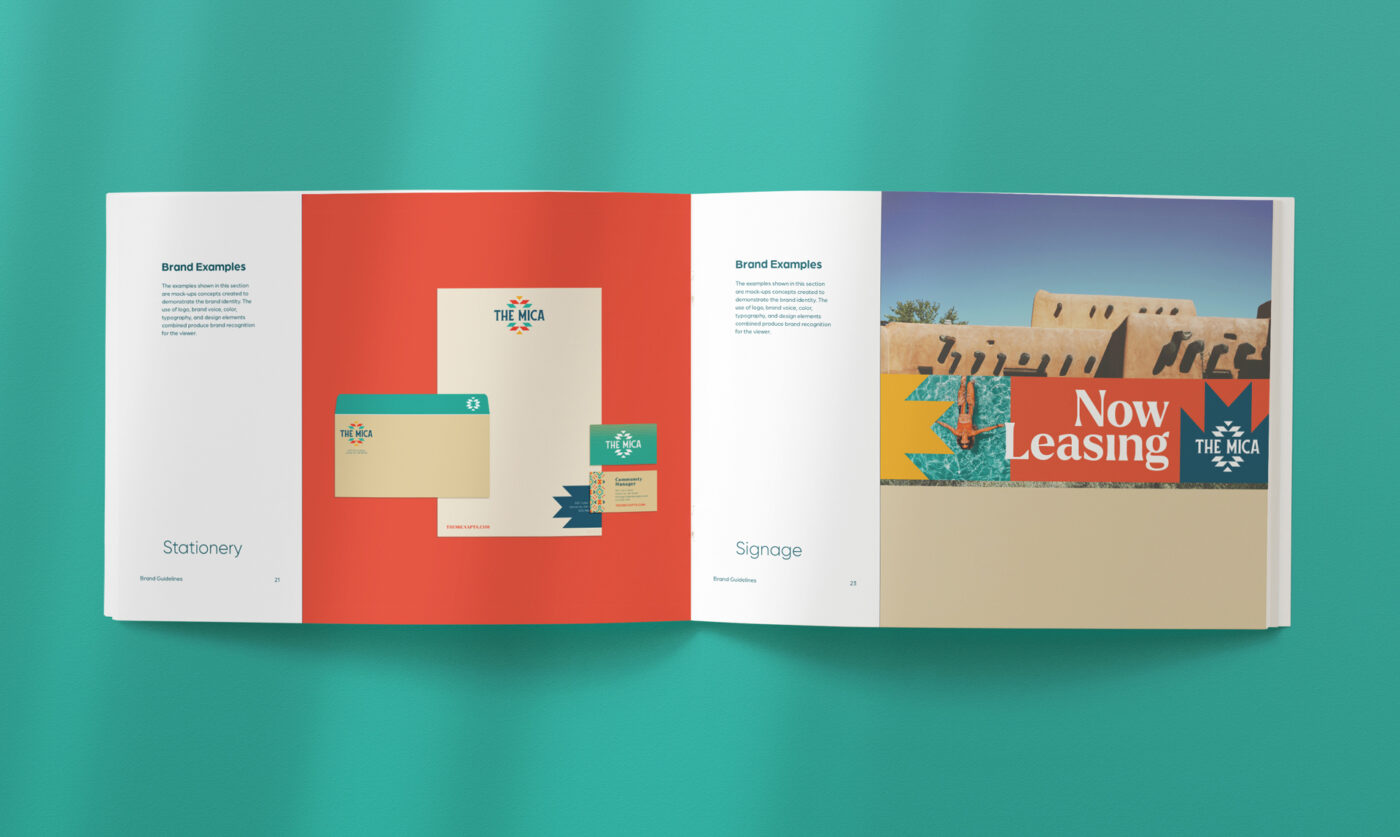
    • Pre-Leasing – Business cards and other stationery should be ready to go now.
    • Now Open – Banners and signage should let everyone know they can move in!

OFTEN

Along with establishing your mission and vision, it’s good to do a little community brand check up every once in a while. Help your corporate-level operators all the way down to your on-site leasing agents know what to use and when to use it. Consistency is key because consistency fosters recognition in the larger community. Be clear about what is and isn’t your brand. Having your marketing team outline bad examples could be just as useful as good ones. The more specific, the less excuse there is for putting something out that’s off-brand.

What is Copywriting and Why Does Multifamily Need It?

Copywriting, Defined

What is copywriting? Copywriting is promotion, through words. These words can be persuasive or interesting, and they prompt the reader to use a business, a service, or an organization. Copywriters have to create text that can be adapted for any number of channels: print, radio, website. Copywriters also need to be able to adapt the copy (also sometimes called content) to different audiences.


BRAND VOICE VS. BRAND TONE


Brand voice is your brand’s personality, through words. It can be mature or youthful, jovial or serious, succinct or verbose, mysterious or open-book. Every way you would describe a person, can usually be used to describe a brand as well. Your brand attributes help create your brand’s unique voice.

Your brand tone is how you approach different scenarios. Similar to what we said above, the copy should be able to be adapted to meet the requirements of that particular time and place. A press release versus a brochure will have a different tone. But your brand voice will still be tucked in there.

Brand voice is WHAT you say.

Brand tone is HOW you say it.


COPYWRITING VS. COPYRIGHTING?

We do get this question. No, we’re not in the business of copyright law—and we never will be! You’ll have to find a law firm for that.

Copywriting means using words to promote a business.

Copyrighting means to register and mark an original piece of work as your own, with the © symbol.

We don’t do that last bit at Zipcode Creative. But we do plenty of copywriting for multifamily.

Copywriting-vs-Copyrighting

Using Copywriting For Multifamily

How can multifamily benefit from copywriting? First let’s look at how it’s used.

COMMUNITY/APARTMENT/ASSET NAMING

Naming multifamily assets is fun, and has long-term impacts on your brand. Hire a place that can do the research and guide the decision. It sets the tone for the rest of your brand, since it’s how people will refer to you—and can steer the direction of your logo and style.

BRAND GUIDELINES IN MESSAGING

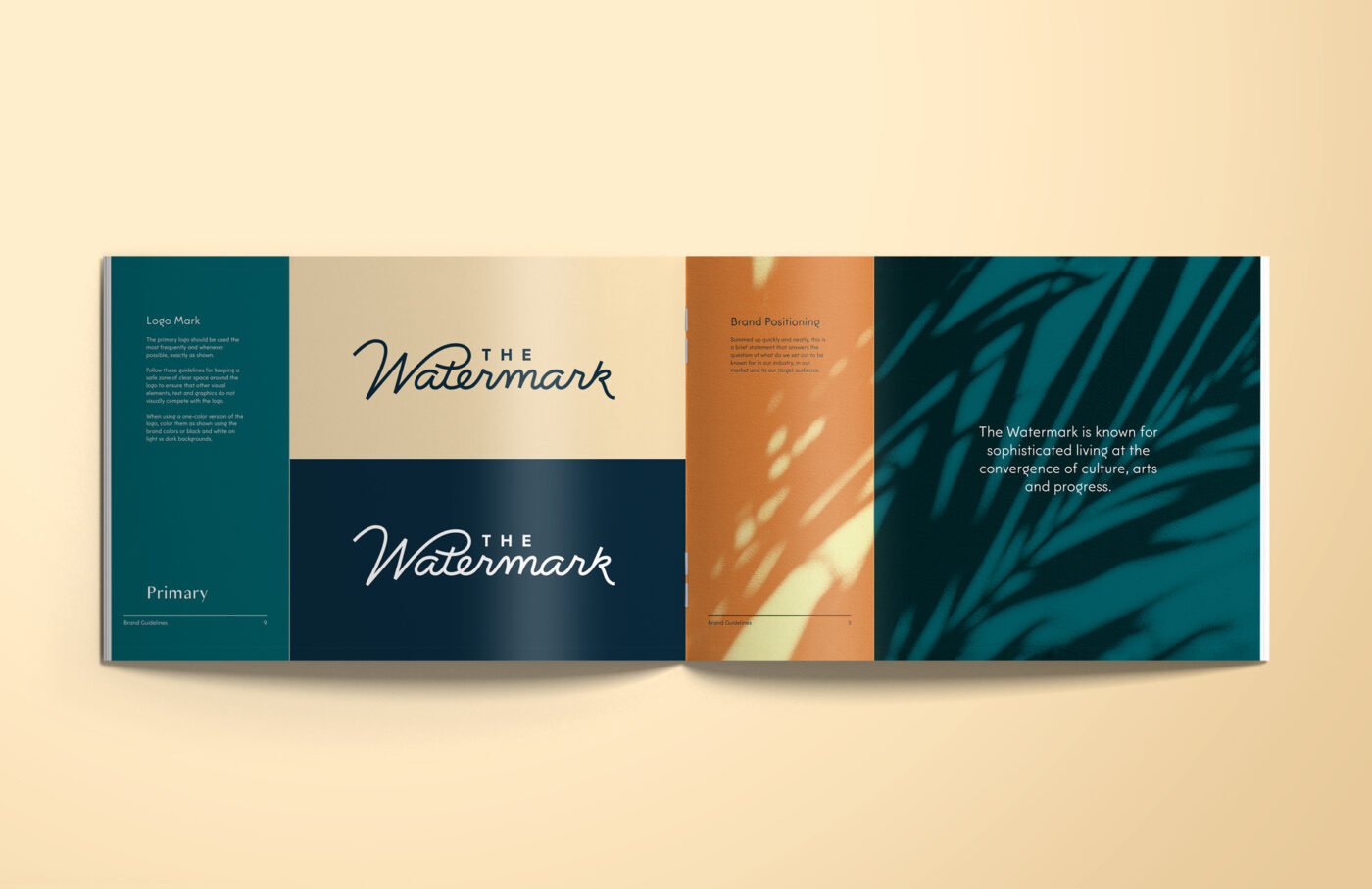
Brand guidelines will get you places you’ve never been before. It’s a little like a superhero power card as if your brand were a person (or a Pokemon?)—but everyone at the company can see it. Once your brand voice (alongside your brand statements) is established using research and discovery and determining your ideal resident profile (IRP), you can go on to create some pretty sweet things like:

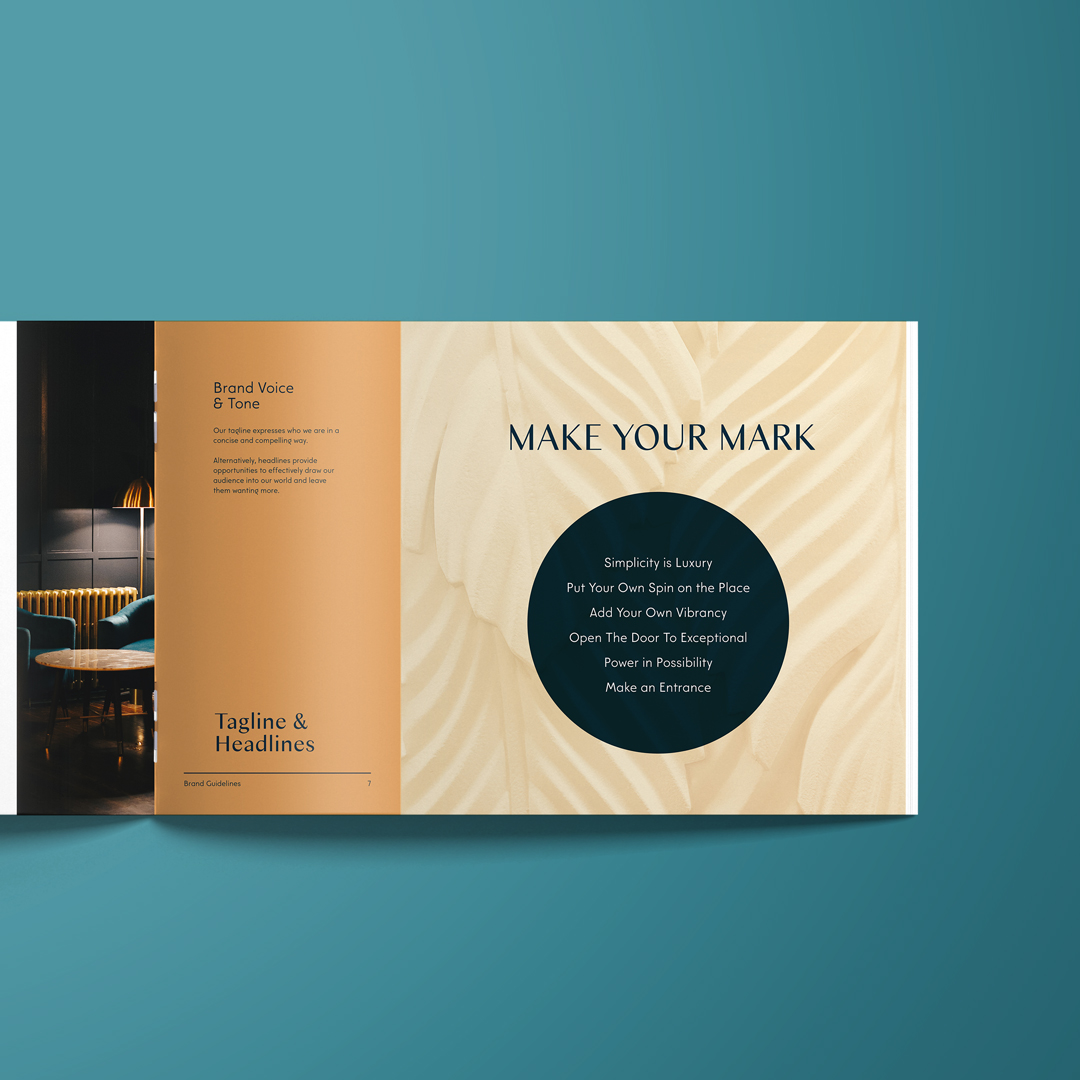
Brand Tagline – Like a slogan for your community—garner interest with your words summed up in one short phrase. 

Brand Headlines – More catchy things to say about the community that keep your prospects reading or scrolling.

Brand VocabularyNaming your amenities creatively or strategically can help create a sense of interest, intrigue, and brand loyalty among your residents. 

Each of these are part of the brand guidelines that we’ll create to keep your brand on track. Our copywriters take care of the verbal parts. Our designers take care of the visual parts. We put it all together to create a singular, beautiful guide to everything Your Brand. 

Also: Your taglines and headlines simply HAVE to grab attention. Sometimes that’s all anyone will ever read, of alllll the things you’ve written. Sad, but true. Make sure you’ve got a few of these up your sleeve: Tricks for Better Taglines and Headlines.


MULTIFAMILY COPYWRITING FOR EXTRA CREDIT

Hoping for a few bonus pieces of copy? There’s plenty more.

Website & Brochure Copy: Headlines, subheads, paragraphs, calls-to-action, it’s all copywriting. Make sure it’s good.

Campaign Copy: Whether it’s a moving campaign or pet-friendly campaign, ensure the words you’re using really sell the deal.

Email Copy: First your readers have to open the email—get them with a good subject line from your favorite copywriter.

Social Media Copy: Writing captions that fit in your brand voice is harder than it sounds.


CORPORATE COPY 

Mission / Vision / Values: Writing these clearly and having them out in the open—it’s more for internal purposes, but will help guide your client-facing brand. (It’s not easy, but that’s why we’re the professionals.)

Team Bios: Your experience and personal approach to property management should shine in your bio—and help you connect with the reader.

Client/Owner/Investor Messaging: We’ll make certain your message is geared to your client. Seal the deal whether seeking investors or presenting your management acumen to owners.

Taglines Headlines

Why is Copywriting Important for Communities?

Copywriting for community brands can = SUCCESS

Spell it with me: S-U-C-C-E-S-S. It has a nice little rhythm to it.

What do you most want from your efforts in your community? 

Success…which comes from signed leases. 

Which comes from prospects that turned into leads that turned into residents.
How do you get from prospects to residents? By connecting, showcasing, and converting.

Copywriting in multifamily communities is key to those three things.

CONNECT

Make an emotional connection by establishing your brand voice and telling a STORY.

SHOWCASE

Show what you have and how it’s the answer to their problems through clear and enticing communication.

CONVERT

Give them a reason to click the “Apply Now” button. You’ve gotten them this far, now convert leads with your brilliant copy (including amazing CTAs.)

When you have a resident—you want them to stay. A strong brand, which is BOLSTERED by excellent copywriting, will be able to maintain loyalty and retain residents—possibly even turning them into your own influencer-style, walking-word-of-mouth-ad brand advocates!

A Professional Copywriter vs. Your “Good Enough” Colleague

If we haven’t convinced you yet, now’s the moment. You’re considering having your colleague who’s “pretty good at writing” pen some copy. For your brochure, for your website, for your social. There are a few places where this could be…fine. Not great, but fine. Social media doesn’t require a huge amount of writing chops—but it could still impact your brand negatively if it’s not up to snuff.

If your colleague really is a good writer, great—use them. But also be aware that because “copywriter” isn’t likely their job position OR in their job description, they won’t be prioritizing the writing you’ve asked them to do (and all the research that has to go into it). Additionally, it’s not the best use of their (or of your) time and will take them longer than a pro.

A professional copywriter for multifamily, like the ones we have at Zipcode Creative offer three things that your “good enough” colleague may not:

EXPERIENCE

A professional copywriter is just that. They have processes that they’ve developed over years. They’re in the know with copywriting trends, as well as what is most likely needed for each job. 

Your “good enough” colleague will probably know your audience’s challenges and pain points, but those can easily be communicated to the copywriter as part of their research prior to writing.

EFFICACY

A pro copywriter for multifamily can create an emotional connection. They know what builds bridges, what entertains, and what kind of copywriting grabs attention. Keeping it short, tight, and compelling are all in a day’s work.

Your colleague of “decent writing chops” may end up writing too formally or casually, or worse: ignore your brand voice completely. All that work on the brand guidelines, for nothing!?

EFFICIENCY

A copywriter working professionally for apartment communities can easily follow your requirements. You’re the client, they’re the hired help. Pros also tend to know what needs to be done without being asked—even in a niche field like multifamily copywriting.

Your colleague—bless their heart—might not know the basic rules of copywriting, and therefore, waste time and money and energy on something that falls flat.

The best kind of copywriting for apartments tells a story, creates emotional connections, and helps build up the brand’s value. That sounds like a happily-ever-after to us.

What is Branding for Multifamily?

If you read our Branding Basics post and wanted more—especially around multifamily branding, and how branding is different than marketing, we’re here to help.

Is Branding Just Logos?

Nope! Branding is a combination of identifying visuals (photos, images, icons, fonts, color palettes) and messaging (brand voice, mission/vision/values, website content, headlines/taglines) that define an entity (this could be a corporation, a company, a community and tell a story. That definition could very well be: the way that your audience, user, or the public perceives you. 

Branding can also help create a movement, a culture, or a lifestyle. When we look at branding, it’s important to ask a lot of questions. The best ones to get to the heart of your brand is:

  • Who are you?
  • Who do you serve?
  • What do you have to offer (that’s special)?
  • Why do you exist?
  • What problem do you solve?

Multifamily Branding—What is It?

The entity we talked about above, in the branding section, could be a corporation, a company, or a community. Could be an apartment building or a property management company.


ACTUAL LIFESTYLE BRANDING

Branding in the context of multifamily is a little different than regular branding. Because you’re dealing with a lifestyle that is being offered—not in theory, but in reality. Because there are people that will LIVE at your apartment community, and that will be a huge part of their lifestyle. Ergo: apartments are lifestyle brands.


REPUTATION MANAGEMENT

Along with the literal lifestyle, branding is crafting the narrative for reputation. Ensure that you guide the perception rather than letting your ideal resident make up their mind about things. Things that are beyond the facts, anyway.


SPHERE OF INFLUENCE

Multifamily branding has a hyper local sphere of influence. It’s not necessarily national (unless you have a  multi-regional series-style brand of communities) but typically your focus is regional, and your branding takes into account (AKA research!) a few items that might be overlooked in any other company’s branding efforts:

  • The Neighborhood Vibe
  • What’s Up and Coming Nearby
  • All the Competition

Current Residents (if you’re taking over management)

Why Branding Multifamily is Important


COMPETITION

If you think you can get by without paying attention to your branding, think again. You have a lot of competition to beat out and stand out against. Besides quality service and an ideal location, your branding can help you rise to the top of your leads’ lists. According to Pew Research, more than one-third of all U.S. residents are renting their homes. More multifamily communities are being built to help curb the housing shortage—you won’t be the only option! This means apartment branding is worth the time and money and effort. Plus, working with an agency that knows how to break down the specifics, like branding broken out into the new construction lease-up phases, is solid gold.


COHESION

Trust and loyalty are rooted in consistency, predictability—knowing what to expect. Your branding, if cohesive, can help you be just that. With a set of branding guidelines that outlines your typography, color palette, stock photography style, and brand voice and messaging, it will be easier than ever to keep your team on the same page the next time you’re putting together ad copy or creating a new brochure. This way there will be no “brand whiplash” when they go from your website to your actual location—it all works together, from architecture to interior design to website to social media to brochures, thanks to good multifamily branding.


CONNECTION

Let’s tap into resident psychology. When you make an emotional connection, using the brand voice you’ve developed, you can help drive decisions. And when you drive decisions, you can see tangible results—like more signed leases. Consistent and authentic branding will drive that connection as well, because you’re offering something expected, predictable, and worthy of your residents’ trust.

Branding-vs-Marketing

Difference Between Branding vs. Marketing

Things that are the same about branding and marketing—they’re both used to accomplish the success of your business, and are based around research and best practices. Branding will always be part of marketing. But marketing won’t always be part of branding. They work together, but they’re absolutely not the same, especially for multifamily.


BRANDING VS. MARKETING

Branding connects through telling a story, whereas marketing gets that story to those who need to hear it most.

E.g. “Our 55+ apartment is the perfect place for your next chapter” is the branding message. Marketing that message means finding the right place to put the ad.

Branding is the vibe of your community (how you look—brand visuals, how you sound—brand voice, and how you behave—brand reputation). Marketing is getting your prospects to notice you, and every piece of the branding you’ve worked on.

E.g. Your mission, vision, and values are integral to your brand—and doing the research to see what would help you stand out beyond the competition…that’s smart marketing.

Branding is creating an emotional connection, and making people feel a certain way (remember psychology?). Marketing is what helps them make a decision, take an action, and move down the funnel.

E.g. You make your website deep, emotional, and moody—that’s branding. You create an irresistible call to action—that’s marketing.

Can you just do multifamily branding and scrap marketing? Nope.

Can you just do multifamily marketing and skimp on branding? Good luck…marketing a weak brand!

You have to have BOTH to create a leasing powerhouse of a community.


For more on how to create an apartment brand, read this, and partner with us. Set up a call with Zipcode Creative today.

Branding Apartments Based On Multifamily Property Class

Branding apartments in alignment with the multifamily property class designation  just makes sense.


For example, do you think if one (very lucky) ad agency worked with Nissan and Mercedes-Benz they would try to sell them on the exact same branding package? Do you think Nissan has the same branding budget, needs, and goals as Mercedes-Benz? Sure, they might be similar in breakdown, but there’s likely a fair difference between their bottom lines and the line items.


Not only are their budgets and goals going to be a little different, the branding they need to work on is slightly different—to reach different audiences and portray two pretty distinctly different products.

So, what does the branding of luxury cars and regular cars have to do with branding apartments by property class?


Plenty. 

What is a Multifamily Property Class?


Multifamily properties are classified in four levels: A, B, C, and D. They’re generally defined by the condition, quality and age of the apartment building. A classification may raise up a half-grade, from a B to a B+ or an A- for example, when the property undergoes renovations for a value-add. More info on multifamily property classifications here.

Be True to Your Class


A little trust goes a long way. It’s best if you relay the correct message (spoken and unspoken) about what class your community is. We as your branding guides would never want to misrepresent the product you’re selling when marketing to prospects. So, keep your brand refresh under control: When you’re finally getting around to modernizing a 1980s suburban garden style community, ensure the branding isn’t telling a “luxury urban high rise” kind of story. 

Get Only the Branding You Need


Other creative agencies might (we’re not throwing shade, we’re just being realistic) try to get you on board for way more branding than you need. That’s not how we work. We know that our Class C properties don’t have as much change in their pocket to spend on branding and marketing—so we’ll only suggest what you need the most, and what will help you be more likely to reach your goals. 

Guide to Branding Apartments by Multifamily Property Class


We offer a ton of branding and copywriting options for our apartment marketers at Zipcode Creative. But how do you know what you actually need, or where to start? (Don’t get stuck with one-size-fits-all branding packages, get what you actually need instead.)


Here’s what you really, truly need, at minimum, broken down by class.
Multifamily Property Class A

CLASS A:

This is the top of the line. Higher cost rents. A full suite of amenities. Truly luxury apartments. Class A properties require something special, more bespoke, and the branding should touch every area, from the inside out.

We recommend a Full Scope Branding Package that includes:

Custom logo design – We’ll give you six lovely logo design concepts (based off of your goals/desires/audience) to choose from, and we’ll narrow down from there to find your perfect fit


Brand visuals – These are the big guns. (Appearances matter.) Included in our brand visuals: 

    • Brand Style Concepts – like a mood board!
    • Color Palette Development – groups of colors we think work for your brand
    • Brand Typography – fonts and weights (including title, subheading, and body text uses)
    • Design Elements – textures and patterns
    • Lifestyle Stock Imagery Curation – picking out the vibe through a photo collection
    • Iconography – designed symbols for your amenities
    • Sample Design Applications – How your brand will look in the wild (signage, mailers, business cards)

Brand voice – AKA how you communicate your vibe through your words. Are you youthful or mature? Verbose or cut-and-dried? It will also be impacted by your understanding of your Ideal Resident Profile [IRP]; we’ll write it towards them, in language that will attract and vocabulary that will entice. We’ll deliver brand voice with:


    • Brand Positioning Statement – A sentence about what you want to be known for in your 1) industry 2) market 3) target audience
    • Brand Attributes – Single words that better define your brand’s personality (e.g. “Edgy”)
    • Ideal Resident Profile (IRP) – Defining your target audience through a tangible description 
    • Tagline Development  – Slogans, essentially!
    • Headline Library – On-brand headlines that you can use in your copy—on the website or in print
    • Brand Phrases/Amenity Names – make your amenities a little more special with names that match the vibe

Multifamily Property Class B

CLASS B:

Class B are nice apartments, but not necessarily luxury, and not new – maybe undergoing some value-add improvements with the change to new management. They bring in above average rent, but the clientele will still be looking for something clean and consistent.

We recommend a mid-level Brand Package that includes:

Custom Logo Design – We’ll give you 3 concepts to choose from and tailor it from there

Brand Visuals – Similar to Class A, but the approach is based on research and discovery.

    • 3 Brand Style Concepts
    • Color Palette Development
    • Brand Typography
    • Design Elements
    • Lifestyle Stock Imagery Curation
    • Iconography
    • Sample Design Applications

Brand Voice – Enough to inform your copy, but not quite as in-depth as Class A properties:

    • Tagline
    • Headlines
    • Brand Identity Statement

Multifamily Property Class C

CLASS C:

Your Class C Property is older, probably 30+ years old and isn’t in the most happening part of town. You should still treat it as a brand, but your budget will be pretty tight, and your branding is less of a priority than a Class A. 

We whittled our recommendations for branding to keep you on track:

Logo – a simple modernization (keep close to the original logo, but refresh the style to keep it timeless) will do wonders. If you’re changing your name, we highly recommend a proper custom logo design treatment with a new name.

Brand Visuals

    • Color Palette
    • Font Choices

Brand Voice

    • Tagline

Multifamily Property Class D

CLASS D

This is the lowest class of property and you’ll be spending your budget elsewhere. We wouldn’t recommend doing more than this for your branding (but you can do more if you desire):

Logo – A simple typeset style logo of the name will serve to identify your community
It’s worth a quick reminder here—the design style and direction should be in exact alignment (we’re talking lock-step) with the quality level of the property. Like we mentioned before, if you’re a Class C, pretending you’re a Class A will get a lot of leads and prospects upset. Don’t mislead, and keep things appropriate—AKA brand within your class. The location and the Ideal Resident Profile (IRP) will also inform the way we handle your branding (and the way you should handle your behavioral marketing).


Also of note: We still have an a la carte menu of apartment branding services, with transparent pricing (request pricing here). That’s easy on you and easy for us. This is just a guide of what we recommend for branding at minimum for different property classes.

Interested to see how we can help with your apartment branding—no matter which class?

Hit us up.

New Construction Lease-Up Branding and Marketing—By Development Phase

Four phases of development directly inform how we handle our new construction lease-up branding and marketing. 

The logic behind this? It’s optimal to align your apartment community’s branding and marketing with construction—because that’s what drives timelines. For example, you can’t create stationery before you have the final address or phone numbers for your community. Think about it: you’ve created a brochure, but you don’t have images or even a leasing office to distribute them from! Go in the right order.

Let’s break it down into each phase, so that you can see how we’re able to keep our clients on track, and drive them to the finish line. 

If we can stay ahead of construction on the branding and marketing side, we can begin pre-leasing and be that much closer to occupancy goals right at first units delivered.

Phase 1 – Early Construction

12-18 months before the first phase of completion, or at groundbreaking.


NAMING YOUR APARTMENT COMMUNITY

The perfect name for your community should embody your values, style, and audience. Make sure you’ve got a good one picked out before you begin with Phase 1. You’ll want to get legal documents in order with the city and county as you set up your web domain and social handles, too. (Beyond that, how can we create a brand identity without a name to pull from?)

FOUNDATIONAL BRANDING DESIGN

The voice, the visuals, we need to get it all dialed in. What do you look like and sound like? Once that’s nailed down (along with your brand’s taglines, headline library, logo design, color palette, typography and lifestyle stock imagery) we can get moving on your floor plans, your renderings, and a landing page that feels consistent with your brand. A consistent brand that extends to your landing page gives you a legitimacy that’s vital in the first phase of your lease-up. Also! Pair your identity with your interior: Architectural plans and mood boards motivate and inspire us. Aligning with where you’re headed helps us work together even better, narrowing our focus so we can go with exactly what you’re envisioning.

Phase 2 – Coming Soon

6-12 months before first phase of completion

YOU’RE HERE—OR YOU COULD BE

This is the moment to make marketing start-up items. Think signage design, rack cards, and maps. We love to help create a property sitemap (we make it pretty—we’re well-known for our beautiful sitemaps!) or a point of interest map that shows nearby freeways, shopping, eateries and the like. 


SIGN UPS

Launching an interest list website is also helpful in order to start developing SEO for your location. During this time, we typically encourage our clients to put “Coming Soon” on their marketing pieces and direct prospects to a landing page with a contact form as the primary CTA.

Phase 3 – Pre-Leasing

3-6 months before first phase of completion

PEOPLE, GET READY

This is when the magic happens—units get reserved, leases get signed. We can help you transition your branded marketing message from “coming soon” to “pre-leasing” as you start up your unit reservations. When you have big goals, you need better branding. During this phase, we like to create business cards for your property manager, leasing agents, and your maintenance supervisor. You’ll also want to have handy a thank you card (with a pre-written message) and a move-in gift note card. When you’re this close to opening, you don’t want to be waiting on printed pieces at the moment your residents step foot in their new home. Plenty of other pieces help bring the “welcome” for any pre-lease signers.

Most of all—get your full website ready. Websites are a huge representation of your brand; get it launched in time for the next (and final)…

Phase 4 – Now Open

At time of first phase of completion

IT IS TIME

Finally, your first move-ins are permitted! And you get to unfurl the “Now Open” banners and signage—we got you covered on that front. We’ll make sure you’ve got building banners, yard signs, boulevard banners, and enough directional signage to make even the most directionally-challenged resident find their way with no problem.

When you hold your soft opening, have marketing collateral handy. When you have your grand opening, have swag and giveaways handy. When (or if you can) do unit delivery by phase after your clubhouse and community amenities are complete, you’ll still want to have everything ready. You won’t miss a thing, if you’re using our checklist.

A checklist?

A Lease-Up Marketing Checklist for Every Phase

Oh, yes. We provide our full branding package clients with a comprehensive project brief—a live google doc that shows the scope and timelines for a new construction, lease-up community. This added benefit includes a lease-up marketing checklist that covers everything you could want to do to set your community up for success. After being in the multifamily industry (on the property management side) for many years, we know what’s most vital and what’s optional when it comes to creating a successful lease-up strategy for your community’s brand.

Compare Creative Agencies for Apartments in 6 Ways

It can be tough to know exactly how to compare creative agencies. There are a lot of options out there, and you just want a reliable, easy-to-communicate-with designer. And you want it cheap. Oops, there go the red flags! Does this sound familiar?: “Good design is not cheap. Cheap design is no good.” Generally that’s true. You absolutely get what you pay for, even in branding and graphic design. 

However, here’s the good news about good design: it doesn’t have to be crazy expensive. If you get three bids, you probably end up picking the middle option, because it’s not likely to be bad, and it’s less likely to break the budget. (The ol’ goldilocks effect.) Yes, budget’s important. But so is branding. Branding is what brings prospects in the door, leading to leases (and $$$ back in your pocket).

So, if you’re focused on what it will cost you, it makes more sense to compare creative agencies on more than the price. 

We can think of 6 ways you can make a better decision on your next design partner. If you take nothing else from this: The who, what, and how behind the bid is vastly more important than the money. Focus on what actually impacts good design, not just the owner’s expressed “budget”.

Here’s those 6 ways to compare creative agencies:

1 Experience

  • What have they done before? 
  • What’s their niche? 
  • How long have they been in the biz? (Always best to strike a balance between expertise and innovation—consider their fresh ideas and their know-how!)
  • Have you seen their work?

2 Knowledge

  • Are they experts in their field? 
  • Do they provide insight because they’re leaders in the space? 
  • Is their blog or news page helpful? 
  • In conversation, do they seem like they understand multifamily marketing priorities?

3 Style

  • What’s the culture of the agency like? (Happy employees make better work.)
  • Is their agency’s branding cohesive? Do they practice what they preach?
  • Do they have the eye for design, and does it show up in their body of work?

4 Quality

  • What are others saying about them? (testimonials, reviews, referrals) 
  • What are their turnaround times like? (too long, can’t wait – too short, sloppy)
  • Is anything fuzzy or stretched or out of proportion? (If yes, RUN.)

5 Personality

  • Would you want to go out for dinner or drinks together?
  • Do you find them helpful and encouraging?
  • Could you imagine working with them regularly?
  • Are you a match, personality-wise?

6 Communication

  • Do they respond in a timely manner, and ask thorough questions? 
  • Are they collaborating with you easily? 
  • What does their back-and-forth process look like?
  • Can you stay on the same page when it comes to design?

What Makes Zipcode Creative Different?


In order to properly compare creative agencies, you have to know a little more about us.

We approach multifamily branding with an eye toward everything distinctive about the property: the community’s amenities and offerings, the location, the target prospect demographics, as well as the architectural and interior design style.

Every factor influences the way we design the logo, pick the fonts, choose the colors, draw in brand design elements and select lifestyle stock imagery. The brands we create fit the neighborhood vibe so you can draw the attention of prospective residents.

multifamily focusedflat project ratesexceptional lead times

WHY WORK WITH US

Beyond that process, we have a few other tricks up our sleeve:

We’re a boutique creative agency.

Small but mighty, we love to give our clients our full attention and extra care. And we have more skin in the game!

We’re multifamily focused.

There’s inspiration everywhere we look, and we tie that into our work in multifamily branding to push the envelope with every project. We consider location, resident demographics, and differentiators as we design and position your apartment community/company.

We’re female-owned and operated.

Women in business = detail-oriented, creative results, every time. We’re proud to be a bunch of multitasking queens.

WE KEEP THINGS SIMPLE


We give clear turnaround times.

During a takeover, you don’t have a lot of time to waste. No problem. We work efficiently, divide and conquer to our strengths and get it done.

We offer a la carte services.

Packages are fun (we have those, too!)—but they’re not for everyone. Sometimes you just need one thing. Which we can do. Just here to help!

We offer project rates.

No tracking hours. No surprise costs or fees. Just easy investment in good branding, sharp copywriting, and beautiful graphic design. Simple invoices are a win-win!

We communicate really well.

We know it’s key, so we make it a priority. We stay in touch and respond quickly so it always feels like we’re just a remote extension of your marketing team.

How Our Creative Agency Works

At zipcode creative, our approach to branding is based on the view that every single community and company is different. We spend a lot of time in research and discovery when we position and design an apartment brand or a property management company.

Our process requires that we get the full view of who you are, who you want to attract, and what you have to offer through:

  • understanding the community in full:
    • Architecture
    • Interiors
    • Amenities
    • Location
    • competitors in the market
    • target resident

    • OR understanding the company in full:

    By fully diving in, we’re able to get the information that will inform a brand that will be 1) set apart from the competition, and 2) will provide its residents with a sense of community. 

    The branding and design aspects stem from the knowledge of every nook and cranny of your property and the people you want to live there.

    Get in touch. We’re ready to work alongside you.