
Tag: verbal identity

Real Estate Brand Strategy in Action: The Curated Group Case Study

A name stands in as a promise—and only works well if that promise is kept. 

When Curated Group came to us, the ink on that promise was already drying. The founder had worked on building the business for close to two years, having named the company and designed the CG mark before ever meeting us. Typically, our branding projects have a blank page and a naming exercise. This one had a (weighty) word already selected, with a founder waiting to see it get fully fleshed out. So instead of inventing, we got to interpret.

So while we didn’t name Curated Group or design the logo, we got to help the founder build everything around it: the strategy, the verbal identity, the full visual identity system, website copy, and company brochure to make it a fully operating brand. The founder’s clear point of view, strong idea, and ambitious brief helped us build the platform that made it all work. 

A Name That Writes a Check

“Curated” is a bold word for real estate. (Say it out loud in a category full of “premier” and “luxury living,” and you’ll hear how different it sounds.) The founder chose it on purpose. The idea is that this firm curates properties, people, investors, and vision the way one would curate art. He loves art, and he meant it.

Yet, a word like that makes a promise the brand must deliver on. If the identity was somehow a standard navy rectangle, stock skyline, tagline about excellence, like any other corporate real estate company, “curated” would have become empty. The main creative challenge was to bring curation across every touchpoint, not just have it sitting in the name.

The Real Problem Was Trust

So, we had a name and a logo—but we needed to dig deeper. Discovery surfaced something that reframed the entire project. The firm’s biggest customer problem wasn’t awareness or price. It was trust. 

Owners have been burned. Managers they’ve hired have overpromised and underdelivered, given conflicting opinions. So by the time they’re moving on and shopping for a new partner, they want someone who will do what they say.

Knowing this made us pivot the whole verbal identity brief. If the brand is to be believed (which it must be)—it has to speak in a way that can be understood plainly. Transparent and confident without salesy speak. Restraint rather than theatrics in the brand voice. (More on how we carefully built that voice in a minute.)

The Whitespace Nobody Was Standing In

Curated Group sits in a bit of an awkward, wide-open middle.

On one side: Small shops, often run by a single agent. They’re personal and hands-on but lack institutional muscle. On the other: The national management giants that typically will not touch anything under about 150 units and treat smaller owners like an insignificant distraction. Plenty of owners sit between those two, wanting real sophistication and real attention at the same time.

That gap presents an opportunity. Institutional-quality operations plus boutique-level care and aligned incentives. Since Curated is an owner-operator (not just a third-party manager) it’s believable. With their experience as owners, they can build trust with clientele because they’re shoulder-to-shoulder, taking on the risk of asset management themselves.

The Tension That Unlocked Everything

Then, the founder casually handed us something absolutely vital. He wanted the brand to be about 40% sophisticated and timeless, and 60% artful and eccentric.

What a direction! Plenty of real estate brands stay in one lane. Totally institutional, buttoned-up to the chin. Or: design-forward and totally unique boutique. Curated desired both, with a lean toward the eccentric. That truly helped us figure out next steps. But it also created a puzzle. How can a brand be dependable and helpful (taking the overwhelm of asset management off an owner’s plate) while still making every property feel artfully unique? The sophistication could war with the playfulness. The reliability could be at odds with the expressiveness. 

So it was our job to resolve the tension. And we were able to do it with a single line!

One Line to Hold It Together

We landed on this positioning platform: The Art of Responsible Real Estate.

This small phrase allows us to relay everything we want. “Responsible” is the dependability clients can trust, with timeless sophistication (40%) while “art” is expressive, and gets at the curated, creative heart of it (60%). Both halves are represented and named, and it made everything that came after so much easier: voice, color, pattern, photography. Decisions got easy when we held the line: if it was artistic or responsible, it got the green light. The logo and name can now become a strategy, with the right words.

Turning a Trust Problem Into a Voice

Voice is where branding becomes readable. And where trust became indispensable.

We defined what the brand sounds like and, equally important: what it doesn’t sound like. It sounds strategic, reliable, insightful, and real. It stays away from the pretentious (“the premier, exclusive provider of luxury real estate solutions”), the clichéd (“at the forefront of the industry”), the trend-chasing (“we’re disrupting property management”), and the overpromising (“guaranteed, unparalleled returns”). Read through those don’ts again. The reason they’re “dont’s” is because they aren’t trustworthy—the companies speaking this way are the ones that caused distrust in the first place. So we avoid this style completely.

Next, we built the positioning into the vocabulary. Think: Partners and Clients, not Owners. Commitment, not Contract. The reason for these swaps is to indicate a relationship-first promise in everyday language—so the brand can stay consistent in written and spoken language.

Finally, we calibrated the tone to match the people. During discovery we found the team to be one that laughs together and works hard. Ergo, a voice that’s professional and approachable. Wittiness, balanced with seriousness around business and trust. “Your Vision, Our Masterpiece” and “Partnership, Artfully Done” bring in the art+responsibility aspect, so it’s built in, and the reader can sense it.

Where the Art Gets Physically Kept

Visual identity brings that curation promise to full fruition. And can be seen clearly—literally.

We captured timelessness with colorC: deep navy, blumine, a limited emerald accent, platinum, light blue, white smoke. That’s the 40% sophisticated, gallery-grade foundation. Gold could have gone into that core palette and turned corporate fast. Instead we pulled it out and made it a design element, the gold swash, an accent gesture that feels applied by hand rather than printed by committee.

Then the gallery metaphor, made literal, which is the payoff of the whole name. Real Florida properties are rendered as watercolor-stylized, masked watercolor images. Buildings turned into fine-art pieces. A frame element in navy and gold with a white matte inside presents them like work hung in a gallery. The copy even refers to the services as a gallery. That is the point where “curated” becomes a visual operating system. They curate, therefore, their work is presented as curated art. Concept and execution in full alignment.

The eccentric 60% shows up in the details that keep a navy-and-gold real estate brand from tipping into stuffy: a dot pattern and a curved-check pattern, a little playful, a little unexpected. Sophisticated base, artful expression, exactly the ratio the founder named. Typography holds the same duality, a clean geometric face for headlines over a condensed serif for the supporting text, modern and grounded with an editorial touch.

(And yes, discovery included the fun stuff. A persona exercise that landed somewhere around a 007-with-an-Audi, salted-rim-margarita, Banana-Republic-meets-Alice-and-Olivia kind of character. Useful for calibration, polished and capable with a real sense of play. This added detail filled in the blanks but didn’t drive the direction. The drivers were trust, whitespace, and that sophisticated-artful split.)

From Platform to Pages

The true test of branding is how it holds up with long copy and real applications. So we worked through website copy and the company brochure to see how it would go. And the page “The Art of Responsible Real Estate” had to pull double-duty to sound serious (a firm you can trust) and artful (a firm that curates its assets). The vocabulary helped, especially with Services framed as a gallery. Every paragraph proved the name was far more than decor and kept the founders belief (of art and trust) afloat.

Built for One Person

One more decision shaped everything: we wrote the entire brand with a single person in mind.

The ideal client is a high-net-worth owner diversifying into real estate who wants professional-grade management without becoming a one-off account for a company too big to care. When you can speak to “one person”, the branding decisions everywhere get easier—because you know who you’re talking to. So every sentence and design call has a clear recipient.

That persona also made Florida-specialist positioning a feature instead of a limitation. Deep local expertise, proximity to the assets, established vendor and regulatory relationships, a brand built for Florida rather than stretched thin across a national map. For an owner who has been ignored, “we fully know this market” is the best, most trustworthy pitch. 

Where It Landed

The brand landed in a great place, middle-of-the-road boutique, yet strong, with two complementary identities working together. Visually strong. Voice and vocab communicate boutique attention. Florida-specialization is an asset not a liability, with local knowledge as an added bonus. Trustworthiness comes through in the brand voice, and partnership is clear in the vocabulary. The proof is in the “owner-operator” alignment. The founder brought the name with the seed of an idea. We brought the branding to allow that seed to grow.

What This Means If You Have Already Named Your Community

Most of the multifamily world is sitting on names that were chosen and then left to fend for themselves. A word picked in a naming meeting, put on a sign, and, fingers crossed, maybe it will mean something on its own?

It won’t. A name is raw material, and the brand is what gets build around it to keep a promise. Strategy establishes what it stands for, voice is what makes people believe it, visuals is what has people see it. All this interpretation is the harder half of the job (from our viewpoint). Curated Group is a clean example: a strong name that would have stayed a nice-sounding word if no one had built the platform to keep its promise.

The other lesson worth taking, especially in a category where buyers have been burned: your voice can be a trust-building tool all on its own. If a brand wants to be persuasive, they have to sound different from the “let downs” that came before them. 

If you’ve named a community and it still feels like a word waiting for a brand, let’s solve that problem together. What could your name stand for?

How to Write Amenity Descriptions That Rank and Still Sound Like You

There’s a copy-and-paste bullet list living on roughly every apartment website in America, and it reads something like this: resort-style pool, state-of-the-art fitness center, wood-look flooring throughout. Maybe a gourmet kitchen if the budget allowed for quartz. You’ve read it a hundred times. So has every prospect comparing you to three other communities on their shortlist.

That’s the problem with amenity descriptions. The amenities are the same across the industry, and the words we use to describe them: also the same. Tour 10 communities in the same submarket and you’ll see the same pool, the same fixtures, the same fitness center, all described in the same handful of phrases that have lost any power to mean something. The list is required to explain what you have on-site—but it doesn’t do the work of marketing what you really offer.

So let’s talk about how to write amenity copy that earns its place twice over: findable by the search engines and AI tools doing the matching, and distinctive enough that a real person reading it can picture their actual life in your community, not other.

Resort-Style Pool, State-of-the-Art Fitness Center, Wood-Look Flooring

Try reading your amenities page outloud—and then read a competitor’s. If you simply swapped three lines of writing between the two pages, could you catch it?

For most communities, the answer is no, and that’s not a knock on the marketer who wrote it. These phrases became standard because they’re efficient. “Resort-style pool” tells you the pool is big and nicely landscaped without making you write a paragraph. “State-of-the-art fitness center” signals the equipment isn’t a sad treadmill from 2009. “Wood-look flooring” tells a prospect they get the warm look without the warping. The shorthand works as shorthand.

But it shouldn’t become a shortcut, and the whole description. A prospect reads “luxury apartments offering resort-style living and state-of-the-art amenities” and learns nothing, because that sentence—they’ve read it somewhere else already. It’s not descriptive… ‘cause it’s not original. The words are doing the opposite of their job. What should differentiate has suddenly camouflaged.

The Amenity List Still Has a Job to Do in Search

Before we throw the amenity list out entirely, remember: People search by amenity. Constantly. Keep it. But change it up.

Prospective residents aren’t typing your community name into Google, because they don’t know it yet. They’re typing “apartments with in-unit laundry near me” or asking their phone “two bedroom apartments with a dog park in Tempe.” The amenity is the search. According to the NMHC and Grace Hill Renter Preferences Survey, an in-unit washer and dryer sits at the very top of what renters want, with the overwhelming majority interested and a real monthly premium attached. That’s not a vibe. That’s a feature people will pay more to get and will search specifically to find.

Which means the exact words matter. If your page says “thoughtfully appointed laundry solutions” instead of “in-unit washer and dryer,” you’ve written something so fancy it will get skipped by the exact searcher who wanted it. The same goes for the AI answer engines now standing between renters and your website. When someone asks ChatGPT or Google’s AI Mode for “pet-friendly apartments with a gym in Charlotte,” those tools read across the web and build an answer from whatever your site says. Generic, vague, or overdressed copy gives them nothing concrete to grab. We made the larger case for this in our piece on SEO copywriting for apartments, and the apartment website specialists at Resi and Jonah Digital have been sounding the same alarm: a thin or fluffed-up page doesn’t get surfaced, it disappears.

So the amenity terms stay. The pet policy, the in-unit laundry, the parking, the square footage, the floor plan names, all of it written in the plain words people search and say aloud. 

A Feature Tells. A Benefit Is Why Anyone Cares.

This is where most amenity copy stalls out: it lists features and assumes the benefit is obvious. Sometimes it is. Mostly it isn’t, and the benefit gets leases signed.

A feature is a fact about the property. A waterfall island. A 24-hour fitness center. A rooftop dog run. A benefit is what that fact does for the person reading it. The waterfall island is where you’ll seat your in-laws at Thanksgiving instead of exiling two of them to the hallway. The 24-hour fitness center is the 6 a.m. workout you can finally do before the kids wake up, and the gym membership you stop paying for. The rooftop dog run is not having to take the elevator down and walk half a block in February every time the dog gives you that look.

Same amenities. Different interpretation. The feature gets you found. The benefit gets you leased. The best amenity descriptions name the feature in searchable language and then, in the very next breath, hand the reader the small specific moment that feature unlocks in their life. You don’t need to do it for all 40 amenities. You need to do it for the few that matter most to the resident you’re chasing, so start getting to know your ideal resident (IRP)!

The Spec Sheet Is Not the Brand

Now for the part the whole industry keeps skipping. A complete, accurate, searchable list of features is a spec sheet. It is necessary. It is also not a brand, and it will never make your community feel like anything other than a building with stuff in it.

Multifamily has been swimming in a sea of sameness for years. The buildings look alike, the finishes are converging, and now, with AI-generated copy popping up all over the place, it’s no surprise: the building descriptions sound alike, too. Same amenity lists, same neighborhood blurbs, same “luxury living redefined” headline. When the product is hard to tell apart, the words become your last stand. So, giving up on copy? You’ve just laid your cards on the table. Waved the white flag. Given in.

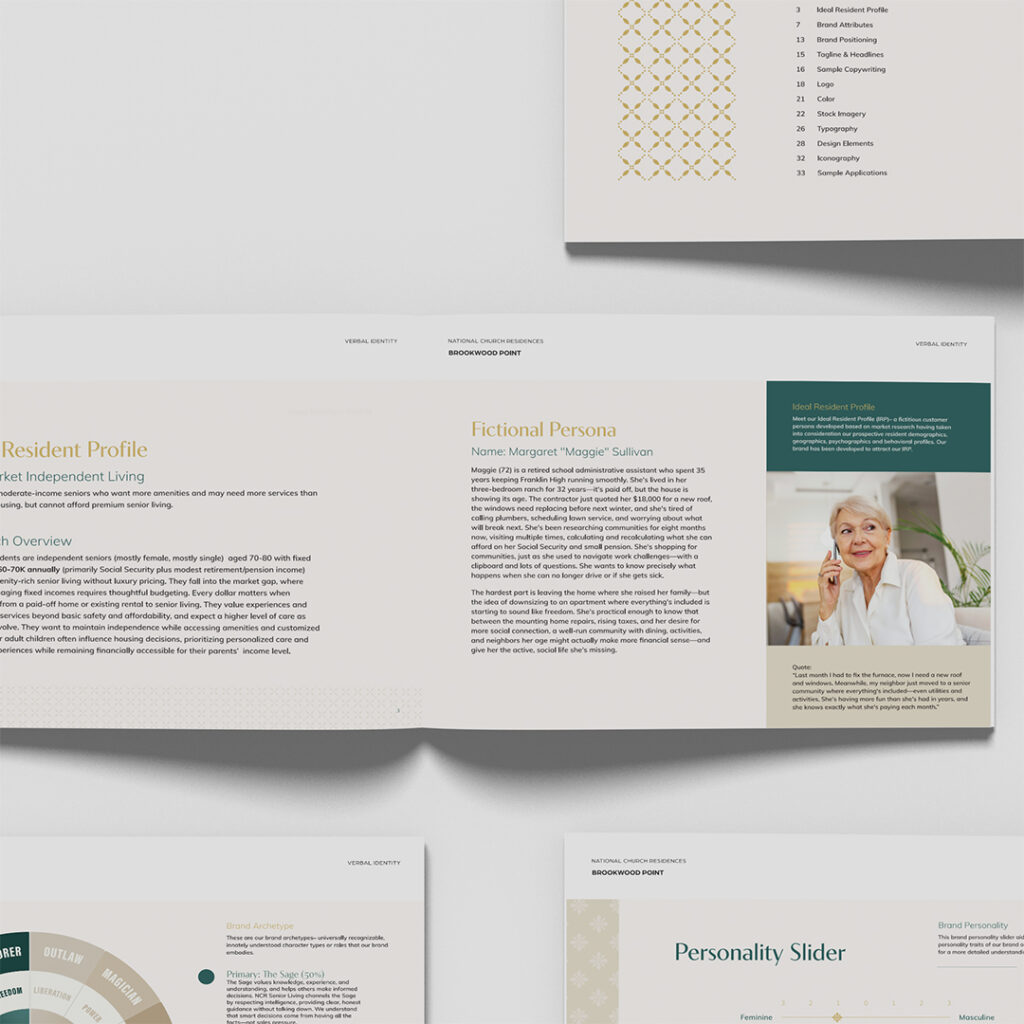
But: Branding. That’s what can slice through all that—your verbal identity (voice, positioning, how your community talks and what it stands for). Funnel your IRP research into your amenity descriptions, and you’ve got yourself a winner. A community for young downtown professionals and a 55-and-better community in the suburbs can have the identical pool. But NOT identical descriptions. One pool is where you’ll recover on a Sunday after a long week. The other is where the grandkids will beg to stay an extra hour. The amenity is a commodity. The story you tell about it is not.

What a Good Amenity Description Does

Strip it down and a strong amenity description is juggling a few things at once, (seemingly) effortlessly.

It keeps the searchable term intact, so the people and the machines looking for that amenity can find it. It leads with, or quickly lands on, the human payoff, so the reader feels something instead of scanning a checklist. It stays specific enough that it could only be describing your community, which is exactly what helps an AI tool tell you apart from the property next door when a renter asks it to compare. And it sounds like you, consistently, so that by the time someone has read three amenity descriptions they’ve started to get a feel for who this community is, the same way you start to get a read on a person a few minutes into a conversation.

What it doesn’t do is reach for the worn-out adjective when a real detail would do more work. “Spacious gourmet kitchen” asks the reader to take your word for it. “An island with enough counter space for two people to cook at once” shows them. Specificity is the most underused tool in amenity copy, and it happens to serve search and persuasion at the same time, because a concrete detail is both more memorable to a person and more citable to a machine.

Keep the Keyword Where It Counts, Then Let Loose

The fear I hear most often is reasonable: if I optimize my amenity copy, won’t I flatten my voice into the same beige paste as everyone else? Yes, if you optimize everything. So aim to optimize the spots that move the needle and leave the rest of the copy free.

Search engines and AI tools pay close attention to a few load-bearing places. The page title. The first hundred words or so. The subheadings. The alt text on your photos. Put your real amenity terms there, in plain language, and you’ve covered the part of the page the machines weigh most. They care less about whether your third paragraph cracks a joke or paints a picture. That paragraph is yours. So is most of the page.

This is also why over-stuffing amenity copy backfires now. Repeating “luxury apartments with luxury amenities in our luxury community” is skipped by humans and AI engines alike. It’s not clear or trustworthy, being stuffed like that. No ranking, no human reader. No wins. Use the amenity term where it counts, say it the way a person would say it, and let related language carry the rest, the neighborhood, the floor plan names, the small details only your community has.

And when a line is doing real emotional (branding) work, protect it. The keyword can go somewhere else. There’s rarely another spot for the sentence that makes someone feel something.

One Pool, Two Completely Different Stories

A quick illustration, same amenity, written for two different communities.

The generic version, the one everybody writes: “Take a dip in our resort-style pool, the perfect place to relax and unwind in a luxury setting.” Come on, that could be any property in the country! It leans on two phrases the industry has worn down to nothing and can’t give a person or a search engine a single thing to hold onto.

For a downtown community chasing young professionals: “A saltwater pool on the eighth-floor deck, with skyline views and enough loungers that you won’t be circling for one at 5 p.m. on a Saturday. The unofficial Sunday recovery zone.”
For a family-focused suburban community: “A zero-entry pool with a shallow end the little ones can stand in, shaded cabanas for the grown-ups, and a grill area built for the kind of Saturday that turns into six families and a lot of hot dogs.”

Same pool, pretty much. Both versions name the solid features a searcher and an AI tool can use. Both hand the reader a moment they can see themselves inside. And crucially, you could never swap them, because each one sounds like the community it belongs to. That’s the whole game.

Where to Start With Your Own List

You don’t need to rewrite all forty amenities this afternoon. Start with the handful that drive your leases, the ones your ideal resident cares about most, and run each through three quick checks. 

  • Does it use the plain word someone would search and say out loud, or did it get dressed up into something unsearchable?
  • Does it give the reader the benefit, the real moment in their life this unlocks, or does it just state the feature and hope? 
  • And does it sound like your community specifically, or like a template that forgot to fill in the name?

Get those three right on your highest-impact amenities and you’ll already be ahead of most of your comp set, who are still copying and pasting “resort-style pool” and wondering why the page isn’t converting.

The deeper work of your community’s voice (deciding what your community sounds like in the first place, to align every description) is its own project. And it’s the part that makes all the copywriting downstream easy. That’s the work we love at Zipcode Creative. If your amenity list reads like everyone else’s and you’d like it to sound like the only community worth touring, let’s talk about your project.

Building Brand Value for Multifamily Through Data & Insights

In today’s competitive market, data-driven decisions are crucial for successful brand and marketing strategies. We recently asked Anne Baum, VP of Marketing at Towne Properties, and  Stacey Hampton of Asset NOI Consulting, to share their thoughts with us. We asked: Where exactly do you find the evidence that your brand delivers results? Let’s dive into the key data sources we need to be tracking.

Find the Data that Proves the Value

A well-executed brand minimizes reliance on costly tactics like escalating marketing spend, concessions, and rent reductions. By comparing traditional marketing metrics, such as click-through rates, contacts, and tours, to operational performance, you’ll see a clear correlation between lower expenses and higher revenue.

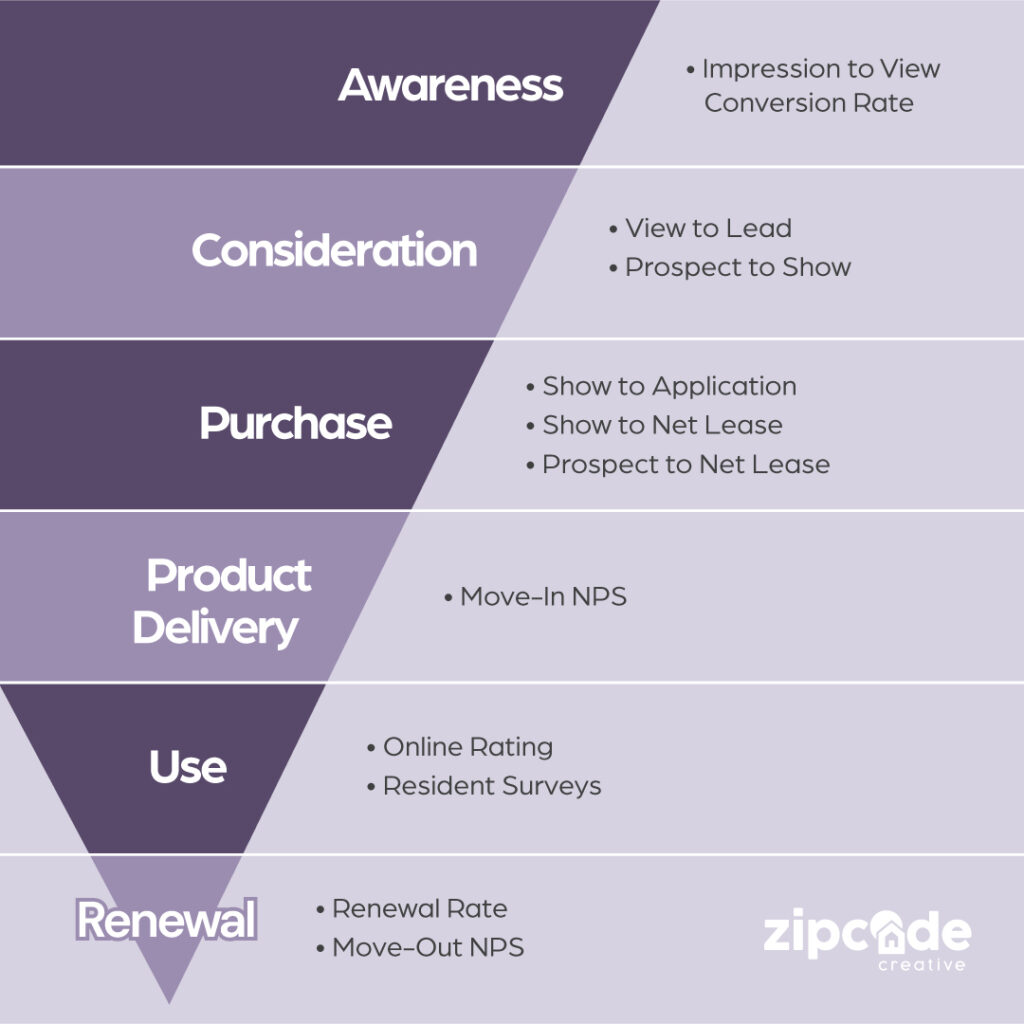
Metrics that indicate that a property has a strong brand and customer experience include a rating of 4.5 or higher on Google, a tour tour-to-application rate that is higher than the benchmark, the percentage of leases coming from referrals, and Rental Income Per Unit Compared to Budget at 100% or higher.

Online reviews and reputation management platforms offer valuable insights into resident sentiment and brand perception. High online ratings and the number of referral leases reflect strong resident satisfaction and brand strength.

Resident surveys and feedback provide crucial insights. Renewal rates and move-in/move-out NPS scores measure resident satisfaction and identify areas for improvement.

Website analytics provide valuable insights into website traffic patterns and user behavior. Analyzing website traffic helps understand which marketing channels are driving engagement and identify areas for optimization. A high bounce rate suggests that your website is not effectively engaging visitors.

How Corporate and Individual Property Brands Work Together 

The corporate brand sets the overall tone and values for the entire organization, while individual property brands reflect each location’s unique character and personality. Balance is achieved when clear brand guidelines and frameworks are established, such as standard photos, videos, tours, collateral, and sign packages. The individuality in the design and messaging should reflect the community, the people who reside there, and what’s important to them. 

With a strong operational foundation and mission at the corporate level, properties can then  reflect their purpose in their communities. 

A strong corporate brand provides a foundation of trust, quality, and consistency that resonates with potential residents. Individual property brands then build upon this foundation, offering a tailored experience that appeals to the specific needs and preferences of the target market for that particular location.

Verbal Identity Shapes Brand Personality 

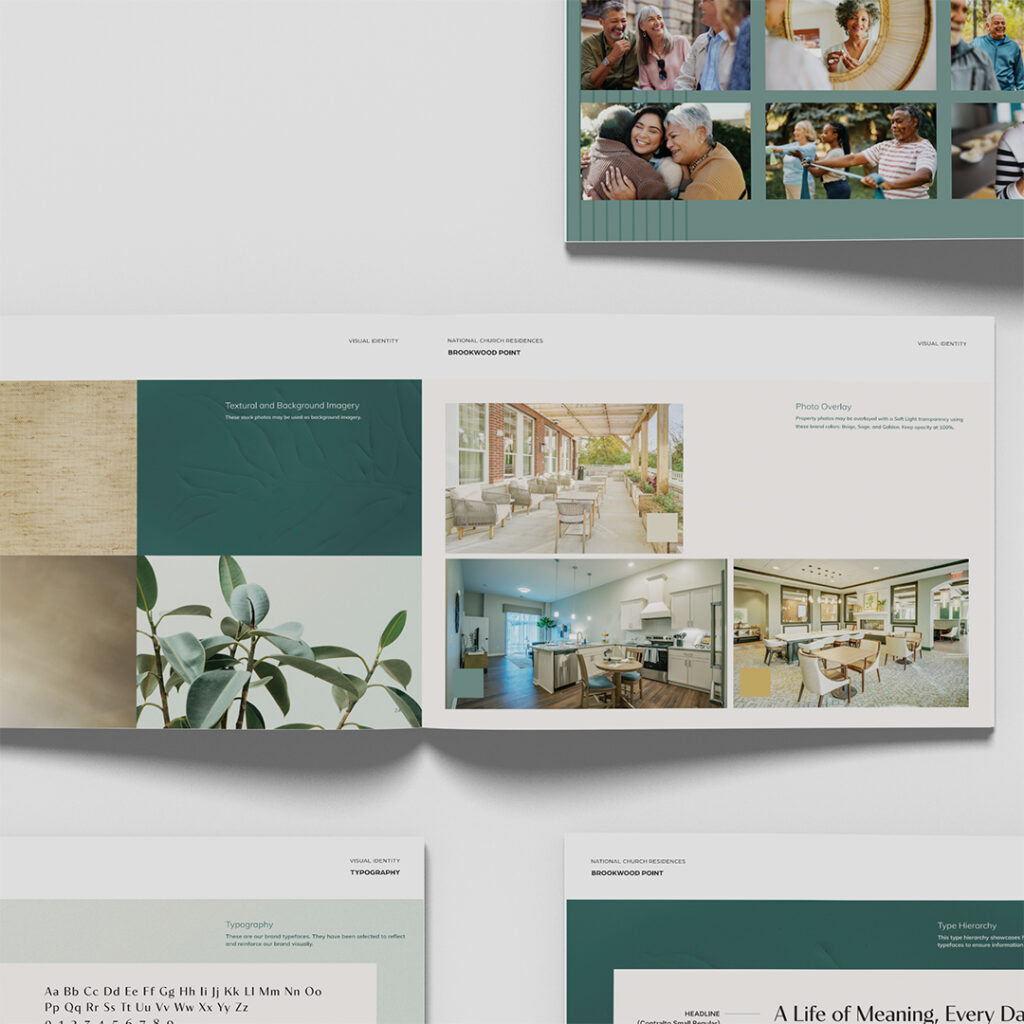
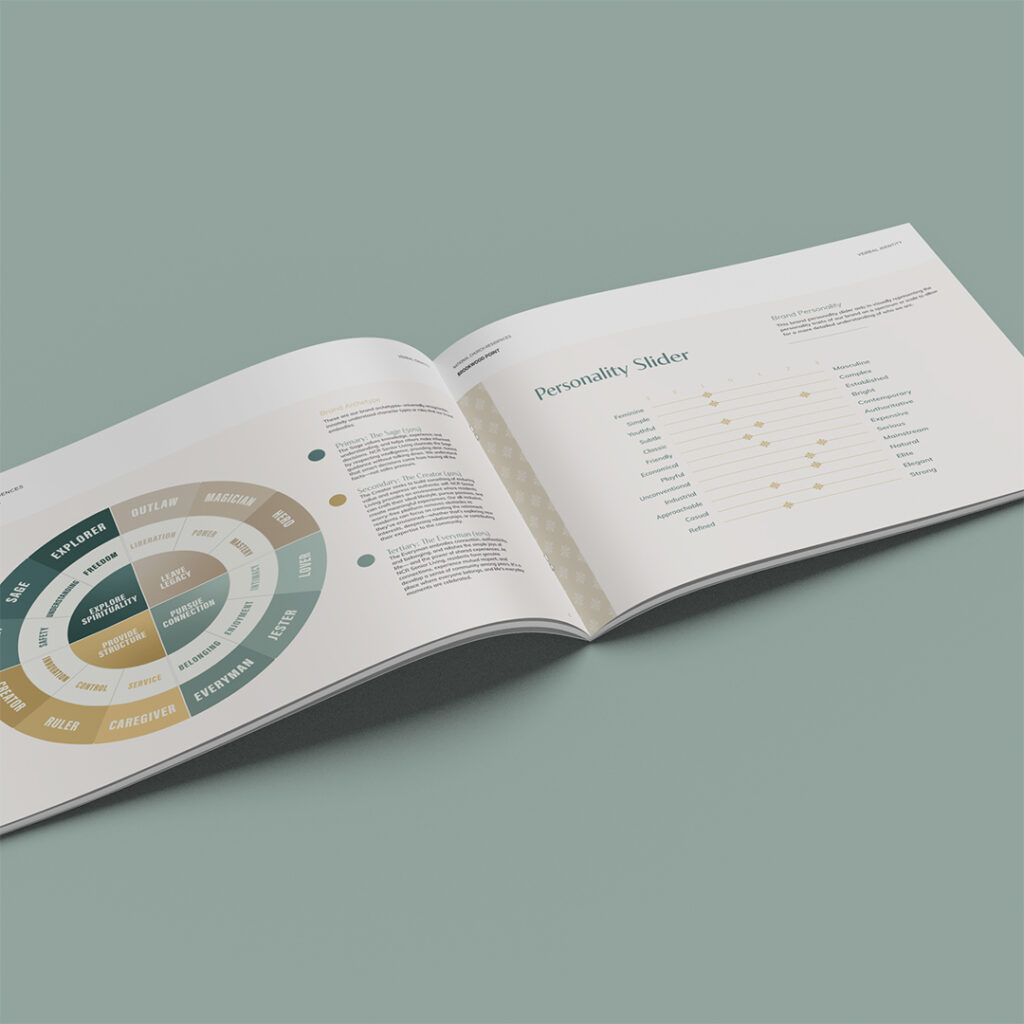
Your verbal identity (brand voice and messaging) shapes your brand personality. Crafting a verbal identity involves defining your target audience and understanding their needs and values. It tells a compelling brand story,  communicating the unique value proposition of your brand and what makes it stand out. Finally, it consists of developing a consistent tone of voice that ensures your messaging is authentic, engaging, and reflects the desired brand personality.

It is essential to train your staff to embody and deliver the defined brand promise. Part of the brand promise is the experience prospects and residents receive from staff. Additionally, make sure brand assets are readily available to site staff. Consider managing websites and marketing sources centrally to ensure brand consistency.

Bring Your Leasing Team into the Brand Development Conversation

Your leasing team is on the front lines, interacting with potential residents and gathering valuable insights into their needs and preferences. The team understands their communities, know what prospects value most, and are deeply familiar with the area they work in daily. Look to them to differentiate your branding, centered around what prospects connect with, such as nearby schools, employers, and popular local eateries.

Physical + Visual Audits 

Beyond the data, conducting regular physical audits is crucial to ensure brand consistency across all touchpoints.This includes assessing the physical condition of the property, ensuring that the property is well-maintained and reflects the desired brand image. It also includes evaluating the property’s visual appeal, ensuring that its exterior and interior design are aesthetically pleasing and aligned with the brand identity. Finally, it includes inspecting signage and branding elements, ensuring that all signage and branding elements are consistent, up-to-date, and effectively communicating the brand message. Remember, physical visits help ensure consistent branding while identifying opportunities to expand it across the community. Existing communities often see improved occupancy with the slightest refresh in branding. 

Additionally, pairing physical with digital audits is also very important to ensure no discrepancy between how the property is represented online and IRL.  It is easy to misrepresent the property through website design, photography, and staging–but discrepancies will impact the tour-to-application ratio when there is a disconnect between the online and physical brand.

Which Type of Brand Do You Want to Be?

You can focus on being the “cheapest or closest to where I go every day,” appealing to renters primarily concerned with affordability and location. Alternatively, you can focus on creating a desirable lifestyle and emotional connection, appealing to renters who seek more than just a place to live. The answer will depend on your target market, competitive landscape, and overall business objectives.

By leveraging data, conducting thorough audits, and actively involving your team in the development process, you can create a powerful brand that drives resident satisfaction, enhances the resident experience, and maximizes your bottom line. 

Remember, your brand is more than just a logo or a slogan. It’s your promise to your residents, reflected in every aspect of your business, from your marketing materials to your resident interactions.