Tag: multifamily marketing

Fair Housing Compliant Copywriting: What You Can and Can’t Say

Your leasing team just posted a gorgeous Instagram carousel. The photography is on point, the copy is punchy, the hashtags make sense. It’s reaching people and getting responses.

But: Buried in the caption is the phrase “perfect for young professionals”—and…that’s a fair housing violation.

Here’s the deal with fair housing compliance in your apartment marketing copy: the mistakes that get communities in legal trouble rarely come from someone being intentionally discriminatory. They come from copywriters, marketers, and leasing teams who genuinely didn’t know that a seemingly harmless phrase could be interpreted as expressing a preference for—or against—a protected class. (And “I didn’t know” has never been a legal defense.)

The goal of fair housing compliant marketing copy is more than simply avoiding lawsuits (though yes, that’s a big motivator). Reframe it around creating inclusive marketing that actually works harder for you. When your copy describes what your community offers rather than who it’s for, you’re casting a wider net and attracting more qualified prospects.

Let’s break down what fair housing compliance actually looks like in your copywriting—and how to stay on the right side of the law without turning your marketing into safe, beige, bland words written for anyone (and therefore: no one).

What the Fair Housing Act Actually Covers

The Fair Housing Act applies to your print ads in the local paper and it covers literally every form of communication related to the sale or rental of housing—and the language is broad. According to HUD, the law prohibits making, printing, or publishing any notice, statement, or advertisement that indicates any preference, limitation, or discrimination based on a protected class.

That includes:

  • Website copy
  • Brochure text
  • Social media captions
  • Email marketing
  • ILS listings
  • Google Ads
  • Signage in your leasing office. 

Even the verbal descriptions your leasing consultants give over the phone.

The key part to remember: it doesn’t have to be intentionally discriminatory. If it indicates a preference—even unintentionally—it can trigger a complaint or investigation.

The Seven Protected Classes (and Why Your State Probably Has More)

At the federal level, the Fair Housing Act protects seven classes: 

  • Race 
  • Color
  • Religion
  • Sex
  • Disability
  • Familial Status and
  • National origin

But it gets a bit more complicated at the state and local level. Many states and municipalities have added their own protected classes. Source of income (meaning you can’t refuse to accept housing vouchers in many jurisdictions), sexual orientation, gender identity, age, marital status, veteran status, and ancestry are among the most common additions. Connecticut, for example, adds ancestry, marital status, age, sexual orientation, gender identity, and legal source of income to the federal list.

What does this mean for your marketing? Get familiar with both the federal requirements and the specific protections in every state and city where your communities operate. A phrase that’s technically legal in one market might be a violation in another.

The National Apartment Association is a good resource for tracking state-specific fair housing laws—and it’s worth checking in with your legal counsel periodically to make sure you’re up-to-date.

The Golden Rule of Fair Housing Copy: Describe the Property, Not the People

If you remember nothing else from this post, remember this: describe the property, not the people.

This is the fundamental principle behind fair housing compliant copywriting. The moment your marketing starts describing who should live somewhere—instead of what the community offers—you’re on thin ice.

Here’s what that looks like in practice:

Instead of: “Perfect for young professionals looking for a vibrant social scene” Try: “Rooftop lounge, co-working spaces, and a walkable location near dining and nightlife”

Instead of: “Ideal family community with great schools nearby” Try: “Two- and three-bedroom floor plans available, with a playground, splash pad, and dog park on-site”

See the difference?

A note on “active adult” and “55+ community”: These terms are only legally appropriate if your property qualifies as Housing for Older Persons under the Fair Housing Act’s HOPA exemption. That means it must meet specific criteria—like having at least 80% of occupied units with one person 55 or older, along with policies demonstrating intent to house that demographic. If your property doesn’t meet HOPA requirements, age-related marketing language is a violation. When in doubt, consult your legal counsel before using any age-based descriptors.

Words and Phrases to Avoid, by Protected Class

This isn’t an exhaustive list (a general list can’t cover every situation), but it covers the most common violations we see in apartment marketing copy. Think of these as red flags that should make you pause and rewrite.

Race, Color, and National Origin

Avoid any ethnic or racial references. Don’t describe the neighborhood demographic or use terms associated with specific nationalities or cultures as selling points—unless you’re describing amenities factually (for example, “near public transit” is fine, but “near Chinatown” could be interpreted as expressing a preference). Phrases like “exclusive neighborhood,” “desirable area,” or even “safe neighborhood” can be coded language that triggers fair housing scrutiny.

Religion

Don’t reference proximity to religious institutions as a selling point (“walking distance to St. Mary’s Cathedral”). Seasonal greetings like “Merry Christmas” or “Happy Easter” in ads are generally acceptable according to HUD guidelines, but they should appear alongside inclusive messaging. Never describe the religious character of a neighborhood.

Sex and Gender

Avoid any language that implies a gender preference for residents. “Bachelor pad” or “girls’ night out vibe” in your marketing copy? Both violations. Be careful with gendered descriptions of neighborhoods or lifestyle assumptions.

Disability

This one is surprisingly tricky. Obviously, phrases like “no wheelchairs” are illegal. But you also need to be careful about terms that could seem exclusionary. The good news: “great views,” “walk-in closets,” and “walk to bus stop” are all acceptable according to HUD—because they describe the property, not a required ability. However, some fair housing advocates recommend using caution with phrases like “within walking distance,” as they could be interpreted as implying a preference for people without mobility limitations.

When marketing accessible features, be factual: “Ground-floor units available,” “Elevator access to all floors,” or “ADA-compliant features” are straightforward and compliant.

Familial Status

This is one of the most common areas where apartment marketing runs into trouble. “No children”—obviously illegal. But the violations can be much more subtle. “Adult community” (unless HOPA-qualified), “quiet community,” “perfect for couples,” or “mature living” can all be interpreted as discouraging families with children from applying.

Marketing a community that happens to attract mostly adults? Focus on the amenities and features: “Relaxing pool and spa,” “Outdoor kitchen with grilling stations,” “On-site fitness center with yoga studio.” Let people self-select based on what appeals to them—don’t do the selecting for them.

The Sneaky Ones

Some fair housing red flags don’t fit neatly into one protected class. Watch out for phrases like “exclusive,” “prestigious,” “private,” or “restricted”—all of which can imply that certain people aren’t welcome, even if that wasn’t your intent. “No Section 8” is illegal in jurisdictions with source-of-income protections. And describing a neighborhood as “up-and-coming” or “gentrified” can carry racial connotations.

What About Photos, Social Media, and Digital Ads?

Fair housing compliance puts words as well as visual content under a microscope. Your visual content is covered too—and this is an area where apartment communities frequently stumble.

Photography and imagery: If your marketing materials exclusively feature people of one race, age group, or physical ability, that can indicate a preference even without a single problematic word. The Fair Housing Institute has flagged cases where leasing offices displayed photos showing only young, white residents engaged in amenity activities. The solution: ensure diverse representation across your imagery—in age, race, ethnicity, family composition, and ability.

Social media: Your Instagram stories, Facebook posts, TikTok videos, and LinkedIn content are all considered advertising under the Fair Housing Act. We’re talking every caption, every reel script, and every comment from your official accounts must be compliant. Social media’s casual, conversational tone can make it easy to slip into phrases you’d never put in a brochure.

Digital advertising: Targeting specific demographics in paid social ads has been a major area of fair housing scrutiny. Meta settled a lawsuit with HUD over discriminatory ad targeting in housing, and the platform now requires a Special Ad Category for housing-related ads. This limits your targeting options—which is actually a good thing for compliance, even if it’s frustrating for ad performance.

ILS listings: Your listings on Apartments.com, Zillow, and other internet listing services are advertising, too. It’s tempting to write keyword-stuffed descriptions that cast a wide net—but “luxury living for discerning adults” or “serene community away from it all” in your ILS copy carries the same legal weight as a print ad.

Pro tip: If you’re using an AI tool to generate marketing copy or social media content, always have a human review every piece for fair housing compliance before it goes live. AI tools don’t inherently understand fair housing law—and they can (and do) produce problematic language. The same goes for templated copy from your property management software—review those default descriptions before they go live.

The 2026 Regulatory Shift: What’s Changing and What’s Not

Here’s some important context for 2026. HUD issued a proposed rule in January that would remove its disparate impact regulations under the Fair Housing Act—the framework that allowed enforcement action when a neutral policy had discriminatory effects, even without discriminatory intent. The National Apartment Association has covered this shift extensively.

What does this mean practically?

What’s changing: HUD is deprioritizing investigations based solely on discriminatory effects and focusing enforcement on cases with clear evidence of intentional discrimination. The proposed rule would leave the development of disparate impact standards to the courts rather than maintaining a codified federal test.

What’s NOT changing: The core Fair Housing Act advertising rules remain fully intact. You still can’t use words, phrases, photographs, or symbols that indicate a preference based on a protected class. State fair housing laws—many of which have their own disparate impact provisions—remain unaffected by this federal shift. And private fair housing organizations remain extremely active in testing and enforcement.

Bottom line: Regardless of what happens at the federal regulatory level, your marketing copy needs to be compliant with fair housing advertising guidelines. Full stop. This isn’t a “wait and see” situation.

A Quick Self-Audit for Your Marketing Copy

Before publishing any marketing content—blog posts, social captions, brochure copy, ILS descriptions, email campaigns—run through these questions:

Does this describe the property or the people? Every piece of copy should focus on features, amenities, floor plans, location details, and community offerings. If you’ve described who should live there rather than what’s there, rewrite it.

Could any phrase be interpreted as expressing a preference? Read it through the lens of each protected class. Would someone in a wheelchair feel excluded? Would a family with three kids feel unwelcome? Would someone from a different ethnic background sense they’re not the target audience?

Are your visuals diverse and inclusive? Check your website, social media, brochures, and leasing office for representation across race, age, ability, and family composition.

Do your digital ads comply with Special Ad Category requirements? If you’re running housing ads on Meta platforms, make sure you’ve selected the housing category and are following their restricted targeting rules.

Are your leasing teams trained? Your marketing team can produce perfectly compliant copy, but if your leasing consultants are describing the community as “mostly quiet professionals” on tour, that verbal description is also covered by the Fair Housing Act. Regular fair housing training for every team member who interacts with prospects—not just once during onboarding, but annually—is a non-negotiable.

Have you audited your older content? That blog post from 2019. The brochure PDFs still floating around the leasing office. The ILS listings that haven’t been updated in two years. Outdated marketing materials with non-compliant language are still a liability, even if they were written before you knew better.

Compliance Doesn’t Have to Kill Creativity

And now for the part that gets overlooked: fair housing compliant copywriting can actually make your marketing better.

When you stop relying on demographic descriptors and start describing what makes your community genuinely compelling—the amenities, the design, the location, the lifestyle your property enables—you create more interesting, more specific, more persuasive copy. “Perfect for young professionals” is lazy copywriting. “Co-working lounge with private phone booths, cold brew on tap, and gigabit WiFi” paints a vivid picture that the right prospect will be drawn to without you ever having to tell them they’re the right prospect.

That’s the creative opportunity hiding inside fair housing compliance: write about what you have, not who you want, and you’ll attract the residents who actually belong there.

Need help creating apartment marketing copy that’s both brand-forward and fully compliant? Zipcode Creative specializes in multifamily copywriting that sounds human, drives leasing results, and keeps your communities on the right side of fair housing law. Let’s talk about your next project.

The Anatomy of an Apartment Email That Gets 40%+ Open Rates

Your apartment community’s email just landed in 500 inboxes. Three hours later, 47 people opened it. That’s a 9.4% open rate—and it’s quietly killing your leasing pipeline.

Here’s what makes this frustrating: email still works. According to HubSpot’s research, the average open rate across industries hovers around 42-43%. Campaign Monitor found that segmented email campaigns see open rates 14.3% higher than non-segmented ones. The data makes it crystal-clear: email marketing remains one of the highest-ROI channels in property marketing.

So why are so many apartment emails collecting digital dust?

The answer usually isn’t the platform or the timing or even the offer. It’s the brand—or rather, the absence of it. When your emails look and sound like they could come from any apartment community in America, they get treated like every other apartment email: ignored.

Let’s break down how brand consistency, voice, and visual identity actually drive email performance.

The Problem with Most Apartment Emails

Most apartment emails fail before anyone reads a single word of body copy. They fail in the preview pane. In that split-second decision between “this might be worth my time” and “delete.”

But the deeper issue isn’t just weak subject lines or bad timing. It’s that most property marketing teams treat email as a separate channel with its own rules (or no rules)—disconnected from the brand they’ve built everywhere else.

Think about it: your website has a distinct personality. Your signage was carefully designed. Your leasing team was trained on how to talk about the community. But your emails? Assembled from generic templates, written by whoever had five minutes, and sent without a second thought about whether they sound like you.

The result: Brand fragmentation. A prospect who fell in love with your community’s personality on Instagram or during a tour gets an email that feels like it was written by a different company entirely. That disconnect erodes trust—and trust is what drives email opens. 

When your emails feel consistent with every other touchpoint, recipients learn to recognize (and anticipate) your messages. Recognition drives opens. Opens drive engagement. Engagement drives leases.

Why Brand Consistency Matters More Than You Think

Brand recognition isn’t just a nice-to-have in email marketing—it’s the foundation of performance.

Here’s what happens when someone sees your email in their inbox: In about two seconds, they decide whether to open it, ignore it, or delete it. That decision isn’t based on a careful evaluation of your subject line’s merits. It’s based on pattern recognition. Do I know this sender? Do I trust them? Has their content been worth my time before?

Consistent branding builds that pattern. When your sender name, visual style, and voice feel familiar, you’re not starting from zero with every send. You’re building on previous positive experiences.

Research from Lucidpress found that consistent brand presentation across all platforms can increase revenue by up to 23%. While that study looked at overall brand consistency, the principle applies directly to email: when recipients instantly recognize your community’s emails as yours, they’re more likely to engage.

This is why the most successful apartment communities approach email as a brand expression channel, not just a communication tool. Every email is an opportunity. Take that opportunity to reinforce who you are and why that matters to both your residents and prospects.

The Subject Line: Your Brand’s First Impression

Your subject line is the first (and sometimes only) chance your brand gets to make an impression. It should sound like you—not like every other apartment email in someone’s inbox.

Generic subject lines get generic results. “New Listings Available!” and “Don’t Miss Our Spring Special!” could come from literally any apartment community. They’re forgettable because they’re brandless.

Branded subject lines perform better because they’re distinctive. If your community’s personality is warm and welcoming, that should come through. If you’re urban and edgy, let that show. The goal isn’t to trick people into opening—it’s to signal that this email is worth their time because it comes from a community they already connect with.

Some principles that work across brand personalities:

Specificity beats vague. “Your tour at The Emery—next steps” outperforms “Thanks for visiting!” because it tells the recipient exactly what they’ll find inside. Specific subject lines also feel more personal and intentional.

Personality should show, not hide. If your brand voice uses humor, a subject line with a wink can outperform a straightforward one—for your audience. The key is alignment. A playful subject line from a playful brand feels authentic. The same line from a sophisticated, upscale brand feels off.

Consistency builds anticipation. When recipients learn that your emails deliver value in a recognizable voice, they start looking for them. That’s when open rates go from acceptable to exceptional.

Voice, Tone, and the Art of Sounding Like Yourself

This is where most apartment emails fall apart—and where brand-conscious communities pull ahead.

Your brand voice is how your community sounds when it speaks. It should be consistent whether someone’s reading your website, talking to your leasing team, or scanning your email. When that voice wobbles—professional on the website, robotic in emails, overly casual on social—prospects notice the inconsistency even if they can’t articulate it.

The best apartment emails read like they were written by a person your audience would want to hear from. Not a corporate announcement. Not a sales pitch. A voice that’s fully you.

But not every email has to be a creative writing exercise. Instead:

Your greeting should feel natural for your brand. “Hi Sarah” works for most communities. “Hey Sarah!” works for some. “Dear Ms. Johnson” works for others. There’s no universal right answer—greet the way YOUR BRAND would greet (casually or formally, etc.)

Your body copy should reflect your personality. A brand that’s warm and approachable shouldn’t suddenly sound formal and distant in email. A brand that’s sophisticated and refined shouldn’t try to be casual just because “that’s how email works.”

Your calls to action should match your overall tone. “Schedule a tour” is straightforward. “Come see for yourself” is warmer. “Let’s find your perfect floor plan” is collaborative. Each signals something different about who you are.

The goal is that someone who’s interacted with your brand anywhere else would read your email and think, Hm! I’ve heard that voice before!

Visual Brand Elements That Drive Recognition

Before anyone reads a word, they see your email. And what they see either reinforces your brand or confuses it.

Sender name and “from” address are the most overlooked brand elements in email. “The Emery Apartments” feels different from “Sarah at The Emery.” Both can work depending on your brand personality—but the choice should be intentional, not accidental. For prospect nurture sequences, a human name often outperforms a property name because it signals personal attention. For community-wide announcements, the property name may carry more authority.

Visual design should extend your brand identity. Your email template is an extension of your brand guidelines—same fonts, same colors, same design sensibility. When someone who’s seen your website opens your email, the visual language should feel immediately familiar.

Photography matters more than most teams realize. If your website features professional photography of your community, your emails should too. Stock photos—especially obvious ones—undermine the authenticity you’ve built elsewhere.

Preview text is often wasted. It’s the snippet that appears after your subject line in most email clients—40-90 characters of valuable brand real estate. Don’t let it default to “View this email in your browser.” Use it to extend your subject line’s personality and give readers another reason to open.

Keep your visuals consistent, down to the smallest details. If your brand uses a specific shade of blue, that blue should appear in your email headers. If your typography is clean and modern, your email fonts should follow suit. These details accumulate into recognition.

Timing, Frequency, and Staying Top of Mind (Without Being Annoying)

Brand consistency extends to how often you show up—and when.

Predictable timing reinforces brand trust. If you send a resident newsletter every first Thursday of the month, your residents learn to expect it. That expectation is a form of brand relationship. Random, sporadic sends feel less intentional and carry less weight.

For prospect communications, the rhythm matters too. A well-paced nurture sequence that delivers value at predictable intervals builds familiarity. A desperate flurry of emails during lease-up panic feels like exactly what it is—and damages the brand perception you’ve worked to build.

Over-communication is a brand problem, not just a tactical one. When you email too frequently, you’re not just annoying people—you’re training them to devalue your brand’s communications. Each email that gets ignored makes the next one easier to ignore.

The principle: only send emails worth opening. If you don’t have something valuable to say that’s aligned with your brand’s purpose, don’t hit send just to stay visible. Silence is better than noise when noise erodes trust.

Segment to stay relevant. One way brand consistency breaks down is when you send the same message to everyone regardless of their situation. A prospect who toured yesterday and someone who went quiet six months ago shouldn’t receive identical emails. Neither should someone looking for a studio and someone looking for a 3BR.

Segmented campaigns see dramatically higher engagement—Campaign Monitor puts it at 100% higher click-through rates—because they feel relevant. And relevance is really just brand consistency at the individual level: communicating in a way that shows you understand who someone is and what they care about.

Putting It All Together

Hitting open rates of 40% or more isn’t about finding one magic trick. It’s about treating email as what it really is: an extension of your brand, not a separate channel with different rules.

Brand recognition built through consistent visual identity means recipients see your name and immediately know what to expect.

Brand voice carried through subject lines and body copy means your emails sound like you—not like a boring, generic property management template.

Brand trust developed through valuable, well-timed content means recipients have learned that your emails are worth their attention.

Each element contributes a few percentage points. Combined, they’re the difference between emails that get ignored and emails that drive tours, applications, and leases.

The apartment communities seeing exceptional email performance aren’t doing anything wild or off-the-wall. They’re just applying the same thoughts (and rules!) around branding to email that they apply everywhere else—with consistency and intention.

And in a channel where most competitors are still sending brandless, template-driven content to unsegmented lists, that consistency becomes a genuine competitive advantage. 

Start sharpening your subject lines, people.


Building a brand that shows up consistently everywhere—including the inbox? That’s what Zipcode Creative does. Let’s talk about how your community’s brand can work harder in every channel.

How Multifamily Marketers Are Using AI Without Replacing Creativity

The panic was predictable. When ChatGPT launched, half the multifamily marketing world thought they’d be replaced by robots within 18 months. The other half secretly wondered if they could finally stop writing the same amenity description for the 47th time.

Three years later, the reality is more nuanced—and a little more interesting. AI hasn’t replaced apartment marketers. But it has fundamentally changed what the job looks like, how teams spend their time, and what “good” apartment marketing even means anymore.

If you’re still figuring out where AI fits into your marketing strategy (or if your leadership keeps asking why you haven’t “implemented AI” yet), this is the practical breakdown you need.

The AI Question Every Multifamily Marketer Is Asking

Here’s the question that keeps coming up at industry conferences, in Slack channels, and in every budget conversation: How do we use AI without making everything sound like it was written by a robot?

It’s the right question. Because here’s the thing—AI tools have gotten remarkably good at producing content. But content and brand aren’t the same thing. Your community’s voice, its personality, the reason a renter chooses you over the identical-looking property down the street? That’s not something you can outsource to a language model.

The multifamily teams getting this right aren’t asking “How can AI do our jobs for us?” They’re asking “Where can AI handle the repetitive stuff so we can focus on the work that actually moves the needle?”

That distinction matters more than you’d think.

Where AI Actually Helps Apartment Marketing Teams

Let’s get into the deets. After watching how operators are actually using these tools (not how vendors say they should), we’re seen a few patterns emerge:

Content ideation and first drafts. This is where generative AI shines. Need 20 subject line variations for your email campaign? A starting point for your neighborhood guide? Social media caption ideas that don’t make you want to cry? AI can generate options in seconds that would have taken your team hours to brainstorm. The key word is starting point. Teams that dump AI output directly onto their website without editing are the ones creating the sea of generic, forgettable content that’s flooding the internet right now.

Data analysis and pattern recognition. AI tools can now analyze customer data—search queries, engagement patterns, feedback themes—and surface insights that would take humans weeks to uncover manually. Property managers report using AI to identify which amenity features drive the most interest, what questions prospects ask repeatedly (hint: parking and pets!), and where their marketing funnel is leaking.

Repetitive communication tasks. Answering the same pricing and availability questions at 11 PM on a Tuesday? AI can handle that. Sending follow-up reminders to prospects who haven’t scheduled a tour? AI can handle that too. This isn’t replacing human connection—it’s making sure no lead falls through the cracks while your team is doing actual human work.

Personalization at scale. AI makes it possible to tailor content and campaigns to specific audience segments without creating 43 different versions of everything manually. The technology can adjust messaging based on where a prospect is in their search journey, what floor plans they’ve viewed, and what their stated priorities are.

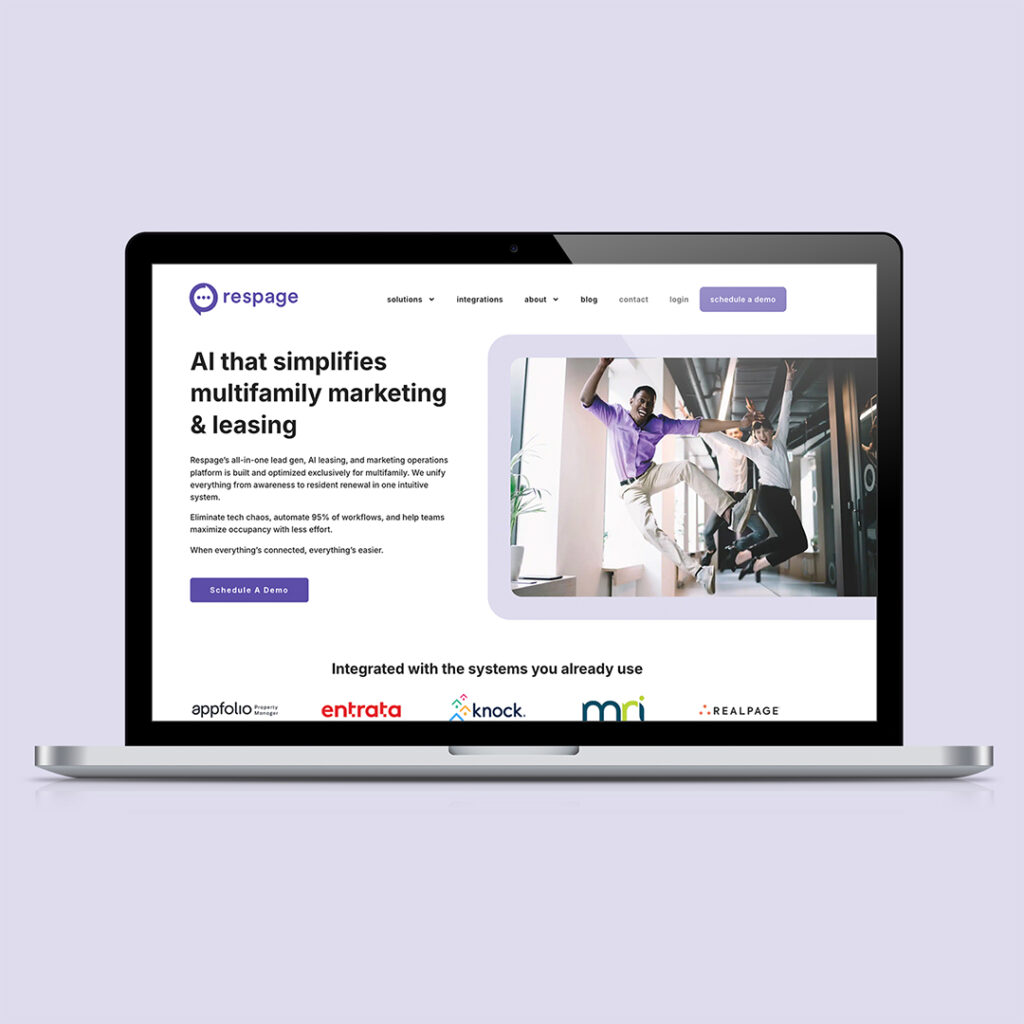
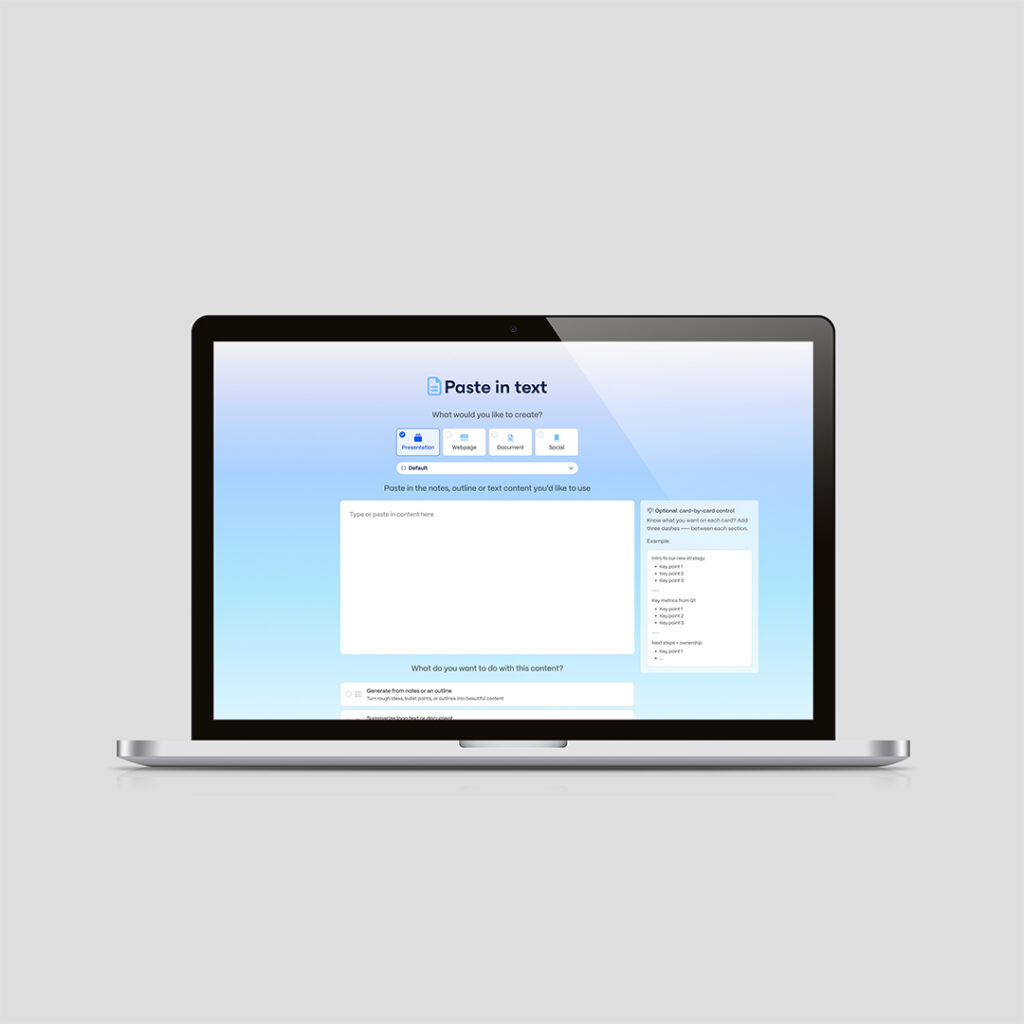
Laptop displaying Respage website homepage featuring AI multifamily marketing platform with headline and integration partner logos

The Rise of AI Leasing Assistants

If there’s one AI application that’s actually, genuinely transformed multifamily operations, it’s the AI leasing assistant. The clunky chatbots five years ago could never! They could only answer, what, three questions before hitting a dead end? Today’s AI leasing assistants—tools like RealPage’s AI Leasing Agent, EliseAI, Zuma, ResMate, and LeaseHawk’s ACE—can handle increasingly sophisticated conversations.

We’re talking AI that can quote real-time pricing and availability by pulling from your PMS; schedule tours across voice, chat, email, and text; answer detailed questions about pet policies and lease terms; qualify leads before they ever reach your leasing team, and hand off seamlessly to human agents when conversations get complex.

The numbers are hard to ignore. Properties using AI leasing assistants report response times dropping from hours to minutes—in some cases, under two minutes—and lead-to-tour conversion rates improving by 20-30%.

But here’s the nuance that matters: the best implementations aren’t removing humans from the equation. They’re letting leasing teams focus on what humans actually do better—building relationships, reading emotional cues, solving complex problems, and creating experiences that make prospects feel genuinely welcome.

AI and Search: Why GEO Is the New SEO

This is the shift that’s catching a lot of apartment marketers off guard. The way renters search for apartments is changing—and your SEO strategy from 2022 might not cut it anymore.

As of late 2025, over 20% of Google searches trigger AI Overviews—those conversational summaries that appear at the top of search results. When an AI Overview shows up, organic click-through rates drop by more than 34%. That’s a massive shift in visibility.

And it’s not just Google. Renters are increasingly turning to ChatGPT, Claude, Perplexity, and Microsoft Copilot to help with their apartment search. They ask: “What’s a good apartment near downtown Austin with a dog park and under $2,000?” and getting AI-generated recommendations that pull from property websites, Google Business Profiles, ILS listings, and review platforms.

This is where GEO—Generative Engine Optimization—comes in. It’s the practice of structuring your content so AI tools can understand, parse, and cite it accurately. That means clear, well-organized information; conversational FAQs that match how renters actually ask questions; accurate and consistent data across every platform where your property appears; and structured content that AI can easily reference.

The properties winning in AI search aren’t just optimizing for keywords anymore. They’re optimizing for clarity, accuracy, and machine readability. If your website content is vague, outdated, or inconsistent with your ILS listings and Google Business Profile, AI tools will either ignore you or surface incorrect information about your property. Neither outcome is good.

Where AI Falls Short (And Why That Matters)

For all the hype, AI has real limitations that apartment marketers need to understand—especially before handing over the keys to their brand.

AI doesn’t understand context the way humans do. Language models can produce grammatically correct, even persuasive copy. But they don’t actually understand your community’s story, your residents’ real experiences, or the subtle positioning decisions that differentiate your brand. They can’t tell when a “creative” idea crosses the line into tone-deaf territory or when a phrase that sounds clever on paper will fall flat with your actual audience.

AI-generated content often sounds…generic. This is the trap so many marketers are falling into. When everyone’s using the same tools with similar prompts, the output starts to sound weirdly similar. Scroll through apartment websites right now. See the same phrases, the same structures, the same unfortunate, forgettable descriptions. AI makes it easy to produce content at scale. It doesn’t make it easy to produce content that stands out.

AI doesn’t fact-check itself. Large language models can generate information that sounds authoritative but is completely inaccurate. They can invent statistics, misremember details about your market, and confidently state things that aren’t true. Every piece of AI-generated content needs human review before it goes live—full stop.

AI can’t replace relationship-building. At the end of the day, renting an apartment is a significant life decision. Prospects want to feel understood, valued, and confident in their choice. AI can streamline the process, but it can’t create the genuine human moments that turn prospects into residents and residents into community advocates.

The Fair Housing Consideration You Can’t Ignore

Here’s the uncomfortable truth that doesn’t get enough attention: AI tools can perpetuate bias.

Because language models learn from existing data—including data that reflects historical biases—there’s a real risk that AI-generated content or AI-driven recommendations could produce outputs that violate Fair Housing laws. The bias isn’t always obvious. It can show up in subtle word choices, in which amenities get emphasized for different audience segments, or in how AI systems prioritize and respond to different types of prospects.

This isn’t hypothetical. Fair Housing regulations prohibit discriminatory practices based on race, color, religion, national origin, sex, familial status, and disability. If your AI tool is generating marketing content or responding to prospects in ways that could be interpreted as discriminatory—even unintentionally—you’re exposed.

The solution isn’t to avoid AI entirely. It’s to implement guardrails, review AI outputs for potential bias, and never use AI as a replacement for professional legal review on anything that touches Fair Housing compliance. Your leasing team should review AI-generated communications, your marketing team should review AI-generated content, and no AI tool should have free rein to make decisions that could create liability.

How to Use AI Without Losing Your Brand Voice

So how do you keep AI’s efficiency without making marketing content that sounds…oddly familiar? Use this guidance:

Use AI for speed, not for voice. Let AI handle the repetitive tasks—first drafts, data analysis, scheduling, follow-ups—but keep human hands on anything that directly represents your brand personality. Your community’s voice is an asset. Don’t dilute it by letting algorithms make your creative decisions.

Invest time in prompting. The quality of AI output depends heavily on the quality of your input. Generic prompts produce generic content. Specific, detailed prompts that reference your brand voice, target audience, and specific context produce significantly better results. This is a skill worth developing.

Edit everything. AI-generated content is a starting point, not a final product. The best multifamily marketers are using AI to generate drafts, then refining until it sounds like their brand.

Stay consistent across touchpoints. If you’re using AI for some communications and human writers for others, your brand voice can drift. Create clear guidelines for how AI should be used, what review processes apply, and what standards the final output needs to meet.

Keep testing. AI tools are evolving a little more, every single day. What worked six months ago might not be the best approach today. Stay curious, keep experimenting, and be willing to adjust your strategy as the technology—and best practices—continue to develop.

The Bottom Line on AI in Apartment Marketing

AI isn’t going to replace apartment marketers. But apartment marketers who learn to use AI effectively will have a significant advantage over those who don’t.

The teams getting this right are using AI to eliminate busywork and free up time for strategic, creative, relationship-building work. They’re leveraging AI leasing assistants to ensure no prospect waits hours (or days) for a response. They’re optimizing content for AI-powered search engines while protecting the human voice that sets their brand apart. (And they’re staying up-to-date on its limitations and risks—especially around Fair Housing compliance.)

The question isn’t whether to use AI in your apartment marketing. The question is how to use it in ways that make your team more effective without sacrificing what makes your brand unique.

Make sure you get the answer to that question right.

Branding Beyond Prospect Marketing

Brand everything.

We’re serious.

There are so many places where residents interact with your brand that…whoops, weren’t ever on your radar, and certainly not in your budget!

This is just a little (okay, sort of exhaustive) list of things and ways to use your brand onsite for a fuller resident experience—beyond prospect marketing.

Where Your Brand Really Lives

It’s completely typical and expected to cover the leasing office in your marketing budget. It’s lovely and all color-coordinated, down to the pens in a little mug. Beautiful brochures. Profesh photography. Sleek website.

But then the residents move in.
And they’re met with generic maintenance forms.
And Times New Roman font on their move-in checklist.

And amenity space signage that…might have gotten printed off at Office Depot.

Eek.

This tells your residents that you’re more than willing to put in the effort to get them to sign on the dotted line and collect their deposit, but don’t really care what happens after that. If you’re frontloading your entire budget on pre-leasing, with crumbs left for post-move-in, it will be clear in the 300+ missed branding touchpoints that never see the light of day.

Keep your brand promise and retain your residents. Every time you use your brand after the lease can help with resident satisfaction, and therefore: renewal rates. That’s money. But somehow, these brand touchpoints don’t really come into the budget discussion.

Let’s walk through a resident timeline and events where you can get that brand boosted.

Branding At Pre-Move-In

This is the sweet spot between the signed lease and the move-in day. Future residents are excited, anticipating what it’s going to be like living there.

Don’t let them down!

Make sure you’ve got budget lined up to brand these pieces well:

  • Lease signing documents and folders
  • Welcome email series (use branded templates, please!)
  • Move-in instruction packets
  • Parking pass/key fob presentation materials
  • Pre-arrival resident portal invitation

Everything here is drawing the brand into their experience. Do it well, and do it according to your guidelines. Nothing is too small to be branded. (See: parking passes!)

Move-In Day Brand Touchpoints

The last thing a resident wants to do is worry on their move-in day, “Was this the right choice?” So this is the best chance to prove that you’re still the one! Look professional. Maintain consistent branding. Let them encounter your brand everywhere they look.

  • Welcome packets at the door
  • Move-in checklist
  • Branded welcome gift
  • Elevator padding or moving signage
  • Door hangers for neighboring residents (“Pardon our noise!” -Your New Neighbor)
  • Emergency contact cards/magnets

Everything at move-in that’s well branded tells your residents: You’re home. Unpack, relax, we’ve got you covered.

Regular Residence Touchpoints

Now comes the tricky run-of-the-mill, everyday stuff. Small details that show care, and attention to detail.

Make sure you don’t miss out on branding these small things—they add up.

AMENITIES

It’s not hard to get logos on these at the very least. These are seen every day, and if your signage is Bold Arial printed off on printer paper and taped to a wall, that tells your residents: “Signed the lease? Cool! We don’t care all that much anymore.”

  • Coffee bar supplies/signage
  • Co-working space materials
  • Clubhouse event announcements
  • Gym equipment labels and class schedules


COMMUNICATIONS

Ongoing communications are a regular chance to prove yourself to your residents, over and over again. Whether sending out a community newsletter (again: templates are great) or asking residents to re-up their lease—why would they if they can’t feel they trust the community brand? The old branding = trust = loyalty is the key equation.

Look for the best ways to brand the following:

  • Resident portal (if possible)
  • Maintenance request confirmations
  • Receipts and reminders for rent payments
  • Community newsletter (email or print)
  • Event announcements
  • Maintenance notice door hangers or leave behind cards
  • Package delivery notice
  • Lease renewal information
  • Utility payment instructions
  • Community updates (construction, amenity closure)

So, which will it be: “We’re on top of everything!” or “Oops, that’s not an issue is it?” Residents are noticing how much care you put into every interaction and every email or notice—when it’s not followed through with consistent branding, it sticks out, in a bad way.

MAINTENANCE AND OPERATIONS

Even if most of the work is happening out of sight of the residents, it’s best practice to have your brand there if they see it. This isn’t the glamorous, fun stuff. But it is the real stuff. And when they need to let in a maintenance person, they want to be certain they work for the community—the logo there is a symbol of trust.

  • Maintenance staff uniforms / name badges
  • Work order forms
  • Move-out inspection checklist (on the opposite end of move-in checklists!)
  • Vendor access instructions
  • Contact info for utilities
  • Emergency procedure signs

Building The Lifestyle Brand

Using the brand’s logo, colors, fonts, has a use—it’s building up the lifestyle brand that you’ve been paving the way for, ever since residents signed a lease. While residents live there, consider every opportunity to brand the lifestyle promised.

Brand the:

  • Event invitations
  • Community event signs/materials
  • Resident birthdays/anniversary cards and appreciation gifts
  • Holiday decor and messaging
  • Social media posts
  • Referral program materials
  • Community board posts

If the brand’s thing is making the community different, unique, and created with the resident in mind, get the lifestyle pieces aligned with the brand, too. Generic brands don’t care about these details—but your brand does.

Renewal and Departure

When it’s time to part ways, maintain a hold on branding—now is not the time to give up. Keep all of these branded, and your residents may think twice about leaving (or may come back after a time away):

  • Lease renewal marketing materials
  • Renewal incentive announcements
  • Move-out instruction packets
  • Forwarding address forms
  • Security deposit return information
  • Exit survey materials (+ “We’re sad to see you go” messaging)

Don’t let residents leave with a bitter taste in their mouths—keep things branded and streamlined and professional until the very end. You never know when they may recommend you or go to another one of the properties in the portfolio in a new city.

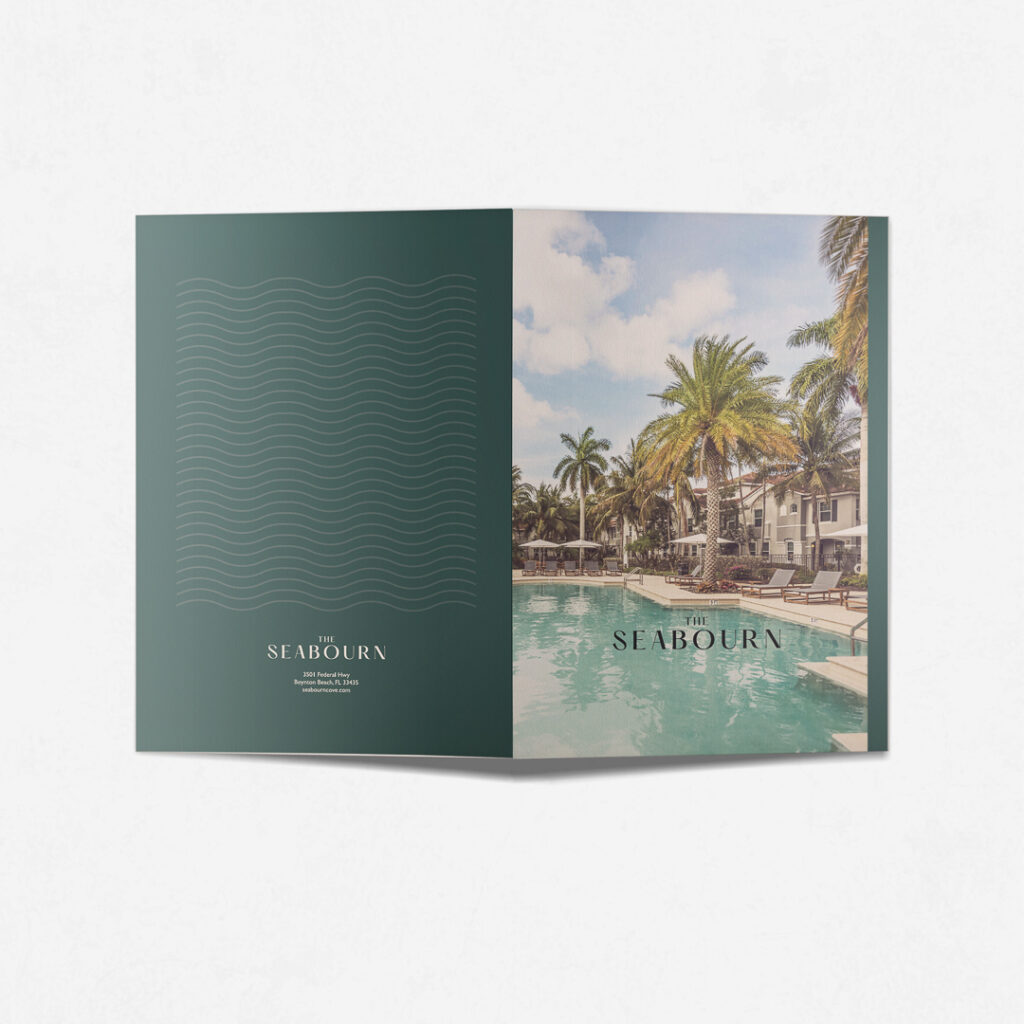
The Seabourn branded presentation folder featuring teal wave pattern and pool photography demonstrating cohesive apartment community marketing materials
The Seabourn branded review request cards with QR code and pool imagery encouraging resident feedback and online reviews
The Seabourn branded circular stickers in teal green with white logo showcasing apartment community brand consistency across small touchpoints

Why “Brand Everything”?

It’s good business. Branding everything is an investment. In our brand promise blog, we talk about how much cheaper it is to have renewals rather than new leases. Every branded resident experience impacts that decision.

If you want to save money on turnover costs (to refill the unit) when comparing renewals vs. new resident prep (paint, carpet, cleaning, minor repairs) then add it all up:

  • Consistent professional touchpoints improve resident satisfaction scores
  • Property management quality and details almost always end up in online reviews (they’re paying attention!)
  • Templates for the whole portfolio create efficiency
  • Residents see when community managers care about the details

If renewal rates go up by 2% or 3% because of branded touchpoints, that budget is self sustaining—get those line items added!

Start Here

Wondering what makes the most sense to address first?

Go with the high impact, high visibility pieces (big things that get seen frequently):

  1. Email templates
  2. Event or announcement flyers or signage
  3. Move-in packets

Get these branded well. That’s your bread and butter. Then you can move on to the “nice to have” pieces, like maintenance notices, or even branded seasonal decorations.

Branding is not just for marketing. Well after the lease is signed, the brand should continue to prove to the resident that they made the right choice. Renewal isn’t a given. Break the brand promise, and they might break the lease. 

It doesn’t have to be perfect all the time, but start with the most visible pieces and go from there, until everywhere you look, the brand is undeniable. Audit those touchpoints post-lease signing and find the places where your brand system can get a boost.

How Voice Search Should Influence Your Apartment Community Naming Strategy

“The Residences at…” format is failing.

Why?

Well, for one: “Alexa, find apartments near me with a gym.”

Everything is getting smarter these days. And prospects are shifting their home search habits to match. But somehow our apartment community names are too complex, using directional or localized differentiators. This may have worked fine in the past, when voice to text and smart speakers didn’t exist. But it’s 2025, and over 50% of searches are predicted to be conducted, which means prospective residents are using voice search to find their next apartment.

That means if you’re not naming for ease of pronunciation and memorability, you might not be capturing a significant percentage of the population. Voice search optimization enhances your property’s discoverability, especially for location-based queries. That mismatch is costing you visibility, and therefore: dollars.

The Voice Search Problem with Traditional Apartment Names

There are a lot of communities out there. And plenty of them have special preambles for differentiation, like “The Residences at…”

Cool, but that’s old hat, for one. And for two: it’s going to fail when the voice searches start picking up.

Why won’t “The Residences at Maple Grove Station” work? First and foremost, the search they’re doing is likely not even using a name—they’re starting out their apartment prospect journey by narrowing it down, saying “dog-friendly apartments near me” because they don’t know you yet. But when they do know you, make sure your name works well for voice search. Avoid these problems:

It’s too long for natural speech patterns. If you won’t order a Rooty-Tooty-Fresh-and-Fruity from IHOP, there’s no way you’re saying “The Residences at Maple Grove Station” to anyone, not even a robot.

Difficult to pronounce correctly on the first try. Similarly, your prospects might end up saying Grove Maple or Station Grove all because there’s just too many words to keep straight.

Gets garbled or misunderstood by voice assistants. The more words, the more chances for the smart speaker to interrupt when your prospects hesitate: “The Residences at Maple…um…” “SORRY, I CAN’T FIND RESULTS FOR….THE RESIDENCES AT MAPLE.”

Prospects won’t recall the name to search again later. Too long, too much to remember. Try creating less hoops to jump through with a simpler name.

Smart home ecosystem adoption is rising, and with it, can almost certainly come voice assisted apartment searches. Name your communities with that in mind.

How Voice Search is Different From Typed Search

VOICE SEARCH VS. TYPED SEARCH

Typing is different from voice search. For a number of reasons.

Voice queries are more conversational and often longer than typed searches. For example, a prospect wouldn’t type “downtown apartments.” They’d say “apartments near downtown”—because that’s how they actually talk. Next, because it’s audio and not text, the pronunciation is vital (more so than the spelling). As long as you say it correctly aloud, the voice assistant can likely help. Plus, search queries for voice are generally longer and more specific. That’s because prospects are thinking aloud while they voice search, rather than tapping the backspace button to correct or shorten their query. It’s easier to rattle something off out loud rather than typing in all the words that come to mind when you’re looking for “apartments near downtown with public transit nearby.” Finally, users can’t see and compare multiple options at once. They get one result with voice search—whichever one the voice assistant decides to provide them with.

WHAT VOICE ASSISTANTS WANT

Voice assistants prioritize the details that make their jobs easier and lessen failure rates (to keep users coming back). In terms of names, voice assistants will prioritize:

  • Short, memorable, easily pronounceable names
  • Clear phonetic distinction from competitors
  • Names that match natural speech patterns

Naming With Voice Search In Mind: The New Rules

BEST PRACTICES

You want to know the best way for your community to be the result that’s given back to your prospects? Two simple (and relatively easy) rules to optimize for voice search:

Keep it short. Syllables add up quickly. And from what we’re seeing, 1-3 syllables is the right amount. So, go with “Velara” rather than “The Residences at Velara Pointe.” Sounds fancy, but may end up a little too exclusive when no one can find it with voice search. (Read more about how we named Velara using strategic brand development.)

Make it phonetically different. Not unpronounceable. Different from competition or common words. If there’s a nearby community named Moonstone Heights, don’t go for a similar sounding “Movado Rise” name. We know you wouldn’t, but…just keep similar auditory qualities in mind.

PRO TIPS

Consider how the name might work in a variety of accents or dialects. (Look at the research!)

Sounds good in casual conversation. “I live at Persnickety Place”? No, thanks.

Real World Examples of Voice Search Apartment Names

Voice-search friendly names:

The Emery Apartments – This works because it’s simple. Easy to remember and say phonetically.

The Frank Estate – This works because it’s easy to say and remember, and different enough from competitors.

Voice-search nightmares:

Green Leaf Sandy Lofts Apartments – Too long. Come on!

2222 Apartments – Who wants to say this outloud? Is it two-thousand, two-hundred twenty-two? Is it two-two-two-two? Yikes.

The middle ground:

Sometimes you need something local included in the name to give context without limiting voice searchability.

The Gabe – Located near a park called Gabriel Park. Nice and short, too.

Garden Home Apartments – On a road and in a neighborhood called “Garden Home”. Easy to remember and fine.

Beyond the Name: Voice Search Optimization for Multifamily

It’s about way more than the community name—it’s how it’s perceived and latched onto by humans and by their way of life, which likely uses Siri, Alexa, or any number of voice assistants. PLUS it’s the context on your site and listings alongside your name: the content that supports what your prospects are looking for, like specific amenities or number of bedrooms.

Updated Google Business Listing: Optimize your Google Business Listing for voice queries—keep it updated and complete. Local SEO is more critical than ever, as renters frequently search for properties using phrases like “luxury apartments near me”.

Conversational Content: Write with content that’s conversational and readable, with long-tail keywords (that align with how someone might search for the community.) Create conversational content with FAQs and long-tail keyword phrases framed as questions to increase visibility.

Responsive Design: Make sure your site is mobile friendly, since most voice queries are via mobile, and once they click the link that pops up, you have to be ready to shine! Learn how building a strong brand identity makes your digital presence more effective.

Local Landmarks: Mention spots in ways that people will say aloud—”Apartments near Gabriel Park”

Amenities, Mentioned: Not the time to get fancy with your adjectives. Have a dog park? Call it that, not a “bark park”. Most of the time voice searches will ask about “apartments with a gym near me.”

Future Proof Your Naming Strategy

Before you’re fully done, ask yourself the following about the name:

  • Can the bots (Siri, Alexa) say it right the first time?
  • Would prospects recall it after hearing it once?
  • Does it sound awkward spoken aloud?
  • Will it get confused with spots nearby or local competitors?
  • Does it work when someone says “I’m looking for apartments like [the name]”?

As much as we’d like to think we can have the most creative name out there, we still have to look at where traffic is finding our community (or not).

Smart home ecosystem adoption is on the rise along with voice search. Make sure your name works with voice queries. It’s not enough to be readable in the directory or findable on the web. We have to contend in the voice search sphere, too.

When you’re ready to develop a comprehensive multifamily brand strategy that works across all channels—including voice search—consider how your naming decisions fit into your broader portfolio approach.


Looking to rebrand or name a new community and feeling stuck? We specialize in creating voice-search optimized apartment community names that drive discoverability. Let’s talk about your project.

Creative Agency Terms Explained: A Multifamily Marketer’s Guide

When you hire a specialist for your multifamily brand—like a multifamily creative agency, there are special words involved. And while we don’t like to go overboard on jargon, sometimes it’s more efficient to use words that are applicable to our work.

If you’re hoping to find an easier way to communicate with creative directors, graphic designers and copywriters, study up! We made a basic guide for what you’ll need to know. For the full “jargon” glossary, click here!

Branding & Identity

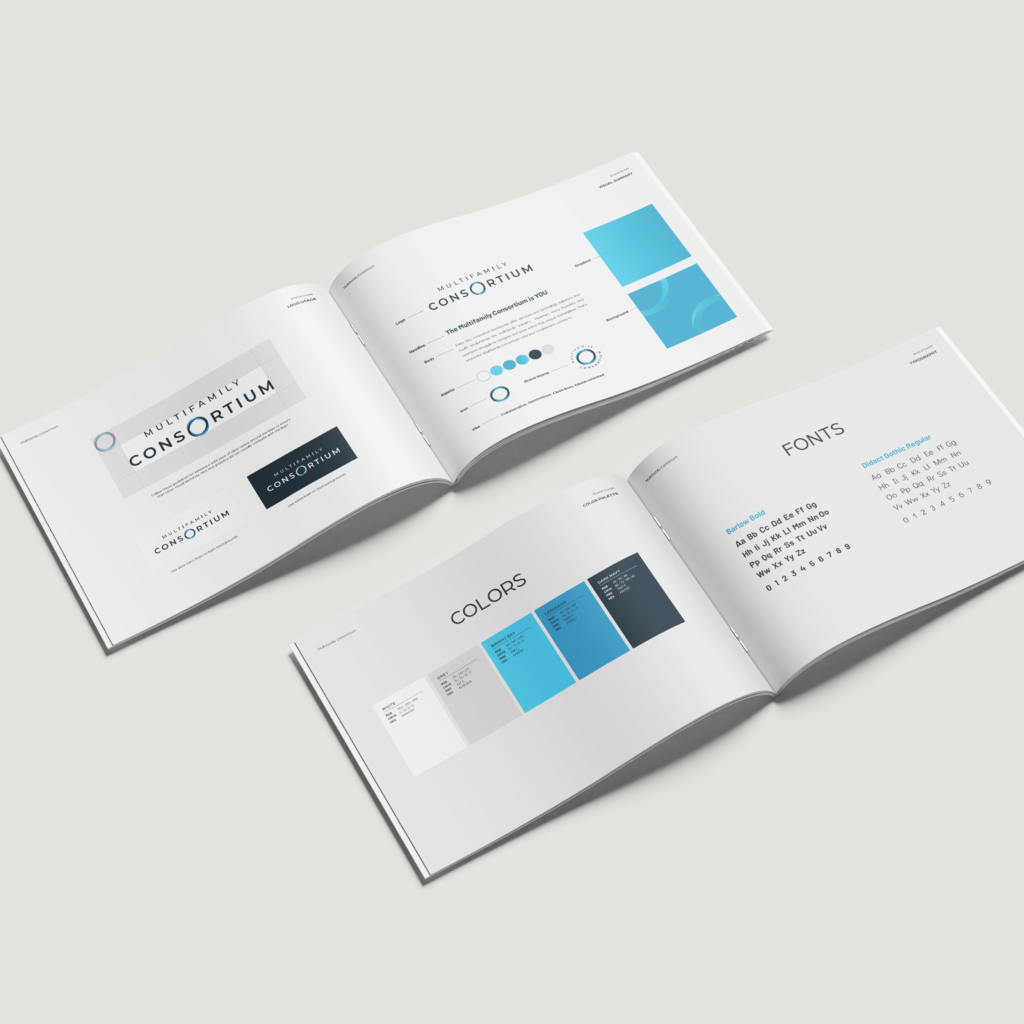
This is where it all starts. When you work with us at Zipcode Creative, we’ll either ask for your brand guidelines or create them—this is a set of “rules” around your visual identity and verbal identity. The visual identity includes your logo, color palette, fonts, patterns and textures, and your verbal identity includes your brand positioning (what sets you apart), your value proposition (what you uniquely bring to your customer/resident), along with your mission (what you do, for whom, and why), vision (hope for future versions of your brand) and your values (your priorities that will help you accomplish these).

Understanding these fundamental elements of brand identity helps ensure consistency across all your multifamily marketing materials.

Color Theory

As part of your visual identity, color theory has a big part to play. Choosing 3-5 colors for a brand’s color palette is what aids the quickest and simplest brand recognition. Using complementary colors (like red+green or orange+blue, which are opposites on the color wheel) can create a beautiful contrast. When it comes to creating the colors on your brand guidelines, we’ll use a Pantone color for printing and a Hex code (6 characters) for digital appearance (RGB stands for red, green, and blue, which are mixed to create any color seen on screens).

Composition & Layout

Composition and layout is often a learned art for graphic designers and artists. But it’s helpful to know a few “tricks of the trade” here. Alignment is all about how elements line up with one another—left, right, center. Having a focal point is always desirable in any piece, so viewers can land somewhere. Additionally when designers talk about negative space, they’re meaning the space around the design components. Or the ol’ rule of thirds—that just means one pretends there’s a 3×3 grid over the piece, and any focal point should aim to sit at the intersection of two grid lines.

File Formats & Technical

When you’re dealing with finalized pieces, and you’re getting ready to share the files, there are multiple file formats to be aware of (some of which are vector images: graphics made of mathematical paths instead of pixels so they can stay crisp at any size; usually logos or icons):

  • AI – Adobe Illustrator’s native file format for vector graphics.
  • EPS – Encapsulated PostScript – a vector file format that works across different programs.
  • JPG/JPEG – A compressed image format best for photos. Smaller file size but loses some quality.
  • PNG – An image format that supports transparency and maintains quality. Larger file size than JPG.
  • SVG – Scalable Vector Graphics – a vector format perfect for web use that never loses quality at any size.
  • TIFF – A high-quality, uncompressed image format often used for printing.

Raster is the alternative to vector images—it’s an image made of pixels (like photos), which can get blurry when enlarged. E.g. JPG, PNG. When we talk about blurriness, we’re talking about poor resolution, or the amount of detail in an image, measured in DPI or PPI. Higher the resolution, the sharper/clearer the image. DPI and PPI are both measurements of resolution; Dots Per Inch or Pixels Per Inch, respectively. DPI is for print. PPI is for screens.

Imagery & Graphics

In the design world, an asset is any visual element you can use: icons, images, logos, illustrations. Icons are tiny symbols that represent a larger idea in a smaller space—think public bathroom signs showing Men or Women. Illustrations help bring personality to visual design, patterns repeat for texture, and texture adds some tactile-ness to it all. Layers in design are what the designer means by each piece of an image, split into transparent sheets, with each sheet adding to the overall image (stacked like a lasagna noodle, sauce, and cheese—making the whole dish.) When something is rendered, all those layers are polished and made into a final image.

Printing & Production

Before going to print for the physical world, a proof is reviewed—it’s the pre-print version needed to double-check colors, alignment, and text before it’s finalized (in a giant version or massive quantities.) Trim is the final cut where the design goes from digital to physical. Pro-tip: Bleed is the extra area beyond the trim edge where design elements extend to ensure no white edges after cutting—the design goes all the way to the edge!

When you’re ready to move from digital concepts to print marketing collateral, understanding these production terms ensures smoother collaboration with your creative team.

Software & Tools

Adobe is the mainstay of most, if not all graphic designers. It has multiple programs used for a variety of tasks, including:

  • Creative Cloud – Subscription service for Adobe programs: where all the Adobe programs “live”
  • Illustrator – Adobe’s vector graphics software for creating logos, icons, and scalable graphics.
  • InDesign – Adobe’s layout software for creating multi-page documents like magazines, books, and brochures.
  • Photoshop – Adobe’s raster graphics software for editing photos and creating pixel-based images.

The artboard is the space inside each of these programs where the work happens. Kind of like the “page” you type in when using a word processing program (Word, Google docs, etc.).

Typography

Letters are art. They require invisible lines, beautiful detail, and proper spacing. And there’s a ton of terminology to know, too. Let’s start with the simplest stuff: bold means letters, fatter. Italics means letters, slantier. Two main camps of font types: serif and sans serif. Serif fonts have little details on the ends of letter strokes. Sans serif fonts go without details. Script fonts connect the letters while display fonts are for grabbing attention in headlines—too busy or strange to be used for body copy.

To tweak type, designers can adjust line height (space between lines) and kerning (space between letters)—this comes in especially handy when working through font hierarchy—first comes headings, then comes subheadings, then comes body copy. Typically going from largest and most interesting to smallest and most pared down font styles. A pull quote is a piece of text set apart to grab attention, too.

Typography choices play a crucial role in memorable logo design and establishing visual hierarchy throughout your brand materials.

Web & Digital

When it’s time to put your brand guidelines to use on a website, look out for these digital dimension terms. Wireframes are where it all begins—it’s the blueprint that details the structure before you get too deep into design. Aspect ratio is the proportions of your image—keeping it as you resize it will prevent stretched or squished images. A responsive design means your website looks good on a computer AND on mobile and tablet. That’s part of the whole UI/UX thing, too—user interface and user experience. The hero image is the big, bold banner at the top of the webpage.

General Design Terms

Mockups are the most fun you can have without hitting “print”—how the final product will look, in real life—like a logo on a coffee cup. A mood board is helpful for designers to show the vibe with colors, images, and inspo for creative direction. Every iteration of the design counts as a round, and feedback helps guide the design closer to the final target. And scalable? That’s just an image’s or design’s ability to get really big or really small without losing quality.

Copywriting

Copywriting is words with a purpose—to help readers feel something or do something (hopefully both). Speaking of doing something—a CTA or call to action is a short phrase, sometimes on a website button, that instructs the reader to Sign Up Now or Book a Tour! Every bit of copy (words) is written to carry the brand message, wherever words are used and needed. Like font hierarchy, there’s also layers to content. A tagline is the catchy phrase that symbolizes the brand. The headlines are the phrases used on the website or brochures to further push those ideas and values, and the body copy backs it all up with details.Effective copywriting works hand-in-hand with strategic brand messaging to create compelling narratives that resonate with your target residents.

Strategy & Planning

No brand should spray and pray, or guess at residents’ wants/desires. Research and discovery through data and brand questionnaires filled out by stakeholders help uncover all the details (like demographics [who they are], psychographics [what they value/prioritize], and geographics [where they are]) that will reveal your target audience, or who you most want to reach. Creating a persona, or a “fake” customer profile can help direct your strategy to reach someone that represents that target audience.

Strategic branding research transforms raw data into actionable insights that drive marketing decisions and leasing results.

Project Management

Before a design is designed, it’s conceived—the art of concepting! Big ideas are born there. Finished pieces are deliverables, or something tangible the client receives. It’s usually based on the scope agreed upon by the client and agency (who’s doing what), but sometimes scope creep sneaks in, and new requests above and beyond the agreement come into the project. Decision makers, or stakeholders have to keep an eye on timelines from the project manager, and the turnaround time from assignment to deliverable has to match up with the expected due date.

Marketing & Advertising

Once the brand is settled in, guidelines have been followed, strategy is outlined, then it’s time to market the community. Ad copy is the little bit of text that sells the community. A landing page (where ads may click) is a focused web page where visitors can take action, whether signing up, downloading, or buying. Every follow through is called a conversion (the main goal of marketing campaigns!) Engagement is also a goal, through likes, shares, comments, clicks, that reveal the interactions people want to have upon seeing your brand. Design + Copy = Attention, Captured and Kept (Ideally.)


Ready to work with a creative agency that speaks your language? Whether you need a complete brand refresh or help navigating limited brand guidelines, Zipcode Creative brings multifamily branding expertise to every project. Let’s talk about your community’s branding needs.

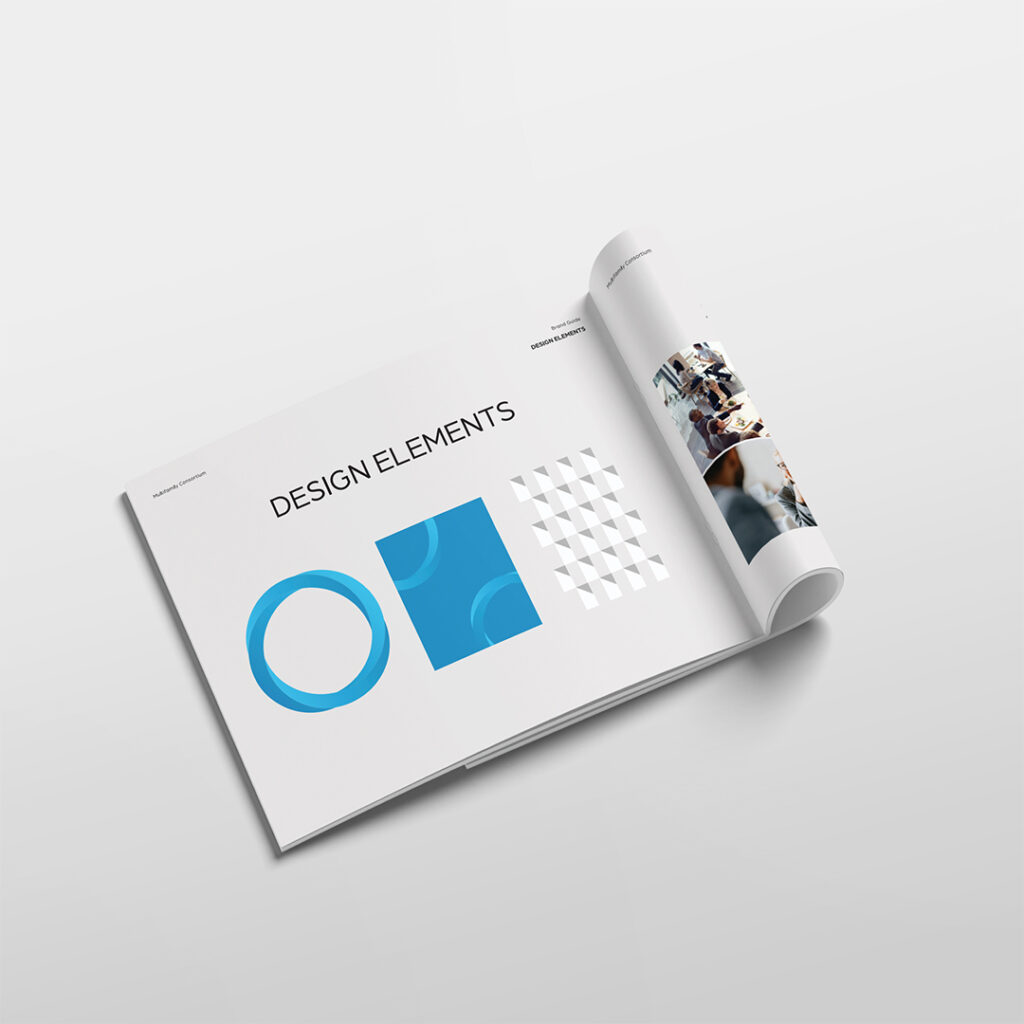
Connecting Innovation and Industry: The Multifamily Consortium Case Study

Multifamily Consortium was founded to bridge a growing gap in the multifamily housing industry—where property management operators face innovation fatigue, and emerging vendors struggle to access the right decision-makers.

As a new platform connecting start-up vendors with potential clients, the Consortium needed a brand that could clearly communicate its purpose, unify its offerings, and position it as the trusted connector in a noisy, fast-evolving market.

Our challenge was to bring clarity to a multi-sided business model and express its value through a cohesive visual and strategic identity.

The Challenge

The brand discovery process revealed a fundamental two-sided marketplace problem. Property management companies lacked time and expertise to vet countless new technologies, while proptech vendors couldn’t access the right industry contacts—or speak the “multifamily language” necessary to build trust.

The founders—seasoned multifamily executives with decades of experience—understood this gap firsthand. Guided by the belief that “alone we can do so little; together we can do so much,” the Consortium set out to become the industry bridge they had always wished existed.

The Challenge

The brand discovery process revealed a fundamental two-sided marketplace problem. Property management companies lacked time and expertise to vet countless new technologies, while proptech vendors couldn’t access the right industry contacts—or speak the “multifamily language” necessary to build trust.

The founders—seasoned multifamily executives with decades of experience—understood this gap firsthand. Guided by the belief that “alone we can do so little; together we can do so much,” the Consortium set out to become the industry bridge they had always wished existed.

Strategy

Defining the Brand Foundation

We began with a strategic metaphor from the client: the Möbius strip, symbolizing infinite connection and non-duality—two sides joining to form a continuous whole. This concept became the cornerstone of the brand narrative and visual identity, capturing the Consortium’s role as a seamless connector between innovation and implementation.

Understanding how brand strategy drives multifamily marketing decisions helped us establish this strong foundation before moving into creative execution.

Market Segmentation & Research

Our research and client input identified five core audience personas that together form the Consortium’s ecosystem: Testers (innovation pioneers at large REITs), Adopters (risk-conscious regional operators), Connectors (well-networked former executives), Partners (established proptech platforms), and Investors (industry-savvy angels and seed funds).

Unlike traditional venture capital firms, the Consortium focused on more than funding, and included ecosystem development—offering guidance, access, and industry credibility. Just as comprehensive brand research transforms multifamily communities, our research phase proved essential to positioning the Consortium correctly.

Reframing Industry Challenges

Market research uncovered a critical insight: “The multifamily industry isn’t resistant to innovation—it’s fatigued by it.”

Operators weren’t anti-technology; they were just overwhelmed by vendor noise and sales-heavy pitches. The strategic opportunity was clear: Position Multifamily Consortium as a trusted curator (rather than another marketplace)—an organization that does the homework on behalf of the industry.

This led to a positioning platform centered on “Wisdom-Guided Innovation.”

Creative Direction

Logo & Symbolism

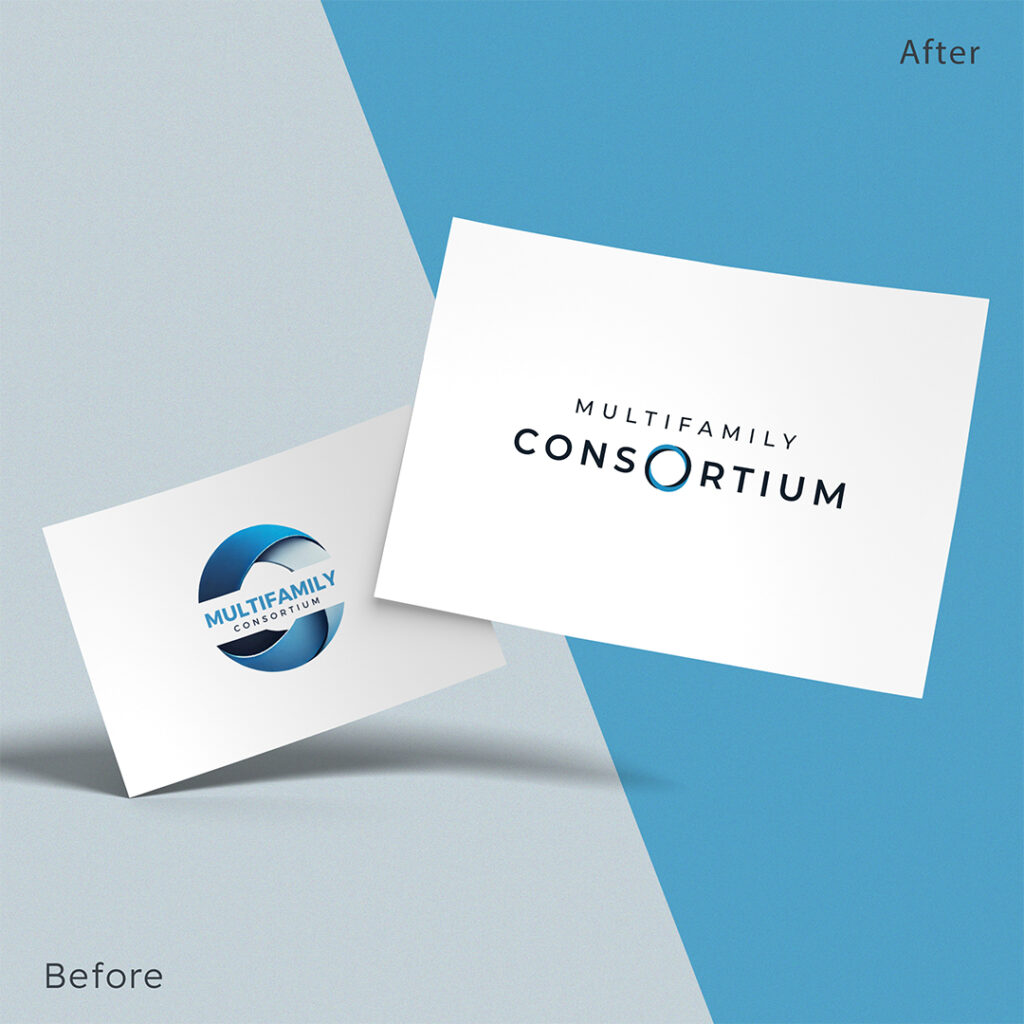
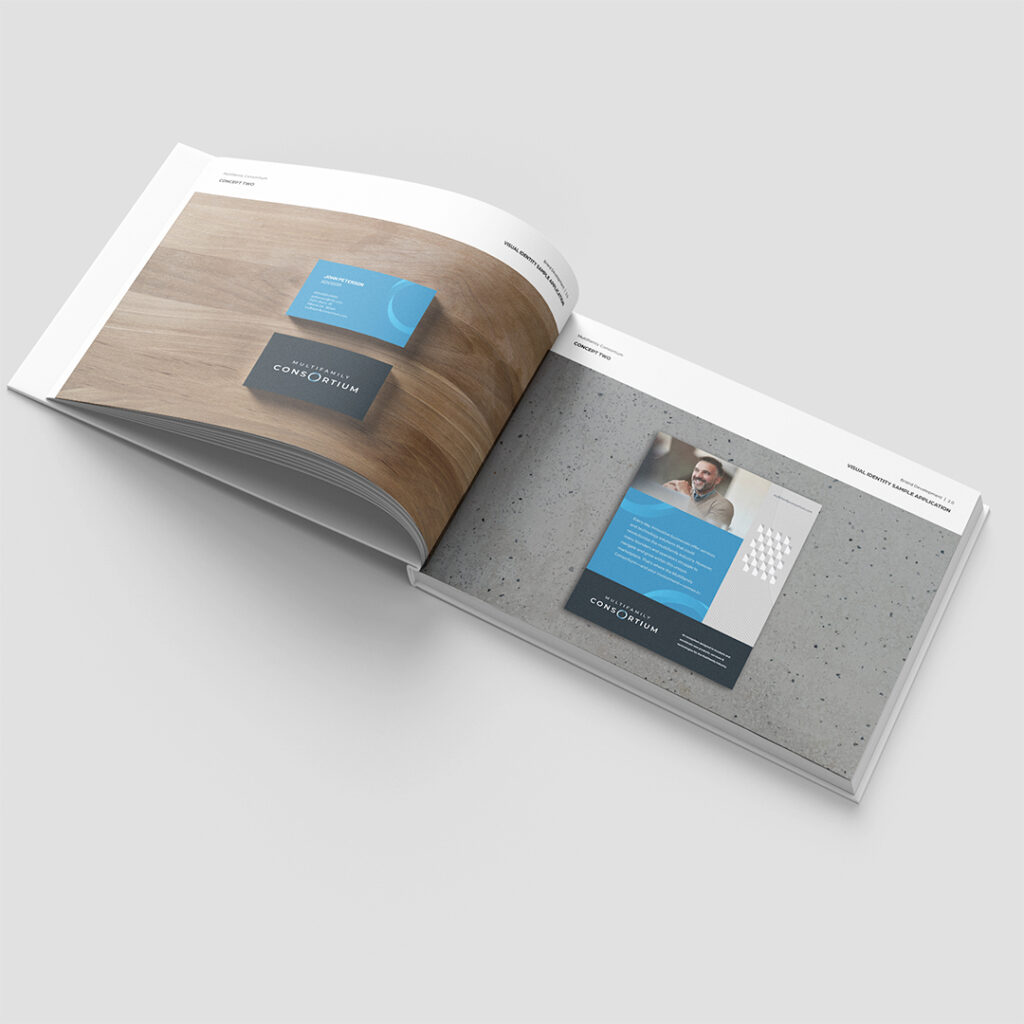
At the heart of the visual identity lies a Möbius-inspired mark, representing continuous connection, trust, and transformation. It serves as both a stand-alone emblem and a dynamic wordmark element—reinforcing consistency and versatility across applications.

The priorities for memorable logo design we established early in the process ensured the mark would be timeless, versatile, and instantly recognizable.

Color System

A blue gradient—from bright teal (#4ABCE8) to deep navy (#1A2B3D)—visualizes the journey from idea to execution, echoing the Consortium’s bridge positioning. The palette also signals professionalism, reliability, and forward motion.

Typography

Modern sans-serif typography provides balance: approachable yet authoritative, designed for executive-level communication across digital environments.

Tone & Personality

The brand tone was inspired by a fusion of two cultural icons: Elon Musk for innovation and cross-industry insight, and Gary Vaynerchuk for authenticity and community-building.

This led to the creation of the “Sage + Connector” archetype—intelligent, grounded, and collaborative. Lifestyle cues such as the Tesla Model X and Theory Performance Wear reinforced the brand’s dual nature: performance-driven, yet refined.

We helped Multifamily Consortium define their voice as professional but conversational, visionary yet credible.

Implementation

Website Content Strategy

The original website relied on vague “ecosystem” language and lacked clarity of purpose. Our messaging strategy for the Consortium established structure and confidence through evidence-backed content that validated expertise rather than “try this, buy this” promotional type language.

Industry-specific terminology reinforced authenticity—using the real vocabulary of multifamily professionals (“property managers,” “residents,” “operators”) instead of generic business-speak. Additionally, knowing that not every website visitor was ready to dive all the way in, we helped provide language for users at any level of the funnel, whether awareness or conversion.

Understanding how to develop a corporate unique value proposition informed our messaging framework across all touchpoints.

Strategic Messaging Framework

We knew that for every pain point, the Consortium needed an answer, if they wanted to be truly different from other “vendor marketplaces.”

Audience InsightStrategic Response
Operators are overwhelmed by vendor noise“Your Time Is Valuable. We Do the Homework.”
Industry is 3–5 years behind, but willing“Innovation Through Industry Wisdom.”
Distrust of marketing claims“Curated Innovation. Peer Validation.”
Seeking trusted partners, not salespeople“Partnership. Expertise. Results.”

Results

Through research, strategy, and design, Multifamily Consortium evolved from a broad ecosystem idea into a distinct market leader—a brand that feels both credible and collaborative.

Outcomes

  • Clear differentiation from accelerators, VCs, and vendor marketplaces
  • Strong alignment between values and visual identity
  • Enhanced clarity through audience-specific messaging and navigation
  • Authority established via founder credibility and authentic industry tone

Brand Values in Action

ValueExpression
Honest & TrustworthyTransparent, hype-free communication
Visionary & EmpoweringInnovation grounded in experience
StrategicStructured messaging, data-backed design
ApproachableConfident yet down-to-earth personality

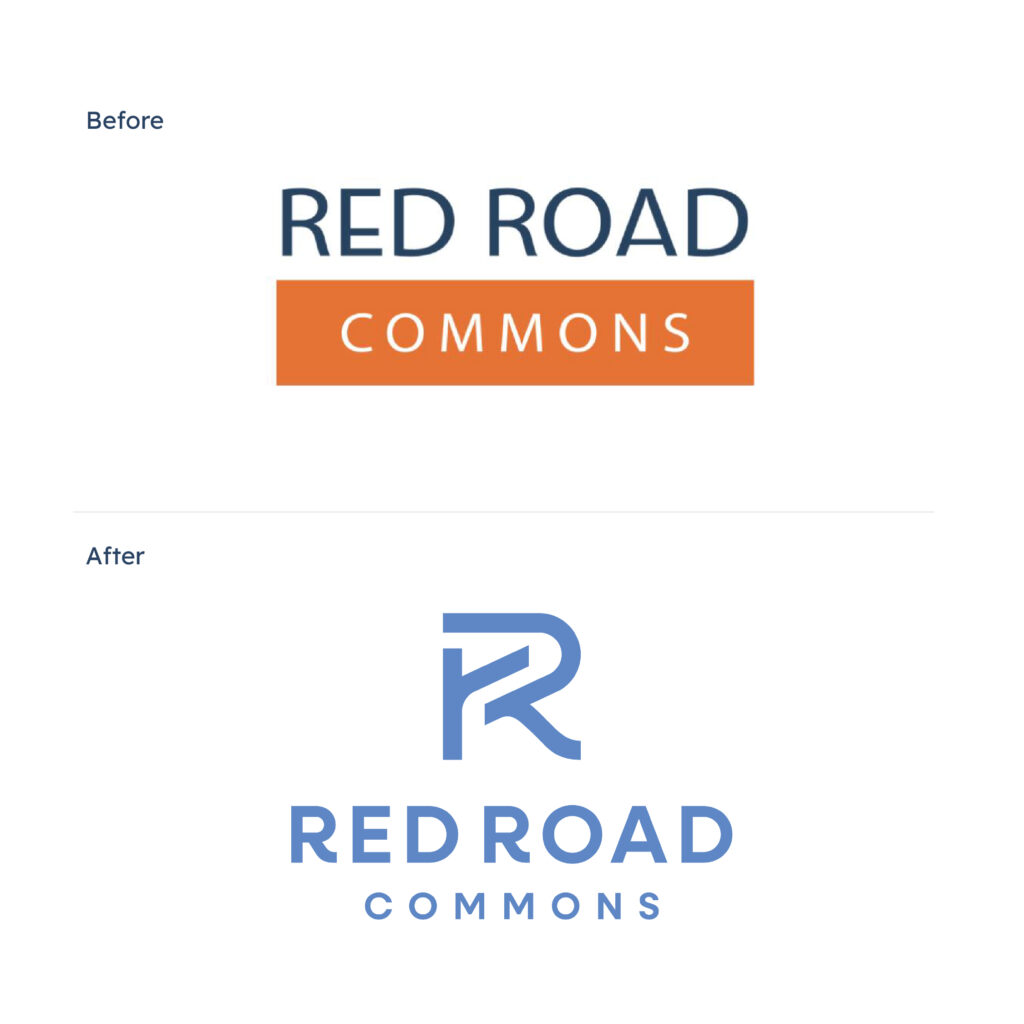
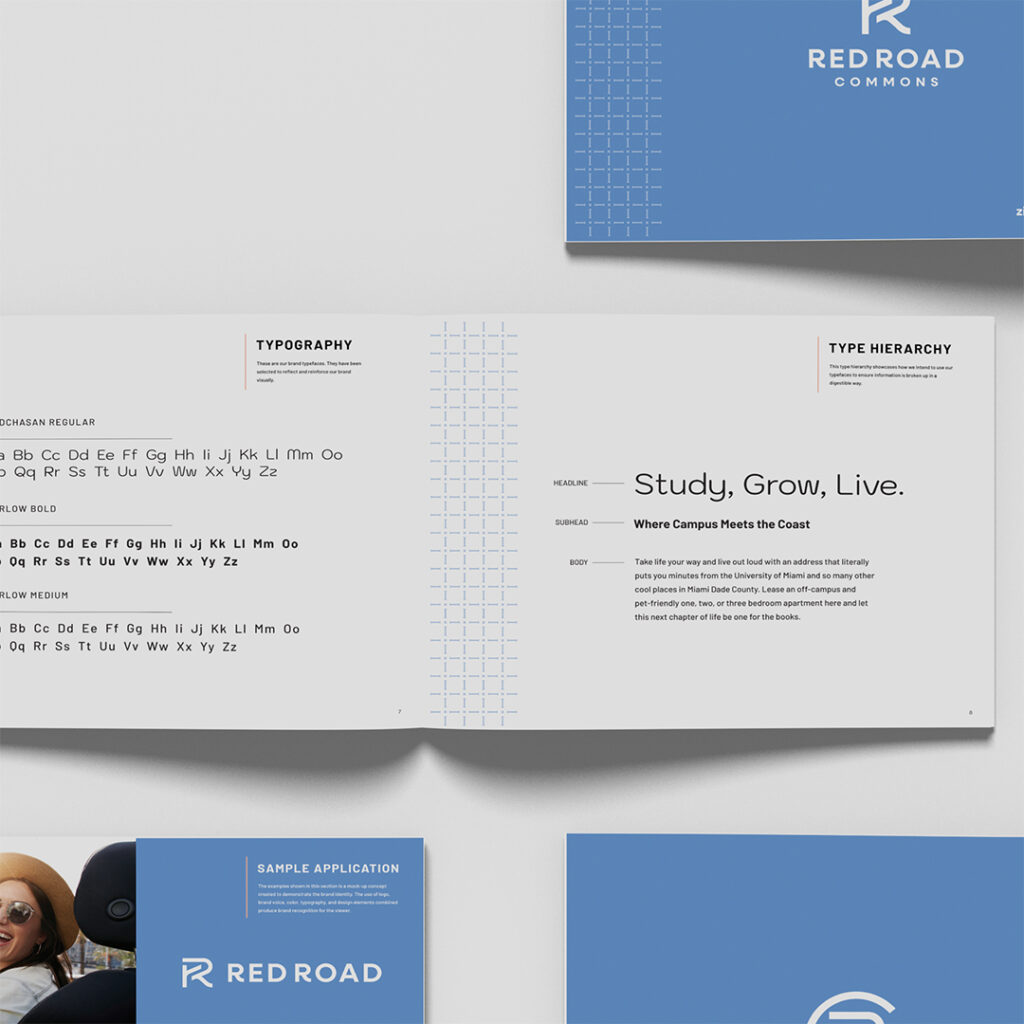
Similar to how we approached the Red Road Commons repositioning, we ensured every brand touchpoint reinforced the core positioning and personality.

The Resulting Position

Multifamily Consortium now stands as the trusted industry insider—a connector, curator, and catalyst for collaboration across the multifamily ecosystem.

By embracing a wisdom-guided approach to innovation, the Consortium differentiates itself not through louder messaging, but through earned credibility and authentic value creation.

Bottom Line

Our brand development process helped transform Multifamily Consortium from an abstract “ecosystem” concept into a strategic industry bridge that operators trust and vendors respect.

Through research-driven insight, refined storytelling, and visual unity, the Consortium is now positioned for sustainable growth—leading the industry forward, one connection at a time.

Multifamily Consortium: Where Innovation Meets Experience.


Looking to position your multifamily brand as a trusted industry leader? At Zipcode Creative, we specialize in brand development strategies that transform vague concepts into clear, compelling identities that resonate with your target audience. Let’s create a brand that connects with the people who matter most to your business.

How Brand Research Creates Resident Resonance in Multifamily Communities

Today’s multifamily residents want more than just an apartment—they’re searching for a home. That means whatever your community offers needs to truly resonate with residents through emotional storytelling, relatable brand identity, and most importantly, a deep sense of belonging.

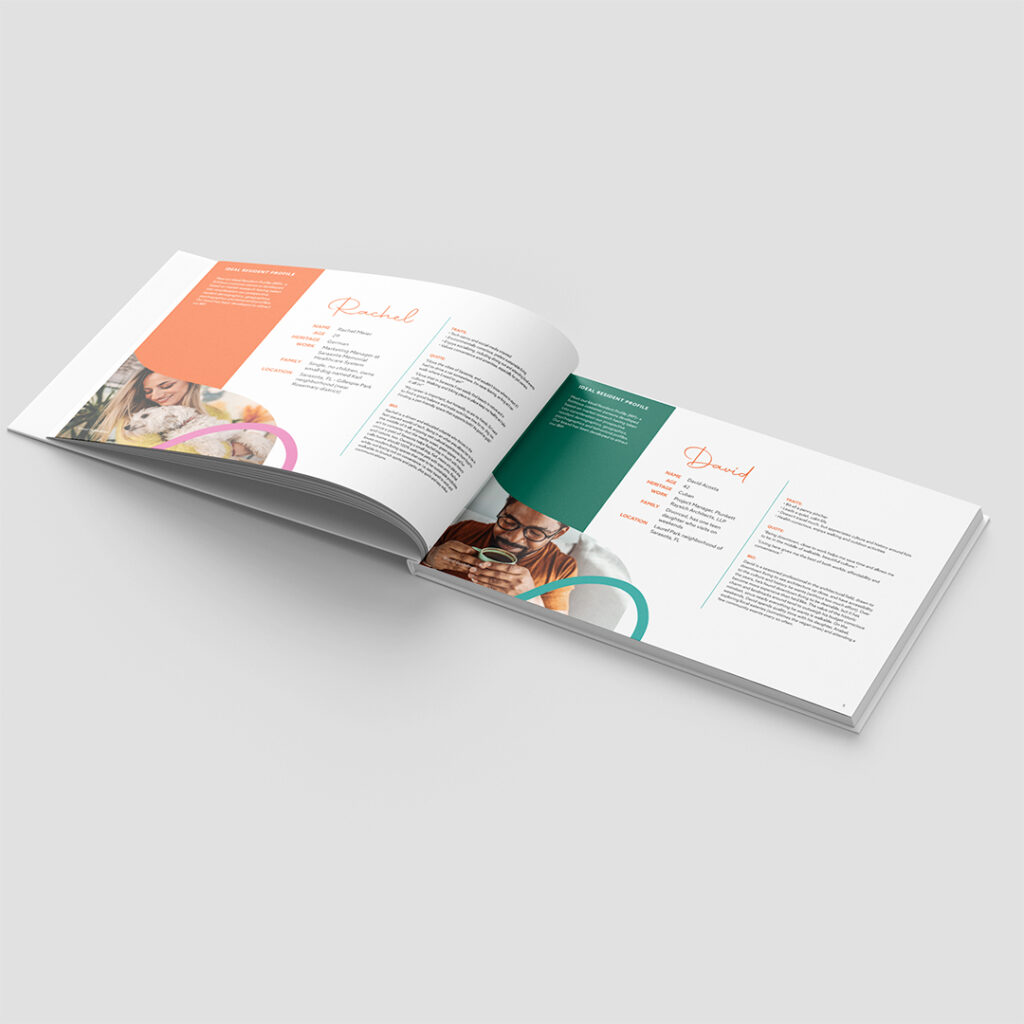
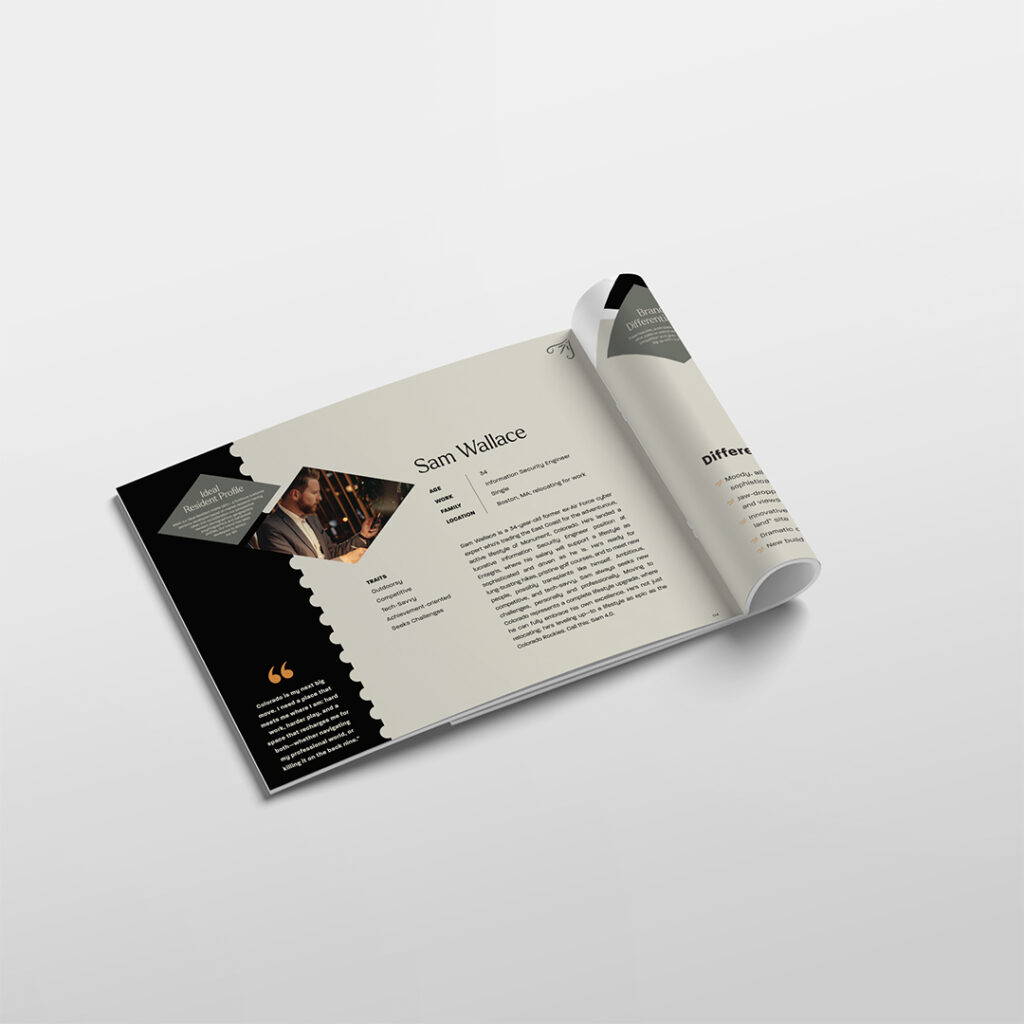
By developing an Ideal Resident Profile (IRP) as the foundation of your brand, communities can create connections that anchor trust and loyalty, ultimately driving retention. But who exactly is the IRP, and how can brand research and design insight help create the vibe that reaches them? Let’s dive in.

Why Brand Research Matters for Multifamily Communities

When an author sets out to tell a story, they start with an outline. The same principle applies to apartment branding—you need structure before diving into details. By examining data through a creative lens, you can craft a brand story that truly vibes with prospective residents.

Effective brand research helps you understand customer demographics, behaviors, needs, and decision-making processes, which ultimately shapes how your community positions itself in the market.

The Foundation: Data-Driven Brand Research

Brand research goes far beyond basic demographics. To function as the keystone of your brand, your dataset needs to capture geographics (including local culture and highlights), psychographics, and behavioral patterns. It’s not just knowing average income for a marketing segment—it’s understanding how residents spend that income and what motivates their choices.

Sifting through this data reveals patterns and unspoken values. Whether your ideal residents prioritize stability or spontaneity, understanding what motivates them provides clearer insight into what they’ll seek in a community.

Understanding Research Categories That Shape Your Brand

Creating a complete picture of your ideal resident requires exploring demographic, geographic, psychographic, and behavioral research categories. Here’s what to examine:

Market Positioning: The context of surrounding properties clarifies what your community uniquely offers. Maybe you’re the only townhouse option in a master-planned community of high-rises—that positioning matters.

Location and Lifestyle Context: What defines your surrounding area? What already draws residents there? Understanding the neighborhood character is essential for local branding strategies.

Competitor Analysis: Study what comparable properties deliver and identify their gaps. This research reveals opportunities for differentiation.

Demographics and Psychographics: Income, interests, work-life trends, and social media habits each add another puzzle piece. Every data point helps reveal the characters who would call your community home.

How Building Design Informs Brand Identity

Your community’s physical building is where tangible meets intangible—where architecture shapes brand vibe. The relationship between branding and interior design creates an immersive experience that residents can feel.

Consider these design elements when conducting brand research:

Architecture Style: Sets the visual stage for your brand story

Quality Level: Finishes and materials signal income ranges and lifestyle expectations

Interiors: Design language like “airy,” “sunwashed,” or “moody” infuses your brand with emotional cues

Amenity Spaces and Programs: Signal specific lifestyle preferences and social engagement styles

Every design element contributes to your brand narrative, steering it toward sleek and polished or casual and inviting—or anywhere in between.

The Human Experience: Where Brand Comes to Life

The way prospects and residents interact with your brand through customer service and programming creates the “feel” behind your brand’s “look and feel.” Personalization increases the likelihood of buyers becoming repeat customers, with 96% of marketers reporting increased customer retention through personalized experiences.

Whether your brand vibe is formal or relaxed, beachy or metropolitan, concierge-style or friendly and straightforward—your resident engagement should reflect that personality consistently.

Resident events and programming aren’t afterthoughts; they’re natural brand extensions. Understanding your IRP helps narrow down community events that genuinely interest residents, making them feel like authentic expressions of your brand rather than generic activities.

Seeing the community and living in the community are two parts of one complete brand experience.

Creating Your Ideal Resident Profile Through Research

The IRP is your human-centered archetype—the North Star guiding every branding decision. Instead of crafting a stereotypical persona, the IRP has a real story informed by all your research data.

Think of it like developing an acting character: creating a persona, uncovering motivations, imagining a backstory, and funneling influences through every choice. A well-defined IRP includes core motivations, lifestyle rhythms, emotional drivers, aesthetic influences, and brand affinities.

Your IRP should capture:

  • Core motivations and what makes them feel at home
  • Lifestyle rhythms and daily patterns
  • Emotional drivers and comfort factors
  • Aesthetic and cultural influences
  • Brand affinities and aspirational connections

It’s tempting to appeal to everyone, but brands that speak to someone specific resonate far more deeply. The IRP becomes your brand’s constellation—every move should point back to it, whether brand voice, visuals, or experience. When those stars align, authenticity emerges.

Translating the IRP Into Brand Expression

The pathway from IRP to brand expression is less connection, more reflection. Your brand should mirror your IRP’s personality across every touchpoint.

Brand Voice and Tone: Does your vocabulary reflect your IRP’s generational communication style? The phrases you choose should sound natural to your target resident.

Visual Identity: Color palettes, typography, textures, and patterns should mirror your IRP’s lifestyle and vibe. Portfolio branding strategies can amplify this consistency across multiple properties.

Brand Story and Community Naming: Are your narratives something your target resident would connect with? Your community name should resonate emotionally with your audience.

Every IRP detail should inform each branding aspect. The data you painstakingly gathered becomes essential to speaking your IRP’s language. Without alignment, you lose prospect affinity and resident loyalty.

When your brand aligns with the IRP, residents develop a clearer sense of place and belonging. Your community stands out in crowded markets, and leasing and retention improve through the connectedness residents feel.

Properties with strong brand identities can see up to 23% higher rental income and 20% faster lease-up rates, but these results require strategic research as the foundation.

A well-defined IRP doesn’t limit your brand—it anchors it. Brand choices become pages in a cohesive, well-written story rather than disconnected attempts to please everyone.

The Bottom Line: Brand Research Builds Belonging

Ultimately, the story you’re telling with your brand is about Home. While that means something different to everyone, the desire remains universal: to feel seen, known, and cared for.

Authentic branding development is about cultivating strategic relationships with residents, building trust and recognition that goes beyond bricks and mortar. Understanding your IRP through research and data helps you build a better brand by bridging insight and imagination.

Authentic multifamily branding starts with knowing your audience. By creating messaging that’s helpful and imagery that represents your brand, your property management team can extend that brand to every resident interaction—from the first sign they see to their maintenance request as a resident.

Research reveals who would participate in the story your community tells. The question is: who would call it home?


Ready to transform your multifamily community with strategic brand research? At Zipcode Creative, we specialize in comprehensive brand development that creates authentic connections with residents. Our research-driven approach to developing ideal resident profiles ensures your brand resonates at every touchpoint. Get in touch today to discover how we can help your community stand out and drive real retention results.

Your Brand Promise Doesn’t End at the Lease Signing

Marketing Should Be for Renewals too, Not Just New Leases

Across every portfolio of properties and communities is an opportunity to keep a promise. A brand promise. By keeping the brand’s personality and resident experience consistent, a brand can keep its promise. And when the promise is kept beyond the lease signing and throughout the full resident lifecycle, the benefits can be seen right in the bottom line.

Benefits like: better renewal rates, more referrals, and reduced turnover costs.

Take a look at your perfectly polished marketing speak. Hold it up against your true resident experience—are residents actually having the experience you promised? Maintaining consistency sounds a lot more like a “must-have” now, doesn’t it? Brand consistency is a revenue tactic.

Let’s learn how to maintain that consistency, and the amount of money you could stand to save if you prioritize the community’s brand promise.

Keep Branding Consistent: A Resident Journey Brand Audit

Across a resident experience there are multiple places where a brand must stay consistent. It’s not just from brochure to lease signing. It’s possible that you’ve got the brand consistently covered in all the obvious places. But, there are always other opportunities!

If you want to improve your brand consistency throughout the resident lifecycle (pro tip: you do), audit your brand from marketing to prospects all the way through to lease renewal for current residents. Ask “Would this make me want to renew as a resident, or move out?”

Move-In Experience – Make the whole process stress-free. Make sure the unit’s clean, the on-site staff is welcoming, and the move-in packet you pass out is comprehensive and fully on-brand with colors, fonts, patterns, imagery, and content. Allow your residents to feel like they were expected (rather than taking your property staff by surprise). Their move-in date isn’t a secret, after all! Minimize stress, maximize memories, and build up loyalty.

Maintenance Communications – You’ve taken care to keep your marketing language and tone all perfectly spunky, casual, and fun. Make it seamless. Use branded cards to let them know maintenance came and went, and send detailed email communication about what was addressed.

Polished Marketing Website, Meet Thoughtful Announcements/Branded Emails – Beautiful community websites are an amazing way to show off logos, colors, fonts, patterns, photo styles, and of course: brand voice. Determine where prospects and residents are interacting with the brand in the digital sphere, too. Social media, website, ad campaigns, ILSs, Google reviews—meet them there. But when your residents use the elevator and see an announcement for a planned construction impacting their floor, provide more than a misspelled all-caps statement signed “-MGMT”. Bring your brand everywhere your residents go so announcements and emails aren’t an afterthought. Align align align, (and add the logo) every time.

Consistent Service Standards (Over Time) – At the start a property may have incredible rapport with its residents, right at signing the lease. Keep up the effort! The customer service you provide should outlast the ink drying on the lease—for as long as they’re living there!

Well-Planned and Well-Executed Community Events – Residents can tell the difference between a Sunday Sundae party and a sustainability-focused workshop (i.e. How to shop more zero-waste or reduce/reuse/recycle more effectively). Plan your resident events to be part of the brand experience by focusing on their interests, and putting a little more effort into it. (Also consider how the brand appears to the outer community. Partner with other local businesses and gather feedback to build up a good rep in the neighborhood.)

Crisis Communication – creating a plan and, once again, being proactive, the brand can keep its promise of comfortable living (or whatever may be the specific mainstay of the brand). If a resident doesn’t feel taken care of, they don’t feel comfortable and at home. Keep your brand promise intact by developing a strategy ahead of time.

Sounds like a lot of work. But not nearly as much work (or as much money) as getting new residents to replace the ones that could have simply renewed.

How so?
This is…

The Financial Reality

Replacing one resident costs $4,200-$4,900 vs. $100-$500 to renew.
For a 225-unit property, a 10% renewal improvement saves nearly $100K annually.

Here’s the logic and the math.

Renewal rates are climbing but still have room for improvement. The latest data shows renewal rates hovering around 54% for market rate apartment renters, with some markets seeing rates as high as 55-58%. While this is up from the pre-pandemic average of 50%, it means nearly half of your residents are still choosing to leave.

Getting new residents costs a lot more than keeping the residents you’ve got. According to NAA, a 225-unit community with a 40% turnover rate (that’s if renewals are at a generous 60%!) would cost $162,000 every year at an average cost of $1,800 per new resident.

If you get your move outs down by just one each month—from the average 7.5 to 6.5—your community saves $20,000 annually and maintenance saves 96 hours of their time. Sweet!

Plus: Think about your advertising costs. Industry standard for lead-to-lease conversion is 10:4:1, i.e. only 1 signed lease is coming from 4 touring prospects out of 10 total leads. How much did you spend to get those 10 leads through Google ads? Might be somewhere in the $350 range ($35.52 CPL x 10). And that’s just one channel—for a 10% success rate, at best.

For every 1% improvement in renewal rate, that’s tens of thousands in combined cost savings every year. Make the marketing budget sing by focusing on current resident renewals—not new leads. Another cool fact? Renewed residents often stay 28+ months, which reduces future turnover frequency. More money saved. Keep it going.

Basically: It’s more important than ever to get your brand aligned to maintain loyalty, trust, and a renewed lease. Sounds a lot better than having a unit sit vacant for 29 days (the average time it takes for units to be leased after listing), right?

How To Keep the Brand Promise: Steps to Take

If the property’s “lost the plot” on the brand promise, there’s a few actions that can help fix it.

Brand standards – Brand standards, branding guidelines, call it what you like. But it should include the resident experience among all the HEX codes and font weights listed in the guidelines. After all, who are you doing this for? Residents! Learn how to maintain brand consistency with the right tools and guidelines to keep your team aligned.
Staff training beyond the leasing team – The leasing team’s important. But having the maintenance crew join your training can help them embody the “why” behind everything the team is doing. (Plus, when someone feels like part of the team, that same someone’s more willing to buy into the whole mission and vision and values they may have been disconnected from.) On top of this, train your team to view current residents as prospects, too, always “selling” to them to snag a lease renewal!

Branded communication templates – Don’t settle for basic emails. Get nice signature templates. Creating color/logo/pattern-rich templates, even for crisis communications or general announcements, helps keep up the brand recognition—when residents see it, they instantly know it’s that brand.

Regular brand audits across resident touchpoints – Secret shop yourself. See where the brand is falling through the cracks. Blah social media DM responses? Overly formal maintenance request confirmation emails? Fix it! And go back to make sure that level of brand consistency is maintained, not just while you’re conducting an announced audit.

Physical environment – Is this the place? Sure is. Get your signs in order. Colors, fonts, patterns, messaging, everything should add up to Your Brand.

Feedback integration systems – All that feedback, all those reviews—the perfect opportunity for improvement. Ensure that it’s captured AND acted upon so your brand is seen as one that listens. Don’t forget to respond in the brand voice, maintaining the values of the community, and keeping the brand’s promise.

Let’s stop leaving money on the table. Consider refocusing on keeping your brand promise through careful audits, consistent training, and better community connection—and see how resident trust and loyalty that leads to renewals positively affects your budget.


Looking to strengthen your brand promise and boost resident retention? Our multifamily branding experts specialize in creating consistent brand experiences that drive lease renewals and reduce turnover costs. Let’s talk about building a brand strategy that keeps residents coming back.

Keeping Your Brand Consistent in Multifamily Email Marketing

Email marketing and phone calls still hold value, especially for property management companies. In fact, emails are consistently one of the top ROI-positive marketing channels—when done well. But an email that doesn’t follow brand guidelines (and a phone call with an off-brand response from the front desk) won’t provide the same punch that an on-brand email will. We’ll show you why these channels are important, what to look out for, and how to keep things consistent.

Emails and Calls Still Matter in Multifamily

Emails can feel old school. Chatbots have replaced interactions. Google searches have eliminated the need to “stop in.” That’s from a different era. Phone calls feel even more outdated. But anytime you really want to get answers and get something accomplished, speaking with a human over the phone is the solution.

Emails and calls are still the most important communication channels for your prospects. (Plus you OWN those channels with emails and phone numbers you’ve collected—unlike Instagram or other social media marketing.)

How so?

Email is one of the highest ROI channels for marketing. It can be personalized. It can be segmented to different populations. It goes straight to an inbox to nurture prospects directly. It’s the ideal version of inbound marketing, if people have signed up for your mailing list.

Phone calls are typically the first live interaction someone may have with an apartment brand. Build trust with the first phone call, and the brand experience has a better chance of being a positive one from then on.

According to Flair’s whitepaper analyzing 1100+ secret shops, 79% of properties used email and 41% used phone. The overall average response time was 36 hours. In a “one-click” world, 36 hours falls far below prospects’ expectations for how quickly they expect an answer to their question.

Both phone and email function to build trust—based on your knowledge of the prospect. But a simple email won’t quite cut it. And just answering the phone isn’t enough, either.

The way your team communicates is vital. And it has to align with established brand guidelines.

For example, in an email, the fonts, colors, voice and messaging should reflect your brand. And a call has to sound professional and on-brand as well. If either of these don’t, your credibility is at risk. Loyalty is based on consistency, which is something achieved with your brand guidelines and following them to a “T”.

Added Bonuses of Email Marketing

An email is a way to get right into your prospects’ daily routine. You appear in their inbox, and you’re part of the fabric of their day. When you stay at the top of the inbox, you stay top of mind. And when your competition is all sending out the same templated automated responses, it’s a great way to stand out from the pack.

Another bonus of email marketing in multifamily is the ability to segment and personalize every email sent out. A greeting block that includes the recipient’s first name can be impactful. It’s even better if it acknowledges any leasing preferences they’ve previously shared. Plus, dividing up the email copy based on the type of prospect can be powerful.

Flair’s whitepaper also uncovered a big gap. Just because you’re responding quickly doesn’t necessarily mean you’re moving a prospect forward in your funnel. A shocking number of email follow ups completely ignore the initial question posed in the form.

Prospects asking about pet policy were answered with spray-and-pray blasts advertising the current special, asking them to book a tour.

Email marketing’s best capability (arguably) is to track ROI. You can see who opened it and clicked on what. This can make every email you send after this better—because you’ll know more about what works and what doesn’t. At every step of the leasing funnel (all the way through to move-in and beyond), you can send the email that’s “just right”. You can actually measure your success with email, because there’s a clearer correlation between a link clicked and a lease signed.

One of the easiest ways to track your email marketing is to try Flair’s free secret shopping tool. Here’s how it works:

  1. Sign up and create a community
  2. Click on “secret shops” and generate a secret shopper
  3. Submit the virtual secret shopper info to your community via the website or an ILS
  4. Log back in over the next 30 days to see what follow ups were made

Users have called it their “most valuable leasing audit ever” because it tests your team and tech stack at the same time.

Don’t wait—find brand inconsistencies, follow-up issues, and more with a simple shop.

The Impact of Brand Consistency in Apartment Email Marketing

If your brand isn’t consistent, it’s not effective. A consistent brand used in email marketing can build trust, improve response rates, and outshine the competition.

Build Trust With Consistency

As your brand consistency is maintained, you can build up trust with prospects. And trust leads to conversions. More trust → more leads → more leases.

Your brand builds on recognition and expectation. Think of it this way: If you’re used to seeing colors and fonts associated with the brand, and you skim through the email and don’t recognize what you’re seeing or reading, you might feel some kind of dissonance. Or worse: You don’t realize the brand is one you’ve seen before, and is completely unmemorable.

Plus, when your brand builds up trust, you can see increased response rates. Why? Familiarity. The more you expose prospects to your brand, the more used to your brand they become, and the more comfortable they will be to open the email, skim it, respond to it, and take the action you suggest.

The top two issues we saw with our secret shop results were inconsistent brand guidelines and sender domains.

Not only were emails from different tools (i.e. CRM automations vs. AI leasing bots) inconsistent with varying fonts, layouts, and color schemes, but sender domains were all over the place too. We saw emails come from clean domains like [email protected] and then follow ups came from [email protected]. This creates an inconsistent and confusing experience for prospects.

Common Brand Inconsistencies

But what exactly do we mean by consistency? It comes down to a brand crafting a specific brand guideline, and sticking to it. We see some issues with this here and there, but these are the most common (with a few examples to help you visualize it):

Inconsistent visuals – If you have a brand guideline, follow it to the letter—font choices, hierarchy, (exact) colors, logo usage, image style and overall design vibe should all be consistent to develop resident trust.

Unclear brand voice – Make sure your brand voice is well outlined with examples in your brand guidelines—and then put it into every aspect of your communications, especially your emails. Subject lines that stand out are the ones that get opened.

Confused messaging – If you say one thing in one email but it doesn’t align with the messaging on your website, that doesn’t help anyone. It makes the brand look unprofessional, and pushes prospects away.

Tips for Brand Consistency in Multifamily Email Marketing

If you create a process for brand consistency, it will be a lot simpler to maintain momentum, even through email marketing. Here are our best tips:

  • Develop email templates that reflect property and/or portfolio branding
  • Maintain consistent voice and messaging across all communications
  • Refer to your brand guideline to ensure you’re using logos, colors, typography, and imagery the right way
  • Adapt your designs to work with email best practices. Emails aren’t as flexible as websites, so you may need to do some testing to get it right

A note on brand guidelines: Templated email designs can help keep you efficient. Just be sure to use them as a starting point, balancing the corporate guidelines with your individual properties in the portfolio.

Focus less on speed-to-lead, and more on speed-to-answer. Speed to lead doesn’t matter if you blatantly ignore a prospect’s question and shove a promotion in their face.

Address their question through any channel as fast as possible, instead of simply logging a follow up to them as quickly as you can.

Branded email marketing example for Aspire Apartments showing consistent visual identity with turquoise color palette and lifestyle imagery

Implementation Strategies

Along with these tips, sometimes it’s helpful to know exactly how to go about using consistent branding in your email marketing.

First, work towards creating a brand style guide that’s specific to email communications. Dedicate a portion of an existing brand guideline to outline how emails should look. Bonus points if it’s digital and linked to your templates. (Most CRMs have user-friendly email builders, so it should all be much easier on you.)

Second, train your team to use the guidelines how you want them to. Help them to understand the brand standards—not just the what but also the why. And then give them the tools (see the section above) to accomplish these tasks.

Third, review all of your processes to ensure everyone is keeping brand compliance. A single inconsistent email could add confusion to your brand—and limit your recognition.

It’s okay to encourage creativity within the guidelines, and it will help keep things from being boring. But consistency is still the bigger goal.

Finally, find a way to hold your team fully accountable—not by micromanaging, but by using tools that take the guesswork out of the equation for you.

Flair recommends running secret shops quarterly, to ensure your tools all work cohesively together to create a consistent experience for prospects. This ensures you are delivering a “premium” experience and every touch point counts. Also, it’s an opportunity to coach your team on how you expect them to nurture new leads, and hold supplier partners accountable to a high standard for being an extension of your brand.

Take the Next Step

Your prospects are already shopping you—often against several competitors. The real question is: does your brand hold up in those first critical communications?

Don’t leave it to chance, and ensure you have the right data to protect your brand’s reputation and arrive at leasing success.

Ready to ensure your multifamily brand is consistent across every touchpoint? Zipcode Creative specializes in developing comprehensive brand guidelines and email templates that help property management companies build trust and convert more prospects. Let’s talk about creating a brand strategy that works as hard as you do.

Want to see exactly how your team performs when prospects reach out? Try Flair’s free secret shopping tool and get actionable insights into your email marketing effectiveness in just minutes.

How Strategic Repositioning Helped 1306 Exchange Attract Young Professionals in Durham’s Competitive Market

When ML Property Group acquired and renovated a Durham apartment community, they faced a challenge familiar to many property owners: how do you attract a completely different demographic than your previous resident base?

The answer wasn’t just a fresh coat of paint or a new logo. It required strategic repositioning backed by research, intentional brand development, and marketing that spoke directly to their ideal residents.

Here’s how we helped ML Property Group transform their newly acquired property into 1306 Exchange—a community that successfully appeals to young professionals in healthcare and technology.

The Challenge: Repositioning for a New Market

ML Property Group came to us after completing a value-add renovation on their recently acquired Durham property. The community had a new name and updated interiors, but they needed more than aesthetic improvements to compete with newer apartment communities in the area.

Their goal was clear: shift from primarily serving blue-collar residents with average incomes of $40-60k to attracting young professionals in Durham’s growing healthcare and technology sectors. The challenge? Positioning themselves as an affordable alternative to downtown Durham apartments without sacrificing appeal to this more affluent demographic.

This type of multifamily repositioning requires more than surface-level changes. It demands a complete rethinking of how the property presents itself to the market.

Building Strategy Through Discovery

Every successful repositioning starts with understanding who you are and who you want to attract. We began with our brand questionnaire—a tool designed to uncover the personality, values, and aspirations that would shape the brand moving forward.

The questionnaire revealed crucial insights about 1306 Exchange’s brand personality. Words like “fun-loving” and “creative” emerged alongside appreciation for both urban nightlife and nature’s tranquility. When asked what celebrity would represent their brand, they chose Ice Cube. For a car? A Mustang. These answers weren’t random—they pointed to authenticity, adaptability, and timeless appeal.

This discovery phase also clarified the demographic shift. The community needed to appeal to residents seeking downtown proximity without downtown prices—young professionals in healthcare and tech who valued convenience but also wanted breathing room from the urban core.

Understanding your target audience’s demographics, pain points, and aspirations is fundamental to any brand repositioning strategy.

Location as a Competitive Advantage

Location doesn’t change, but how you position that location absolutely does.

1306 Exchange held several strategic advantages: proximity to Duke hospitals, major shopping areas, Ellerbee Creek trails, and easy highway access. These weren’t just amenities to list—they were the foundation of the community’s competitive positioning.

We positioned the property as offering an ideal combination of suburban comfort and urban convenience. This positioning directly addressed the needs of the target demographic: healthcare and tech professionals who work near downtown but don’t want to pay premium downtown rents or sacrifice space and nature access.

This location-driven strategy became central to all marketing messaging, helping differentiate 1306 Exchange in a market crowded with new construction competing for the same residents.

Creating Visual Identity with Purpose

With strategy established and target personas defined, we moved into creative development. Every visual element needed to align with the strategic goals we’d identified.

Brand Stamp/Symbol

The address itself—1306—became a distinctive brand element. We created a modernized “06” symbol that felt both established and contemporary. Remember that Mustang analogy? Classic, yet adaptable. The symbol provided brand recognition while maintaining flexibility across applications.

Color Palette

We built upon the building’s existing blue-gray tones and added bright orange as an energetic accent color. The client wanted a pop of color, and we tested both yellow and orange. Orange won—it provided better contrast and brought the vibrancy the brand needed without overwhelming the sophisticated base palette.

These colors became the foundation for patterns and accent elements throughout the marketing collateral, creating visual cohesion across every touchpoint.

Typography

Font choices might seem minor, but they set tone immediately. We selected typefaces that balanced professionalism with warmth—exactly the combination that would appeal to healthcare and tech professionals seeking a community that felt approachable but credible.

Every element of visual identity development serves a strategic purpose when done intentionally.

Strategic Brand Positioning

The property’s name—Thirteen 06 Exchange—connected to ML Property Group’s existing portfolio while emphasizing connection and interaction. Though we didn’t name the property, the name gave us momentum for positioning.

The word “Exchange” particularly resonated with the community-building goals. It suggested interaction, collaboration, and the social atmosphere that young professionals seek. This became a theme we wove throughout the marketing narrative.

The positioning also directly addressed area perception challenges. Durham has experienced significant growth, but some neighborhoods still carry outdated reputations. By emphasizing community, safety features, and the collaborative spirit, the brand positioning helped overcome these perception hurdles.

The Complete Brand System

The final brand guidelines created a comprehensive, cohesive system that could flex across multiple applications:

Logo: Clean, modern, and versatile enough for everything from signage to social media.

Pattern: Organic, flowing patterns that referenced the nearby Ellerbee Creek and nature access—subtle but meaningful.

Photography Style: With the demographic shift to young professionals, photography needed to reflect this audience. The style guidelines now featured diverse, happy families and young professionals in authentic lifestyle moments.

Tagline: “Effortless Living” captured exactly what the target market valued most—convenience and ease in a world of complexity.

This complete brand system gave ML Property Group everything needed for consistent application across all marketing channels. Every touchpoint would reinforce the same message and visual identity, building recognition and trust with prospective residents.

Marketing That Connects with the Target Audience

Brand strategy means nothing if it doesn’t translate into effective marketing. We applied the positioning and visual identity across all marketing materials with strategic intent.

Floor Plan Naming: Rather than generic “A, B, C” designations, we named floor plans after trees—Magnolia, Oak, Maple. The names felt natural and grounded (literally), connecting to the nearby creek and nature access while maintaining sophistication. They were accessible but elevated—exactly the balance the brand needed.

Marketing Brochures: Every amenity listed addressed the practical needs and quality-of-life desires of the target demographic. Washer-dryer connections, security cameras, dog park, fitness center—these weren’t random features. They were strategic selections that spoke to safety-conscious professionals who wanted modern convenience and active lifestyles.

The security messaging deserves special mention. By highlighting security cameras and off-duty officers, the marketing directly addressed the area’s reputation concerns without being heavy-handed. It provided reassurance while maintaining the positive, aspirational tone throughout the rest of the materials.

Creating marketing collateral that drives leasing results requires this level of strategic thinking behind every choice.

The Results: Professional Polish Meets Laid-Back Living

The final brand successfully positioned 1306 Exchange to attract the exact demographic ML Property Group wanted: healthcare and tech professionals seeking suburban tranquility with urban accessibility.

But success in repositioning isn’t just about attracting residents—it’s about attracting the right residents. The brand system we created:

  • Projected professional polish without feeling stuffy
  • Emphasized laid-back living without appearing unserious
  • Addressed safety concerns while maintaining aspirational messaging
  • Balanced nature and urban convenience
  • Honored the property’s authentic character while repositioning for a new market

This is what strategic branding accomplishes. It’s not about surface aesthetics or following trends. It’s about creating an identity that accurately represents who you are, speaks directly to who you want to attract, and positions you competitively in your market.

The security features addressed reputation concerns. The lifestyle imagery projected aspiration. The nature-inspired patterns and tree names connected to location. The “Effortless Living” tagline promised exactly what busy professionals needed.

Everything worked together because strategy came first.


Ready to reposition your multifamily community to attract your ideal residents? Strategic branding research and development helps you compete effectively, even in crowded markets. Let’s talk about your property’s unique positioning opportunity.

Multifamily Website Template Design Choices to Be On-Brand

Using a website template isn’t unusual in the multifamily industry. But it doesn’t mean you’ll need to stick with the usual—the default settings on everything. You still have the capacity to make it your own.

There are certainly factors that come into choosing a template: budget, timing, marketing team size and capabilities. Even though it’s not a fully custom website from scratch, you can take the template to the next level while still staying on-brand. Ensure every one of your website template design choices are on-brand to set you apart.

There are a variety of ways to make an apartment community templated website appear more custom. When using a PMS provider like RentCafe or a third-party template provider like Jonah Digital, it still pays dividends to follow your brand guidelines as much as possible. Let’s walk through some practical hacks to make an apartment community website look less “seen-it-before” and more “can I see that again?”

Start Here: Fonts + Colors

The first thing you’ll want to touch is the fonts and the colors. This is a small effort, big payoff move. Anywhere the template allows the user to make custom selections—that’s the spot to shine. Adjust the colors to match your palette. Adjust the fonts to match your typography selections—and as much as you can, enable the font hierarchy to be the same as what’s outlined in your brand’s guidelines.

Everything you choose should be consistent with your brand guidelines. This will help when a prospect jumps from your socials to your website—if it looks the same, they won’t second-guess where they’ve ended up. They’ll know it’s the same brand. This goes for print and email, as well.

Note: Be precise. Matching approximately is not going to be professional. Use the exact HEX codes for your color palette from the brand guidelines.

Backgrounds: Use the Negative Space

Just because it’s default doesn’t mean it’s the right choice. So many templates default to plain white backgrounds, but this is the perfect place for brand personality to shine. A brand color can be just the “pop” needed when used as the background’s negative space instead. Beyond solid brand colors (that are in the brand guidelines)—which are simple, but effective—backgrounds that use the below could also work well:

Patterns or textures: These should be pulled from your brand identity, not just selected from a list of drop-down options in the website template.

Custom images or graphics: Using these in section backgrounds can help break up the page and further push forward your brand identity, even from the background.

To do all of this effectively, keep these things in mind:

Make sure the image (whether a photo, pattern, or texture) is high-quality and has the right resolution. If it’s blurry, it’s unprofessional. Work with your creative partner to upload vector files when possible.

Test it on mobile and tablets to make sure it’s showing up how you want—no awkward cropping or stretching as the site moves through its responsive screen sizes.

Don’t overdo it. Don’t do a pattern or photo everywhere you can. That ends up looking busy and can overwhelm website visitors.

Prettier Than a (Property) Picture

Property photos are helpful for prospects to know the basics—how apartments look, the layout of the pool, the cool hangout spaces in the community area. But take it a step further. Beyond the expected.

If you’re already working with a templated website for your property, get more creative with the photos you use. If you’re able, use brand-driven visuals. They’re far more memorable than standard pool, community, apartment photos.

Beyond photos of the property, images could include:

  • Subtle graphic overlays on photos (using brand elements)—similar to how social media posts are designed
  • Accent typography as an artistic addition if it works with your brand style
  • Swap traditional photo blocks for a totally graphic-designed element (cool!)

Additionally, stock images can help you easily tell a story, helping the prospect envision themselves in the community. Choose stock photos carefully, and keep them within the same style, too.

Once again: Make certain that everything shows up properly on mobile, tablet and desktop screens.

The Little Things

If you know us at all at Zipcode Creative, we do sweat the small stuff. The little details. The micro-elements that can push your brand a little farther in the competition to win the heart of your prospects. It’s all worth it.

These oft-overlooked items include:

Buttons – The style of the button is important. The shape, the color, and whether there are any hover effects.

Iconography – Icons can be a great way to draw the viewer’s eye to key amenities and work to showcase the brand’s style and personality. If you don’t have custom icons as part of your brand guidelines, search for stock sets that work within the aesthetic.

Bullet points and list markers – This is similar to your typography options. Choose bullet points that make sense with your brand guidelines. Arrows? Big bullets? Hollow bullets? Diamonds? Totally depends on your vibe.

Every choice, big or, in this case, small, has an impact on how your brand is perceived. Polish up your appearance and keep things cohesive. When your brand implementation is consistent, prospects notice—and remember.

Laptop and tablet displaying Jonah Digital Woodlark apartment website template with luxury community room photo, custom typography, and branded color scheme showcasing stylish interiors and stunning surroundings

What NOT To Do With Your Multifamily Template Site Design

PITFALLS TO AVOID

There are always pitfalls with design. And multifamily templated site customizations are no different. Be sure you…

Do NOT overload the site with distracting patterns and imagery

Do NOT use low-res or poorly cropped backgrounds

Do NOT add text INTO images unless it’s carefully crafted as part of the brand style

Do NOT forget to view changes on mobile—that’s where prospects will likely make their first impression


A template doesn’t have to look template-y. It can look customized and totally on brand. Just be sure to consult your brand guidelines to give your prospects a fully custom feel and experience. When you’re building more than buildings, every touchpoint matters—including your templated website. Use your creative team or ask your agency for help to make the most of your template options.


Ready to elevate your apartment community’s digital presence beyond template defaults? Our branding experts help multifamily marketers transform standard websites into branded experiences that convert. Let’s talk about making your template work harder for your brand.

Print vs. Digital Marketing Collateral in Multifamily: Why Brand Strategy Comes First

Brand Strategy Then Format

Brand Supports Format

A strong brand strategy always has to come first. Any decision about marketing collateral format should be made after the branding foundation has been laid. Everything about your brand must be strategic, up to and including the collateral. But the brand supports the format, not the other way around. Digital ads can’t create a brand, just like stationery can’t determine a multifamily company’s values. It’s backwards.

Finetune your brand first. Determine your brand’s positioning (what makes you different) and craft your messaging (verbal identity) and look (visual identity) to truly amplify the collateral you put out. This approach helps property management companies build lasting brand recognition through strategic development across all marketing channels.

The Cost of Skipping Brand Strategy

At Zipcode Creative, we absolutely know and love beautiful design. We also know that it means nothing without excellent brand strategy. Collateral can be as pretty as a picture—but won’t get optimal results if that’s all it is. There’s gotta be a foundation and a structure to it all: What is the story you are telling about who you are as an apartment community? If you sprinkle in some purpose based on your branding work, you’ll probably have a more effective marketing strategy, too. With better branding comes better results.

Know Your Audience, Choose the Format

When developing an apartment community brand, the results will always be better when the ideal resident audience is determined first. The same could be said for your choice of marketing collateral format. If your ideal resident personas are ones that are in the habit of clipping coupons and bringing in direct mail to events, for example, you’d likely want to go for print collateral. How your ideal residents make decisions should be tied to your branding choices as well as your collateral format choices.What kind of research? Demographics, geographics, psychographics and buying behaviors. Same tidbits you’d consider when working through your branding. If done right, look to your brand guidelines to understand your audience for this decision too. Keeping your brand consistent across all collateral ensures residents recognize your community instantly.

U.S. Demographic Preferences

According to research from Pew Research Center, about 96% of adults use the internet. But when we dive deeper into demographics, we can see a better breakdown of who is doing what—and what they prefer based on who they are.

For example, look at age. Gen Z prefers digital. Millennials prefer digital but are open to “tactile experiences.” Gen X likes both. Boomers largely prefer print, but can use simply formatted digital here and there. Getting deeper still, younger demographics prefer YouTube and Instagram for their apartment searches.

Senior Living Complexities

Senior living communities are a more complex consideration. The audience may be a mix of both the prospective resident as well as the family members working to find them a new place to live. So think about how to reach both of those audiences with the collateral—consider using direct mail for the seniors and using targeted ads for their adult children researching options for their aging parents.

In addition to a range of audiences, the search is also multi-faceted: 75% of U.S. consumers begin senior living searches online, with 6,000 searches per hour, yet 70% prefer speaking with someone before deciding.

Formats for Family Involvement

Similar to the complexities of senior living communities’ audiences, you’ll want to determine who will be involved in the decisions for the resident. For student housing, for example, create collateral that will reach the parents as well as the students—so that you can have a multi-pronged marketing approach.

Geographic and Cultural Considerations

Another piece of the puzzle—where your ideal resident lives and the culture they’re surrounded with will impact the collateral that they connect with most. If your audience is multilingual (Spanish and English, for example) you’ll need to consider using both languages on your collateral whether print or digital. If you’re trying to reach a geographic area that has a strong local paper, placing print ads may work well for a community, especially if it’s in an area that hasn’t yet been developed but is just starting to.

Again, each of these choices is relying on branding based on completed homework—who your ideal resident persona or profile is, and then what kind of collateral would best reach them. Understanding local branding strategies can help you connect more authentically with your target audience.

The ROI Reality

When Print Outperforms Digital

According to a study done at Virginia Tech, 82% of the recipients of an alumni campaign remembered a print version of the campaign versus only 49% remembering the online version. Print can sometimes bring about a deeper resonance and retention when pitted against digital versions of the same thing. It’s worth considering what factors are at play before you go all in on print, though. If you’re thinking of going all digital, on the other hand, consider these statistics:

73% of U.S. internet users discover new brands through “offline” channels like TV, print, or radio despite digital dominance.

High-Stakes Housing Choices

Where one lives has a huge impact on quality of life, so most take it very seriously. Trust is a huge factor in marketing. More than 50% of the public across surveyed markets indicate concern over what is real and fake in regards to online news. Trust is at a premium. For example, print ads earn 82% trust from U.S. consumers compared to lower digital trust, while U.S. print sources deliver 112% ROI compared to digital’s 87% ROI.

Cost vs. Efficacy for Different Properties

Find the collateral type that will indicate the brand’s trustworthiness to your audience. Otherwise, ad spend is wasted when no one believes what the brand is saying.

In addition to accounting for different audiences, it’s also worth noting that different properties may also require a different analysis. As mentioned above, senior living and student housing communities will have different approaches, different costs (especially depending on competition for digital ads), and different effectiveness rates for digital over print. Start with an educated guess approach, and then adjust as needed.

To track efficacy, use special codes or copy that says “Mention this postcard when calling” to better find the best part of your buyer’s journey. This integration strategy can increase campaign effectiveness by up to 400% when print and digital work together.

Format Decisions

If your brand foundation’s been laid, you can move forward with marketing collateral. But where to use print or digital? And when? And how much?

Assessment Questions

Ask these questions to get at which format will work best for the brand:

  • How personalized do you want this marketing to be?
  • Do your users value tangibility?
  • What is the reach you want to achieve with this message?
  • What’s your budget, and what do you need to accomplish with the money you spend to make it “worth it”?
  • Do you want to A/B test during the campaign (rather than run the campaign again in print to compare)?
  • Does your audience want an interactive experience rather than something static?

Integration Strategies

Usually, integrating print and digital is going to work best for any brand, but depending on the goal of any campaign, you’ll know which format could work better. If you’re hoping for more online tours to be booked through the website, use digital ads—it’s the fastest route from one click to the website. If you’re hoping to bring more people in to take a physical tour, use printed mailers with an offer that can be redeemed exclusively in person.

Balance both, based on your audience’s demographics, as well as the budget you have to spend and the ROI you need to show. Having the right marketing collateral essentials ensures your brand message stays consistent across both print and digital formats.

Marketing is never one-and-done. As long as you have your branding set up properly and your research solidified on your ideal resident—along with their decision timeline and the pain points of their apartment or home search—your print collateral and digital collateral can work together to capture (and convince) the segment you want.


Ready to create marketing collateral that actually converts? Whether you need print brochures, digital ads, or a complete brand strategy, we design everything using your brand guidelines to ensure consistency across every touchpoint. Let’s talk about your next project.

AI Multifamily Marketing: Where Branding Fits (And Where It Doesn’t)

Using AI for everything in your multifamily marketing? Not quite yet—and definitely not on our watch.

The multifamily industry is embracing artificial intelligence faster than ever. According to AppFolio’s 2025 report, 34% of property management professionals currently use AI (up from 21% in 2024), with 47% of large properties (5,000+ units) using AI versus only 28% of smaller properties. But here’s the thing: AI doesn’t need to be used for everything in your marketing processes.

Being strategic about how you use AI multifamily marketing tools is the smart move. Know where it excels, recognize where it fails, and understand the places where authentic apartment brand development still reigns supreme.

Below, we outline where AI transforms multifamily marketing operations and where authentic branding remains irreplaceable—so you can use it strategically for maximum impact.

Where AI Transforms Multifamily Marketing Operations

When the task requires basic execution with clear inputs and outputs, AI shines. Think: foundational content creation, data crunching, and automated testing. These areas represent AI’s current sweet spot in multifamily marketing.

Content Creation: AI’s Sweet Spot for Efficiency

AI excels at basic content production. It can generate outlines, suggest headlines, and brainstorm social media post ideas. The more foundational the content, the better it performs. AI is particularly valuable for brainstorming sessions and creating boilerplate-style content like disclaimers or basic property descriptions.

For multifamily communities, this means AI can handle:

  • Social media content calendars and basic post ideas
  • Email marketing templates and variations
  • Property description drafts and amenity lists
  • Blog post outlines and topic suggestions

However, this content still requires human oversight to ensure it aligns with your brand voice and messaging strategy.

A/B Testing and Data Analysis: Let the Robots Handle the Numbers

A/B testing is where AI can compare and contrast almost more quickly than you can say “Venn Diagram.” Some campaigns can be automated for setup and optimization with minimal input. However, use this with caution—your marketing budget depends on accurate targeting and audience selection.

AI particularly excels in:

  • Data Analysis: Instead of parsing through spreadsheets line by line, feed your data to AI and ask for actionable insights. It can analyze performance, summarize findings, and create reports for stakeholder sharing.
  • Basic Editing: AI handles grammar and punctuation with technical accuracy, though it may not edit for length, clarity, or brand voice.
  • Predictive Analytics: AI can forecast market trends and renter behavior to help property managers anticipate pricing shifts, occupancy changes, and consumer preferences.

Properties using AI-powered lead nurturing have reached 2-4 minute average response times, 44.8% higher lead-to-lease conversion rates, and a 30% increase in lead-to-tour conversions.

Where AI Falls Short in Apartment Branding

AI handles basics well, but lacks the human experience that drives authentic branding. It doesn’t have personal stories, firsthand observations, or the ability to create something genuinely original. Most importantly, it can make significant branding mistakes.

Brand Strategy Requires Human Insight and Local Knowledge

There are too many moving parts in effective multifamily brand strategy: local competition analysis, neighborhood culture understanding, and ideal resident profiling. Creating a brand that resonates with your target residents requires more than input-output processing.

Successful brand positioning demands:

  • Critical thinking to identify market gaps
  • Understanding of local cultural nuances
  • Ability to pivot strategy based on market feedback
  • Strategic naming that considers geographic and demographic factors

Community naming and developing an authentic “angle” shouldn’t be left to algorithms that lack local market knowledge and cultural understanding.

Authentic Storytelling: The Human Element That Can’t Be Replicated

If you haven’t lived experiences, you don’t have authentic stories to tell. People often say that without traveling, you’ve only read “one page” of life’s book. Even without extensive travel, humans accumulate stories that resonate with others. AI systems don’t.

They can’t distinguish between what’s valuable versus vital when crafting compelling narratives—the elements that touch residents’ emotions rather than simply explaining features and amenities.

As branding experts note, “The brand of a new property must tell a story,” and authentic storytelling requires understanding the human experience that AI cannot replicate.

Visual Identity: Why Originality Beats AI Generation

This area presents the highest risk for robotic repetition. There’s no guarantee that AI-generated visual elements—logos, layouts, or design systems—haven’t been created identically for competitors or copied from existing intellectual property.

Effective visual identities have an unconscious emotional appeal that AI cannot achieve because it only replicates and modifies existing inputs rather than creating original concepts.

Understanding Resident Emotions: Beyond Data Points

AI can only match emotional inputs—it cannot generate genuine emotions or insights. Therefore, it cannot truly understand resident motivations and feelings.

For example, AI wouldn’t instinctively know that:

  • A college student moving to a new city might be missing home-cooked meals
  • A senior citizen transitioning to a new community might feel both overwhelmed and excited about increased social opportunities
  • Young professionals might prioritize workspace amenities after remote work experiences

Our human perspective enables us to anticipate what different scenarios will evoke from various resident segments. While data and AI can predict patterns, they cannot understand the emotional drivers behind resident decisions.

The Authenticity Problem in AI-Generated Marketing

As we’ve established, AI can only replicate and regurgitate existing content. Nothing about it is truly original—even when it combines different inputs in new arrangements. This repetitive nature can breed distrust among prospects and residents.

The trust crisis is real: 40% of consumers worry about being misled by AI marketing, and consumers increasingly associate AI-generated content with lower credibility, especially when it’s obviously artificial.

Signs of AI content that damage trust include:

  • Images with anatomical inconsistencies (extra fingers, unnatural lighting)
  • Generic messaging that could apply to any community
  • Responses that lack genuine understanding of local context

According to the Edelman Trust Study and Getty Images Trust Report, nearly 90% of consumers want transparency when AI is used in marketing, while trust in AI companies fell from 62% to 54% globally.

An authentic brand creates touchpoints and commonalities with residents. It’s challenging to achieve this connection through automated systems that lack genuine human insight.

Strategic AI Implementation for Multifamily Success

If you’re implementing AI in your multifamily marketing workflows, focus on using it to increase operational efficiency rather than replace authentic branding elements.

According to Zuma’s research, AI-powered tools deliver 44.8% higher lead-to-lease conversion rates and save teams up to 10 hours per employee per week.

The strategic approach: Use the time and budget saved through AI-powered data analysis and operational efficiency to invest in human creativity—hiring professionals with real emotional depth and authentic stories to craft brand strategies that drive your apartment community’s success.

Here’s the winning formula:

  • AI for efficiency: Data analysis, basic content creation, automated testing, routine task management
  • Humans for authenticity: Brand strategy, storytelling, visual identity creation, resident emotion understanding, pre-leasing marketing strategy

Ultimately, authentic branding becomes more valuable as other companies turn to AI for generic content that lacks genuine human connection. Use AI to enhance your data capabilities and operational efficiency. Use humans to create brands that reach other humans.

While AI can amplify your marketing strategy’s power through superior data processing and analysis, it cannot craft strategy from authentic human insight. A strong brand foundation remains the key to setting your apartment community apart through true differentiation.

The bottom line: Strategic marketing services integration means knowing when to use AI tools and when to invest in authentic human creativity. The most successful multifamily communities will master this balance—leveraging AI’s efficiency gains while preserving the authentic branding elements that create genuine resident connections.


Ready to develop an authentic brand strategy that sets your apartment community apart from AI-generated competition? Our multifamily branding experts help property management companies nationwide create compelling brand identities that resonate with residents and drive sustainable success. Let’s discuss how strategic branding can amplify your marketing results.

How Strategic Branding Research Transforms Multifamily Communities: The Heritage on Hover Case Study

When Thompson Thrift approached our team for their newest 324-unit development in Boulder/Longmont, Colorado, they already had a name—Heritage on Hover. But they needed something much more valuable: a strategic brand identity that would help them capture market share in one of Colorado’s most competitive rental markets.

The challenge? Boulder has the highest cost of living in Colorado, with fierce competition from established communities. The opportunity? Our comprehensive branding research revealed a gap that Heritage on Hover could fill.

Here’s how strategic multifamily branding research transformed this ground-up development into a market leader.

The Power of Strategic Research in Multifamily Branding

Properties with strong brand identities can see up to 23% higher rental income and 20% faster lease-up rates, but achieving these results requires more than creative design—it demands strategic research.

Most multifamily properties skip the research phase to save money, but this approach often backfires. Effective research must be thorough in order to achieve statistical significance, meaning it will often include surveys and focus groups conducted through professional market research firms.

At Zipcode Creative, we’ve learned that the most successful apartment community brands start with understanding three critical elements:

  • Target demographics and psychographics
  • Competitive landscape and positioning gaps
  • Location-specific opportunities and constraints

For Heritage on Hover, this research became the foundation for everything that followed.

Understanding Your Market: The Heritage on Hover Opportunity

Boulder’s rental market presents unique challenges. The area attracts a sophisticated mix of professionals who value both outdoor adventure and intellectual pursuits. These aren’t typical apartment hunters—they’re discerning residents making lifestyle choices.

Through our initial client discovery process, we identified Heritage on Hover’s target market: Millennials and Gen X professionals (25-59) earning $50-150k annually. But demographics alone don’t create compelling brands. We needed to dig deeper.

Our psychographic research revealed these target residents valued:

  • Work-life balance with access to outdoor recreation
  • Authentic character over flashy amenities
  • Environmental consciousness and sustainability
  • Modern luxury that doesn’t feel pretentious

This insight became crucial when we analyzed the competition.

Deep-Dive Research Phase: Demographics, Psychographics, and Competition

The most revealing part of our research was the competitive assessment. We analyzed established communities like Notch66 and Clovis Point, examining their brand positioning, amenities, and marketing approaches.

The findings were eye-opening:

Competitor Gap Analysis:

  • Most competitors focused heavily on tech amenities and modern conveniences
  • Brand messaging emphasized generic “luxury living” without authentic character
  • Marketing materials lacked connection to Colorado’s authentic heritage
  • Limited emphasis on outdoor lifestyle integration

This competitive analysis revealed a significant opportunity: Heritage on Hover could own the “authentic Colorado character” positioning while still delivering modern luxury.

Our research also examined location advantages. Longmont’s proximity to Boulder offered the perfect balance—access to outdoor recreation and the intellectual energy of Boulder, but with more authentic, small-town charm.

Strategic Brand Direction: From Research to Creative Concepts

Armed with research insights, we developed our creative direction in partnership with Studio M’s interior design vision. Their “elevated lodge” concept provided the perfect framework for our brand identity.

The celebrity persona exercise from our brand questionnaire revealed telling insights:

  • Celebrity Choice: Tom Cruise (confident, adventurous, premium without pretension)
  • Vehicle: 2024 Jeep Grand Wagoneer with leather and wood interiors
  • Clothing: Kuhl outdoor-focused, high-quality apparel
  • Drink: Moscow mule, espresso martini, hot chocolate
  • Activity: Skiing and snowboarding

These choices weren’t random—they painted a clear picture of the brand personality our target residents would find appealing.

Three Distinct Brand Concepts: Finding the Perfect Fit

Based on our research, we developed three strategic brand directions:

Concept 1: Indie Adventure This concept targeted the curious, adventure-driven personality traits from our research. Classic lodge elements combined with Nordic star motifs honored Colorado heritage while appealing to the sophisticated, intellectual demographic through vintage book aesthetics.

Concept 2: Luxury Lodge
This direction embodied the Tom Cruise-type confidence identified in our brand questionnaire. The masculine yet sophisticated color palette drew from the Jeep Wagoneer and Kuhl clothing references. The intersecting “H” monogram honored local heritage while projecting premium appeal.

Concept 3: Modern Adventure This bold concept captured the “seize the day” mentality associated with skiing and snowboarding lifestyle. The aesthetic appealed to younger professionals while maintaining sophistication through geometric patterns that would scale effectively across marketing materials.

Each concept directly addressed insights from our research, but one emerged as the clear winner.

Results That Matter: Why Concept 2 Won

Concept 2: Luxury Lodge became the strategic choice for several research-driven reasons:

Alignment with Target Psychographics: The concept perfectly matched the “premium but not pretentious” personality our research identified as most appealing to the target demographic.

Competitive Differentiation: While competitors focused on tech amenities, Luxury Lodge emphasized authentic Colorado character—exactly what our competitive analysis showed was missing in the market.

Interior Design Harmony: The brand worked seamlessly with Studio M’s materials palette. The logo’s intersecting lines echoed geometric ceiling designs and fluted wood patterns throughout the community.

Market Positioning: The concept positioned Heritage on Hover for upper suburban diverse families and young professionals who wanted quality and sophistication—our primary research targets.

The Bottom Line: Research-Driven Branding Benefits

The strategic branding we created for Heritage on Hover delivered measurable advantages:

Timeless Appeal: The aesthetic transcends trend cycles, protecting the brand investment long-term.

Marketing Flexibility: The logo, colors, patterns and textures work effectively across all marketing materials, from brochures to social media.

Competitive Advantage: The branding successfully differentiates Heritage on Hover in Boulder’s hyper-competitive market.

Authentic Positioning: Rather than generic Colorado clichés, the brand captures authentic character without relying on obvious mountain imagery.

Most importantly, the final brand successfully positions Heritage on Hover as the premium choice for residents seeking modern luxury with authentic Colorado character—precisely what our research revealed the market was missing.

Key Takeaways for Your Multifamily Branding Strategy

The Heritage on Hover case study demonstrates why strategic branding research is essential for multifamily success:

  1. Invest in comprehensive research before creative development begins
  2. Analyze competitor positioning to identify market gaps
  3. Understand both demographics and psychographics of your target residents
  4. Align brand identity with interior design for cohesive storytelling
  5. Test concepts against research insights rather than personal preferences

Want to see how other properties have benefited from strategic branding research? Check out our Velara community naming case study


Ready to transform your multifamily community with strategic branding research? Our team specializes in comprehensive brand development that drives real results. Schedule a consultation today to discover how research-driven branding can give your property the competitive advantage it needs.

How to Enhance Your Multifamily Brand with Design Elements That Drive Leasing Results

As the multifamily market grows increasingly competitive, property managers can no longer rely solely on amenities to differentiate their communities. For every granite countertop one property offers, another boasts a “resort-style” pool. They see your stainless steel appliances and raise you a tile backsplash. It’s a risky gamble to let amenities run the show, especially when claiming “luxury apartment living” without the brand to back it up.

The reality? People can identify a brand in 50 milliseconds. Your amenities don’t factor into that split-second decision. Stop prospects mid-scroll with a brand that grabs—no, demands—attention. Visual brand recognition can help your community escape the sea of generic advertising and land on residents’ short lists.

Design elements, when executed strategically, can help your multifamily brand truly resonate with your ideal resident profile (IRP) even more powerfully than your logo or colors alone. Let’s explore why this matters and how to make it happen.

The Challenge of Commoditization in Multifamily Marketing

Commoditization occurs when apartment communities become virtually indistinguishable from their competitors, leading prospects to choose based solely on price or availability. Today’s multifamily properties often feature identical amenities and finishes: shaker cabinets, tiled backsplashes, LVT flooring, granite countertops, and modest fitness centers. When every community looks the same, branding becomes the primary differentiator.

Visual consistency across platforms increases revenue by up to 23%, according to research by Lucidpress. This isn’t just perceived value—it’s measurable business impact. In saturated markets like today’s, comprehensive branding isn’t optional; it’s essential for securing your competitive position.

What Are Design Elements in Apartment Branding?

Design elements are the visual components that extend beyond your basic logo and color palette. These include:

  • Custom icons and graphics
  • Distinctive photography styles
  • Typography treatments and font hierarchies
  • Graphic patterns and textures (our personal favorites)
  • Visual overlays and design motifs

While your logo serves as shorthand for brand identification, design elements communicate your community’s personality, values, and lifestyle appeal to prospective residents. They bridge the gap between basic brand recognition and deep emotional connection.

For a comprehensive overview of design element examples and applications, check out our detailed guide on apartment brand identity key elements.

Visual Recognition and Emotional Connection Through Brand Design

Major brands master this concept by understanding their audiences and consistently delivering resonant visuals. Consider these brand descriptions—can you identify each one?

  1. Minimalist white space, clean photography — Instant communication of innovation and sophistication to tech-savvy consumers
  2. Bold red color blocking and circular elements — Appeals to budget-conscious families seeking fun paired with quality
  3. Iconic monogram pattern — Signals luxury and exclusivity for affluent consumers
  4. High-contrast photography and dynamic angular elements — Designed for ambitious, active individuals

(Answers: Apple, Target, Louis Vuitton, Nike)

Sleek black iPhone Pro showing minimalist design elements and premium brand identity representing sophisticated multifamily marketing approach
Target's iconic red and white bullseye logo demonstrating bold geometric design elements and instant brand recognition
Classic Louis Vuitton monogram pattern in brown and gold demonstrating iconic luxury brand design elements and visual consistency
Dynamic athletic photography showing Nike branding with high-contrast lighting and angular composition targeting active lifestyle demographics

Each brand uses visual elements to speak directly to their target audience’s values and aspirations. Apartment communities should follow this same strategy: connect with your ideal resident persona through purposeful visual design choices.

Why Design Elements Matter More Than Ever for Multifamily Success

Five critical reasons why comprehensive design elements are vital to modern multifamily success:

Standing Out in Saturated Markets When every property offers similar amenities, branding becomes your primary differentiator. Research-driven design elements that reflect your ideal residents’ preferences help you rise above the noise.

Creating Deeper Emotional Connections Brands with strong emotional connections can see up to 306% higher lifetime value from customers. Design elements add layers of connection beyond surface-level branding, making your community feel personally relevant to prospects.

Building Trust Through Consistency Consistent visual presentation creates predictability, which builds comfort and trust. When residents know what to expect from your professional visual communications, loyalty naturally follows.

Achieving Portfolio Unity For property managers with multiple communities, strategic design elements create cohesive brand recognition across your portfolio while allowing for individual community personality.

Improving Resident Retention When your brand visually resonates with residents’ identity and lifestyle, they’re more likely to renew leases. Your community becomes part of their personal story, not just a place to live.

The IRP Connection: Designing for Your Ideal Resident Profile

Understanding your ideal resident profile (IRP) is crucial for creating resonant design elements. Your target demographic has specific visual preferences, lifestyle aspirations, and aesthetic values that you can tap into through strategic design choices.

Generic logos and overdone color palettes miss these crucial nuances entirely. Thoughtfully designed visual elements can hit your target perfectly—when your design elements align with your IRP’s visual language, prospects can see themselves reflected in your brand. This goes far beyond brand recognition to achieve true brand resonance.

For property managers struggling with limited brand guidelines (typically just logo, colors, and fonts), expanding into comprehensive design elements solves the challenge of creating diverse marketing content while maintaining brand consistency. Learn more about brand implementation strategies in our dedicated guide.

The Implementation Challenge: Maintaining Brand Consistency

Creating design elements might be the easy part—implementing them consistently across your entire operation is where many property managers struggle. This isn’t just about copy-and-paste execution; it means ensuring every team member across your portfolio understands the brand guidelines and knows how to apply them effectively.

With multiple properties, teams, and communication channels, maintaining consistency requires strategic planning, comprehensive training, and ongoing quality control. However, this effort directly impacts your ability to attract and retain residents.

Key implementation strategies:

  • Develop clear visual brand guidelines that go beyond basic logo usage
  • Train all team members on proper brand application
  • Create templates for common marketing materials
  • Establish approval processes for brand-related content
  • Partner with branding experts when specialized expertise is needed

Remember: design elements only provide competitive advantage when your team implements them consistently across all touchpoints.

Expanding Beyond Basic Brand Guidelines

Most property management companies work with brand guidelines limited to logo usage, color specifications, and font selections. While these form important foundations, they leave marketing teams without sufficient tools to create compelling, varied content that maintains brand consistency.

Comprehensive design elements address this gap by providing:

  • Pattern libraries for backgrounds and graphic treatments
  • Icon sets for wayfinding and digital applications
  • Photography style guides for lifestyle and architectural images
  • Typography hierarchy systems for various content types
  • Graphic overlay templates for social media and digital marketing

This expanded visual toolkit empowers your marketing team to create diverse, engaging content while maintaining unmistakable brand recognition. Whether designing social media posts, creating leasing brochures, or updating community websites, your team has the resources needed to stay on-brand.

For inspiration on implementing design elements effectively, explore our case studies on multifamily portfolio branding and acquisition rebranding strategies.


Ready to expand your brand beyond basic guidelines? Whether you’re looking for DIY inspiration to enhance your current marketing materials or considering professional brand development to create a comprehensive visual identity system, the right design elements can transform your community’s market position. Contact our multifamily branding specialists to explore how expanded visual identity guidelines can drive measurable leasing results for your properties.

How to Develop a Corporate Unique Value Proposition That Transforms Your Multifamily Company

Your company manages thousands of units, but you’re stumped when someone asks what makes you different from all the other multifamily operators. You might say “our amenities!” or “our exceptional service.” But that’s not actually a strategy. Set a strong foundation by turning your already good company into a market leader with a corporate unique value proposition (UVP) as part of your multifamily brand strategy.

A corporate unique value proposition is just one part of an overall brand strategy that can set your company apart and bring additional value (and perceived value!) to the table. The strongest property management companies use their corporate UVP to clarify offerings internally and communicate solutions externally—resulting in measurable brand value that impacts everything from resident retention to investor confidence.

What Real Corporate UVP Looks Like

DEFINITION OF A Corporate Unique Value Proposition (UVP)

A unique corporate value proposition is the difference between you “and the next guy”—why your organization appeals to and is chosen by residents, property owners, investors, and municipalities. It’s not property-level marketing and it isn’t mission statements. It’s an articulation of the benefits any stakeholder receives when working with your company, and how you solve their problems better than competitors.

CORPORATE UVP EXAMPLES FROM LEADING MULTIFAMILY COMPANIES

Zipcode Creative Example:

The Only 100% Multifamily Creative Partner That Moves at Your Speed—Not Agency Speed

Unlike general agencies that treat multifamily as just another vertical, Zipcode Creative is the specialized, women-owned creative partner that speaks your language from day one and delivers results faster with transparent, flat-rate pricing.

We’ve eliminated the typical agency runaround with productized services, dedicated project managers, and a collaborative approach that treats you as the master of your brand—because details matter and you have our full attention.

What makes us different: We’re not just designing pretty things—we design brands that connect people to home. Our deep multifamily expertise means we understand resident demographics, community positioning, and market dynamics that generalist agencies miss. Plus, our flexible, mix-and-match approach means you get exactly what you need within budget, whether that’s a complete rebrand or a single direct mail piece.

The bottom line: You get hospitality-level branding expertise with boutique-level attention, delivered at the speed your leasing timelines demand—all from a team that actually gets multifamily.

Greystar Corporate UVP Example:

The Global Leader in Rental Housing with Vertically Integrated Excellence

As the largest apartment owner and manager in the United States with over 798,000 units under management, Greystar provides end-to-end solutions through our integrated platform spanning investment management, development, and property management across 17 countries.

What makes them different: Unlike regional operators, Greystar combines global scale with local market expertise, offering institutional-quality services whether you’re an investor seeking attractive risk-adjusted returns or a resident looking for premium living experiences. Their $78 billion in assets under management demonstrates proven ability to create value through strategic capital improvements and operational excellence.

The bottom line: You get world-class expertise backed by the resources and relationships of the industry’s most established platform, delivering consistent results whether you’re investing $50 million or choosing your next home.

Basically, you can’t just tout features. You have to outline why those features are unmissable for your specific stakeholders.

Four Keys to Strong Multifamily Corporate UVPs

Great corporate UVPs don’t happen by accident. There are four essential components that every successful multifamily company must nail to create compelling differentiation:

STAKEHOLDER CLARITY

Similar to researching and developing your target resident personas, great corporate UVPs see every interested party and address their needs in a unified way. You’ve got residents, investors, owners, prospective employees, and municipal partners—and they’re all relying on your company to solve specific problems.

OPERATIONAL TRUTH

A corporate UVP is not the place for pie-in-the-sky visioneering or listing off random successes that had no strategy behind them. This is what you can promise AND deliver consistently across all your properties. Your UVP must align with your actual operational capabilities and business model.

COMPETITIVE DIFFERENTIATION

Look around you. What can you do better than competitors? What can you do that they don’t do at all? According to industry research, properties with strong brand identities see up to 23% higher rental income and 20% faster lease-up rates. Use your true competitive advantages to create meaningful differentiation in an increasingly crowded market.

PROOF POINTS

The proof is in the numbers. Get data, records, measurable KPIs and outcomes that back up what you’re claiming. Whether it’s portfolio performance metrics, resident satisfaction scores, or operational efficiency benchmarks—your UVP needs quantifiable evidence, not just marketing speak.

Why Multifamily Corporate UVPs Miss the Mark

Most multifamily corporate UVPs fall short, and it’s usually not the marketing team’s fault. The problems typically stem from deeper organizational issues:

1) Built around what marketing thinks leadership wants instead of what stakeholders actually value. This misalignment leads to UVPs that sound good internally but don’t resonate with the people who matter most.

2) Confused about internal culture versus external positioning. Your 2025 internal goals shouldn’t be published on your website or included in your corporate UVP. Internal messaging and external positioning serve different purposes.

3) Too broad or too narrow in scope. If your UVP is too broad, it becomes meaningless and generic. If it’s too narrow, it can’t encompass your full business strategy or speak to multiple stakeholder groups effectively.

4) Developed in a bubble without sufficient market research and stakeholder input. This siloed approach misses the mark on what’s actually vital to your key audiences—whether residents, investors, or property owners.

Complex Value Proposition Challenges for Property Management Companies

Even with best practices, developing corporate UVPs remains complex because no two multifamily companies are identical. Consider these challenges as you work toward differentiating your corporate brand:

Balance: Ensure your corporate UVP can be consistent across every property in your portfolio while maintaining local market relevance. Your portfolio branding strategy should support, not conflict with, your corporate positioning.

Influence: Make sure your corporate UVP influences acquisition criteria and guides resident communications. It should be deeply embedded in all operational processes, not just marketing materials.

Testing: It’s easy to see how a UVP works when everything’s performing well. But examine your worst-performing assets too—does your corporate UVP still hold water when properties underperform?

Alignment: Align your corporate UVP with what’s actually feasible given your business model and operational capabilities. Remember: this isn’t aspirational messaging time—it’s about authentic differentiation you can deliver.

Consider having a master corporate UVP supported by audience-specific variations that address each stakeholder segment: investors, owners, employees, and residents. Their needs differ significantly, and your solutions likely vary as well.

5 Signs You Need Corporate Value Proposition Development

You won’t necessarily know immediately that your company needs corporate UVP development, but there will be clear warning signs:

1) You’re coasting on location and amenities alone. Your differentiation should withstand changes to your locations and property offerings. You need to solve problems and fulfill needs that transcend physical assets.

2) Your internal values are inconsistent. If you asked different team members about your company values, would they all be on the same page? Unclear internal alignment usually signals your corporate UVP needs serious development.

3) Your marketing could apply to any competitor. If you’ve gone generic and any other multifamily company could claim the exact same benefits, it’s time to develop a real corporate UVP. You must be different and set apart—otherwise, you’re losing to competitors with stronger brand positioning.

4) Your only competitive edge is price or concessions. Sure, you might win business with great deals, but when promotions end, price-driven residents move on to the next offer. Sustainable competitive advantage requires deeper differentiation.

5) Your reasons for success don’t match your positioning. Examine your best-performing properties and identify the real reasons for their success. Your corporate UVP should be accurate and authentic, not aspirational or out-of-touch with operational reality.

Transform Your Multifamily Company with Strategic Corporate UVP Development

Use your corporate unique value proposition to clarify your offerings internally and communicate your solutions externally. When executed properly, a strong corporate UVP becomes the foundation for everything from resident acquisition strategies to investor presentations.

The multifamily industry continues evolving rapidly, with new players entering markets and existing companies expanding portfolios. In this competitive landscape, generic positioning isn’t enough. Your corporate UVP must articulate exactly why stakeholders should choose your company over alternatives—and it must be grounded in operational truth, not marketing wishful thinking.

Remember: your corporate UVP isn’t just about differentiation—it’s about building the strategic foundation that supports sustainable growth, attracts quality stakeholders, and creates lasting competitive advantages in an increasingly crowded multifamily marketplace.


Ready to develop a corporate UVP that transforms your multifamily company’s market position? Our specialized team helps property management companies and development groups create authentic, results-driven brand strategies that attract premium residents and deliver measurable ROI. Contact us today to discover how strategic branding can elevate your entire portfolio.

Brand Identity for Apartments: The 5 Key Elements That Drive Leasing Success

Building a strong brand identity for apartments requires more than just “being yourself.” Properties with strong brand identities can see up to 23% higher rental income and 20% faster lease-up rates, making strategic branding essential for property managers and multifamily development groups looking to differentiate their communities in competitive markets.

Creating an effective apartment brand identity involves considerable legwork, but the payoff is significant. Once your research and strategy determine your ideal resident profile (IRP), you can build a brand foundation that resonates with your target audience and drives measurable results. Understanding what branding means for multifamily is the first step toward building a successful community identity.

What Makes Apartment Brand Identity Different

Unlike traditional retail brands, multifamily branding faces unique challenges. Your brand must appeal to residents who will make your community their home, not just purchase a product. Brand matters significantly in multifamily, as a strong brand identity attracts potential residents, fosters loyalty, and differentiates your properties from competitors.

Your brand identity becomes the shorthand that represents your entire community experience—from the first impression online to daily resident interactions. This makes consistency across all touchpoints absolutely critical for building trust and recognition. Authentic branding starts from the very beginning, when prospects first see your sign or contact you, all the way through to their maintenance requests as residents.

Logo Design and Variations That Work

Your logo serves as the visual introduction to your community and should be solidified and kept consistent across all applications. The most effective apartment logos are simple, memorable, and scalable across various mediums.

Essential Logo Variations

Think through how you’ll use your logo and craft visual variations for different applications:

  • Primary logo: Full color version for standard use
  • Secondary versions: Simplified versions for small applications
  • Monochrome options: Black and white versions for single-color printing
  • Stacked layouts: Vertical arrangements when horizontal space is limited

Placement and Spacing Guidelines

Different materials require different placement strategies. A logo on a resident t-shirt needs different positioning than your community website header. Establish guidelines for logo usage and ensure consistent application to maintain brand recognition by creating buffer zones between your logo and surrounding elements.

Size and Scalability

Your logo must scale proportionally from business cards to construction banners while maintaining readability and visual impact. Lock the height and width ratios to prevent distortion during resizing.

Logo Usage Mistakes to Avoid

  • Stretching: Never distort the logo by changing proportions
  • Color changes: Stick to approved color variations
  • Background misuse: Avoid using logos as watermarks or background elements
Apartment community color palette example showing SKY NIGHT GRASS LIME CLOUD colors with Paragon Ranch marketing materials demonstrating coordinated brand application

Building Your Color Palette Strategy

Using a signature color can increase brand recognition by up to 80%, making your color palette one of your most powerful branding tools. Colors communicate personality and values before potential residents even read your messaging.

Primary, Secondary, and Accent Colors

Primary colors represent your main brand personality. Whether you choose calming blues for a luxury high-rise or vibrant greens for a eco-friendly community, this color should appear most frequently across your materials.

Secondary colors support and complement your primary choice, providing flexibility for various design applications while maintaining cohesion.

Accent colors grab attention for special elements like call-to-action buttons, special announcements, or highlighting key amenities.

Technical Color Specifications

Maintain consistency across all applications by defining colors in multiple formats:

  • HEX codes for digital applications
  • RGB values for screen displays
  • CMYK values for print materials

This technical precision ensures your community’s forest green looks identical whether it appears on your website, printed brochures, or outdoor signage.

Typography comparison chart showing luxury fonts versus family friendly fonts for apartment communities including Playfair Cormorant Early Sans and Quattrocento examples

Typography That Resonates with Residents

Font choices dramatically impact how residents perceive your community. Typography should be carefully chosen to align with the brand’s personality, ensure readability, and maintain visual harmony. A luxury property might use elegant serif fonts, while a modern urban community could benefit from clean, contemporary sans-serif options.

Visual Style Guidelines for Consistency

Your visual style extends far beyond logos and colors. Design elements can include patterns, textures, shapes, stickers, mini illustrations that help push your brand to the next level when used strategically.

Photography Standards

Stock photos require careful curation to maintain brand consistency. Define your photography style with specific examples:

  • Lighting preferences: Bright and airy versus dark and moody
  • Composition styles: Lifestyle shots versus architectural photography
  • Color treatment: Warm tones versus cool, crisp imagery

Icon and Graphic Elements

Consistent icon styles reinforce your brand across digital and print materials. Whether you choose minimalist line icons or detailed illustrations, maintain the same style throughout all applications.

Consider developing unique design elements like:

  • Custom patterns or textures
  • Photo framing and overlays
  • Geometric shapes or illustrations
  • Branded stamps or badges

These visual elements, when applied consistently across your marketing collateral, create a cohesive brand experience that residents and prospects will recognize and remember.

Brand Voice and Messaging That Converts

Your brand voice encompasses what you say, how you say it, and even what you choose not to say. Brand voice and messaging convey your property’s personality and values and should be consistent in all communications.

Adapting Your Voice by Context

Your brand voice should remain consistent while adapting to different contexts. A “friendly neighbor” community might use “Come check us out!” in social media posts, while a “sophisticated urbanite” property would say “Schedule your private tour today.”

Email communications, website copy, and lease renewal materials should all reflect your established voice while meeting the specific needs of each communication type. Consider how your local neighborhood characteristics can influence your brand voice to create authentic connections with your target residents.

Implementing Your Brand Identity Successfully

Brand style guides create structure without limitations and provide a consistent foundation for creativity. Document your brand standards in a comprehensive guide that includes:

  • Logo usage rules and variations
  • Complete color specifications
  • Typography guidelines and hierarchy
  • Photography style examples
  • Voice and tone guidelines
  • Application examples across materials

Learn more about implementing brand guidelines at the property level to ensure consistency across all resident touch points.

Measuring Brand Success

Track your brand’s performance through key metrics:

  • Lease-up speed and occupancy rates
  • Resident referral rates
  • Online review sentiment
  • Brand recognition surveys
  • Website engagement metrics

Monitor leasing activity, resident engagement, referral rates, and reputation management to assess how well your brand is resonating with your target audience.

The Investment in Professional Branding

While brand development costs can range from $1,500 to $20,000 depending on complexity, the return on investment proves worthwhile. 78% of residents prioritize customer service when choosing where to live, and a strong brand identity signals quality service before prospects even visit your community.

Professional apartment branding creates the foundation for all marketing efforts, from your website and social media to signage and resident communications. When executed strategically, your brand identity becomes a powerful tool for attracting ideal residents, supporting premium pricing, and building long-term community loyalty.

Successful multifamily brands understand that consistency, authenticity, and strategic thinking drive results. Whether you’re launching a new community or refreshing an existing property, investing in comprehensive brand development sets the stage for sustained leasing success and resident satisfaction. Stay ahead of the competition by keeping up with the latest multifamily branding trends that are shaping the industry.


Ready to develop a brand identity that drives results for your multifamily community? At Zipcode Creative, we specialize in creating comprehensive brand identities that resonate with residents and support your leasing goals.

How Branded Visuals and Renderings Drive Apartment Pre-Leasing Success

Creating desire and demand before a launch is key to any business. Apartment pre-leasing marketing is no different. Branding well before units deliver is crucial for successful lease-ups in today’s competitive multifamily market.

Pave the way for better lease-up rates by using a fully-fledged apartment brand along with branded visuals and beautiful renderings to pre-sell the story before prospects take a tour. Promise beautiful living, and maximize pre-leasing results.

Read on to discover the best practices from Zipcode Creative (apartment brand geeks) and GRYD (rendering and media mix experts) when it comes to apartment pre-leasing—timing, branding, visuals, the whole nine.

New Construction Branding: Starting Early with Strategic Timing

How early is too early? If you don’t have a property, it’s too early. But, as we mention in our brand activation guide, integrate brand development at the start: 18-24 months before your first units are delivered. Keep marketing and maintaining brand awareness from that point on.

According to industry research, it takes an average of 12 to 18 months to fully lease an apartment complex, making early brand development crucial for new construction marketing success.

The Key Branding Elements for Pre-Leasing Success

You know we’re going to hit the branding thing—make sure you have it all down, on paper, in pen, for your new construction: the name, the logo, the messaging, the positioning. Your visuals should be clearly set up and your verbal identity should be locked in.

Once your visual and verbal branding pieces are set up, everything else can click into place, whether it’s the website, signage, digital ads, or marketing collateral (business cards to brochures). Because the branding has structure, the creative pathway for the rest of the pieces is already carved out.

For more pre-leasing strategies, explore pre-leasing marketing guide and learn how proper multifamily brand development creates lasting connections with your target residents.

Branded Visuals Are Your Foundation (And More): Why Quality Matters

According to industry data, 90% of internet consumers cite photo quality as the most crucial element in an online purchase. People (prospects) want to see what they’re buying, whether it’s a new pair of shoes or a new apartment lease.

So, even if the units haven’t yet been built, 3D renderings can fill in the gap between conceptual and reality. Plus, bonus: renderings can be tailored perfectly (no waiting for golden hour) to get the exact right shot that’s staged precisely to fall within your brand’s personality and vibe.

Branded visuals—the ones that show off the most beautiful side of a community while reflecting your unique identity—can be used at any point in the marketing process: pre-lease, lease-up, and beyond. These branded visuals are your foundation for a reason. They’re prominent, full of promise, and create hope while maintaining consistent brand recognition. These consistent assets are baked into the brand identity, because it’s likely the first visual prospects see, from construction fence banners to the home page.

Renderings as Part of Your Brand Development

Alignment with Brand Style and Visual Identity

Once the brand guidelines are established, take a look at renderings next. Ideally, they’ll align well with the colors and vibes selected, especially if the branding was based off of interior design. This goes for furniture in the renderings, as well as color pops in the décor that connect to your larger brand identity.

The first step is to ensure apartment renderings are an extension of your brand. Furniture layouts should be chosen with intention, using styles, finishes, and decor that reflect your tone, whether that’s sleek and modern, warm and inviting, or bold and eclectic. Pull accents straight from your palette and choose textures and lighting that create the mood you want prospects to experience.

When every detail is aligned with your brand, the rendering goes from a pretty picture to a real story your audience can imagine themselves living in. GRYD’s rendering expertise ensures these visuals maintain the highest quality standards while supporting your brand narrative.

A Media Mix That Converts (Beyond Renderings)

It’s one thing to have nice renderings. Multifamily renderings should also do the job of converting prospects into residents. A single image can spark interest, but a mix of visuals keeps it alive.

Static renderings are your anchor, giving prospects a clear, polished look at your community before the first brick is laid. Add rendered tours, inviting them to explore at their own pace. Bring in rendered animation videos and suddenly they can feel the flow of a space and picture the lifestyle that comes with the space.

Different formats shine in different places. Static renderings make striking hero images, property listing photos, and eye-catching paid ads. Rendered tours invite deeper exploration on your website or through email campaigns, giving prospects an in-depth view from anywhere. Animation videos bring energy and movement, perfect for cutting into short social reels, running as paid banner videos, or looping on a landing page to hold attention.

The secret to renderings is planning for reuse and thinking about versatility from the start. An animation can be cut into multiple high-impact clips with different focal points. A single rendering that starts on your website can support a paid ad campaign or be featured on brochures and billboards. When your assets are built to adapt, one scene can fuel a variety of campaigns, saving time, budget, and creative effort.

Timing is Everything: When to Launch Your Pre-Leasing Campaign

If you think 90 days of planning is common, you’re right. If you think it’s best practice…not quite. Build buzz sooner!

Pre-leasing should start 3 to 4 months in advance of your projected opening day to maximize results. Launching visuals early gives your leasing team a head start. By the time the doors open, you’ve already built awareness, generated interest, and attracted qualified leads who are ready to take the next step.

Realistic renderings let prospects essentially walk through the building (and community) from their couch, and be enticed to book a real tour. This is just one layer of added brand trust (and trust in the leasing team) that can be built using well-timed marketing and beautiful renderings.

Research shows that one apartment complex saw a 25% increase in pre-leases within two months of using 3D virtual tours, demonstrating the power of high-quality visual content in apartment lease-up marketing.

Long-Term Hero Image Use for Ongoing Marketing

Long after lease-up, you can still use renderings. It’s not just for the beginning stages! Just as you wouldn’t stop marketing a new product after you make your first sale, use your most beautiful hero images for more of your marketing applications.

Use hero images as evergreen marketing tools to beautify social media accounts, update a website, or add to your investor presentations. Using the renderings multiple times in multiple places can allow marketing teams to get a little more mileage out of them.

Quality visuals continue driving value throughout a property’s lifecycle, supporting everything from resident retention to future development presentations.

Using both a strong branding foundation and high-quality, well-aligned renderings will help your pre-leasing strategy succeed. A good visual goes a long way, and helps show prospects you’re not all talk.


Ready to elevate your apartment community’s pre-leasing success? Connect with our teams at Zipcode Creative for on-point branding that resonates with your ideal residents, and GRYD for beautiful, conversion-focused imagery that brings your vision to life before construction is complete.

Brand Repositioning: The Red Road Commons Case Study

When a community gets a facelift, that can shift their goals and priorities—and their brand, ideally.

After Red Road Commons in South Miami, Florida underwent renovations, they came to Zipcode Creative to modernize their brand (without too many dramatic changes) in order to reach a demographic they really wanted to tap into: students.

With plenty of competition nearby, Red Road Commons (RRC) was looking to boost their lease-up numbers. Having noticed their younger target residents’ growing attraction to newer properties, they took on the work of modernizing some of their spaces. The next step: Refresh the brand.

RRC’s traditional mid-rise is not specifically student housing (and is not rented out by-the-bed), but it is in the area locally known by University of Miami students as “the place to be” after freshman year.

The Opportunity: Brand Repositioning after Renovations

The class-B midrise wanted to focus on University of Miami students. And after their renovations, it made sense for them to bring more of their attention to students—who more than anything, just want to go where their friends are. The proximity to the university was helpful, and the variety of floor plans (1, 2, and 3-bedroom) helped with options for prospective residents.

Red Road Commons came to Zipcode Creative to help reposition the brand. After the older property’s renovations were complete, they needed a partner to help them shift their target demo more fully to students. All this while pivoting toward a streamlined aesthetic that was white, clean, and attractive to more independent students. They were locked in with their name, but they knew their look and feel needed to attract a new target customer.

Our team took a look at the signs: the shift in the target demographic and needing community repositioning and the need to keep up with competition—every one of these pointed to what Red Road Commons already knew: Time to hit refresh.

Brand repositioning after renovations is becoming increasingly common in the multifamily industry. According to recent industry research, properties that align their brand with physical improvements see better lease-up performance and can command higher rents. Understanding what branding means for multifamily properties is crucial when considering this type of strategic shift.

Research & Strategy: Modernizing the Brand for The Audience

In working with RRC’s team, we took a relatively simple approach—but still looked at the whole picture. We considered the interior design. Having just been renovated, the common areas were streamlined and modernized. So we echoed that in the rest of the look, and brought in some pops of color to attract the younger demographic RRC was aiming for.

Instead of going overboard with too much color and fun, we balanced the look out with a level of sophistication that (newly, fiercely) independent college kids would likely appreciate and aspire to.

Student housing branding requires a different approach than traditional apartment marketing. College students—especially upperclassmen—want to feel mature and independent while still having fun. They’re influenced heavily by social media and where their friends choose to live. For University of Miami students specifically, the Miami lifestyle and coastal vibe play important roles in their housing decisions.

Though modernizing or refreshing a brand can be a solution for some brands, it’s not for all—some need a complete rebrand instead of a brand refresh. But with simply adjusting their focus, and taking inspo from their interiors, RRC was able to do a simpler brand repositioning to capture the audience they needed. Authentic branding in multifamily means creating something that genuinely reflects both your property’s personality and your residents’ lifestyle aspirations. For RRC, this meant balancing sophistication with approachability.

Implementation: How it Turned Out

Working with RRC, we crafted a number of pieces for their brand refresh that would help set them up to pivot and refocus on their student demographic:

Logo – We created both a primary and secondary logo along with usage guidelines. The streamlined and modern new look gave off the exact vibe RRC was aiming for.

Color Palette – The colors include white, black, two blues, and a contrasting melon color. It’s vaguely seaside, with a hint of the fun pink tones of Miami, without going overboard. All understated and modern.

Typography and Hierarchy – Two different typefaces, with one using two weights (regular and bold) helped keep an easy consistent feel with an attention-grabbing font (Kodchasan Regular) perfectly suited for headings.

Stock Imagery – Examples of lifestyle photos with tones that work well in the color palette, reflect the vibe that aligns with RRC’s ideal (student) resident.

Pattern – This stately grid pattern gives a little more texture to the brand, and creates more interest around the edges.

Sample Application – Seeing it all come together helped our client see the full brand on display—and how it would look to their residents and prospects when put into practice. (Pretty as a picture and refreshing as a dip in the pool.)

The key to successful student housing brand positioning is understanding that these residents are in a transitional phase. They’re moving from dorm life to more independent living, so the brand needs to feel grown-up without being intimidating. RRC’s refresh struck this balance perfectly.

Implementing brand guidelines for multifamily on-site teams becomes especially important with student housing, where staff interactions heavily influence resident satisfaction and referrals.

Before and after comparison of Red Road Commons logo design showing evolution from orange and navy traditional branding to modern blue streamlined student housing brand

Brand Elements That Work for Student Demographics

Student housing branding success depends on understanding what drives this demographic. Unlike traditional apartment residents, college students make housing decisions based on:

Social proof and peer influence – Students want to live where their friends think is cool Instagram-worthy aesthetics – The space needs to look good in photos Lifestyle aspiration – They want to feel more sophisticated than dorm life Authenticity – They can spot fake or trying-too-hard branding immediately

RRC’s color palette worked because it felt authentically Miami without being cliché. The blues evoked the coastal location, while the melon accent added just enough pop to feel youthful without being juvenile. The sophisticated base of white and black kept it feeling elevated.

The pattern element was particularly smart—it created visual interest that would work well across marketing collateral from business cards to large-scale signage, giving the brand flexibility while maintaining consistency.

Florida Market Considerations

South Florida’s student housing market has unique characteristics that influenced RRC’s brand positioning. University of Miami students often come from affluent backgrounds and have higher lifestyle expectations than typical college markets. The Miami location also means competing with the allure of the broader Miami lifestyle—beaches, nightlife, and cultural diversity.

RRC’s brand refresh acknowledged these realities by incorporating subtle Miami references without going full South Beach. The result feels authentic to the location while appealing to students who want to experience Miami’s sophisticated side.

For properties in competitive Florida markets like Miami, Tampa, or Gainesville, brand positioning needs to account for both the university culture and the broader regional lifestyle expectations. Corporate branding for multifamily companies operating in multiple Florida markets often need to balance consistency with local market nuances.

Measuring Success: The Results

Now that South Miami’s Red Road Commons has a newly refreshed brand, they can get a fresh start on marketing to the student population. Fully rebranding a property is a big lift—so if a community can get away with a brand refresh instead, they may find the opportunities it affords them may be well worth it.

The success of brand repositioning in student housing can be measured in several ways:

Improved marketing efficiency – Brand-aligned marketing materials typically see better engagement rates and lower cost-per-lead Enhanced social media performance – Students share content that looks good and feels authentic to their lifestyle Stronger word-of-mouth referrals – When current residents feel proud of where they live, they’re more likely to recommend it to friends Better lease renewal rates – A brand that residents connect with emotionally tends to improve retention

While we can’t share specific metrics for RRC, industry data shows that properties with strong, targeted brand positioning typically see 15-25% improvements in lease-up velocity compared to properties with outdated or misaligned branding.

Current trends in multifamily branding and design show that residents increasingly expect brands that feel authentic and lifestyle-focused rather than purely functional.

When to Refresh vs. Rebrand Your Community

The Red Road Commons project illustrates an important decision point for property managers: when does a brand refresh make more sense than a complete rebrand?

Choose a brand refresh when:

  • Your community name still works for your target demographic
  • The core positioning is sound but needs visual updating
  • Recent renovations have elevated your property but haven’t fundamentally changed it
  • You have some brand equity worth preserving
  • Budget or timeline constraints favor a more targeted approach

Consider a complete rebrand when:

  • Your current name or reputation has negative associations
  • You’re shifting to a completely different demographic
  • Major repositioning requires new messaging and positioning
  • The property has undergone dramatic physical changes
  • Management or ownership changes call for a fresh start

For RRC, the refresh approach worked because their name wasn’t problematic, their location remained their biggest asset, and they weren’t changing what they offered—just who they were targeting and how they presented themselves.

If you’re curious about a rebrand or a refresh to help you stay competitive and relevant, or to match your renovation vibe or pivot to a new audience, reach out. We’d be happy to help you get a new look.


Considering brand repositioning for your community? Whether you’ve completed renovations or want to attract a new demographic, the right brand refresh can make all the difference in your lease-up success. Let’s explore what’s possible for your property.

How to Transform Apartment Community Events Into Strategic Branding Experiences

What sounds more intriguing to your prospects? Traditional community events? Or branded and bespoke marketing experiences that drive lease conversions? They could be the same thing—if you’re strategic about it.

Multifamily community events used to be the bread and butter of properties everywhere, but many have grown stale. Movie nights and national donut day celebrations aren’t cutting it anymore. Your residents deserve something more, and your property manager team can deliver experiences that align with your brand, reach your ideal resident profile (IRP), and celebrate everything local. That’s the sweet spot for modern apartment community branding!

Let’s explore how to create meaningful experiences through branded and bespoke events throughout the year that bring your leads closer to leasing and keep current residents engaged.

The Foundation: Brand Development for Strategic Events

You can’t align your community events with your brand if it’s not well-developed. Start with solid brand development for a fully bespoke event strategy. (We love that word “bespoke”—it means custom-made to speak to your particular residents and community personality.)

Your multifamily marketing strategy needs three key elements: knowing your audience, understanding your location’s advantages, and having a locked-in brand personality.

Know Your Audience Through Generational Insights

Without knowing your audience, you won’t know whether to host crafting workshops or mixology classes. Research demographics, psychographics, and behavior patterns. Understanding generational values is crucial for effective resident engagement events.

Gen Z residents value authenticity, inclusivity, and social justice. They care about inequality, environmental issues, mental health, and independence. Event ideas: Live music showcases, diverse cuisine festivals, sustainability-focused workshops, and social impact volunteer opportunities.

Millennial residents seek purpose-driven activities, authenticity, continuous learning, and experiences over possessions. They’re tech-savvy and value transparency. Event ideas: Volunteer group opportunities, nostalgia-based 90s/00s culture events, outdoor adventures like hiking or kayaking trips.

Gen X residents prioritize self-reliance, adaptability, and loyalty to individuals over institutions. They’re practical, resourceful, and resist micromanagement. Event ideas: Entrepreneurship workshops, fitness challenges, wine/craft beer/cocktail tastings and educational sessions.

Understand Your Location’s Competitive Advantages

Your property’s location is fundamental to your multifamily marketing strategy. Determine why residents choose to live there, then build events around those attractions. Location and competitor research reveals high points (entertainment venues, convenient services) and helps your community stand out.

Local Partnership Opportunities Beyond placing business cards in your lobby, develop meaningful relationships with local businesses. Connect with hiring managers at top local employers to discuss apartment availability and create cross-promotional opportunities that benefit everyone.

Develop a Strong Brand Personality

Your property brand personality should mirror your IRP’s personality. Thanks to thorough research, it will align naturally with your company’s core values.

Essential brand elements include:

  • Brand personification: Fill your brand with personality based on your offerings and location to attract your IRP
  • Corporate core values: Align philosophies, customer service standards, and programs across all properties
  • Brand attributes: Best qualities that show your brand’s true embodiment (vibrant, spirited, detailed)
  • Brand archetypes: Universally recognizable character types your brand embodies (The Explorer, The Sage)
  • Personality sliders: Show where your brand fits between opposing personality types (elite vs. approachable)
 Know your audience research guide showing demographics, psychographics and generational insights for apartment community event planning

Strategic Event Planning for Multifamily Properties

Here’s the part property managers have been waiting for: planning better multifamily community events. The secret to success shouldn’t be a secret—above all, events must be intentional.

Keys to Successful Community Events

On-Site Focus: Host events at your community to bring awareness to the property, attract prospects, and boost resident retention efforts.

Cohesive Branding: Ensure flyers, landing pages, physical signage, handouts, and promotional items are all perfectly aligned with your apartment community branding.

Clear Call-to-Action: Define your event goals. Make it clear what you want participants to do: schedule tours, refer friends for rewards, post on social media for prizes, leave reviews, or join your email list. Pro tip: Use QR codes with tracking links to measure results!

Strategic Partnerships: When partnering with local businesses or organizations, request special discounts or recurring benefits for your residents.

Local Partnership Ideas for Property Management Events

Now that you have your IRP locked in and understand your location’s offerings, investigate who would make the best event partners. Here are proven ideas for your multifamily marketing strategy:

Food & Beverage Partnerships

  • Food truck nights: Rotating menus with local food trucks create ongoing excitement
  • Wine education: Partner with local wine shops for tastings, cheese pairings, and vineyard education sessions

Health & Wellness Collaborations

  • Stress relief workshops: Team up with local massage therapists for resident wellness events
  • Fitness challenges: Create community-wide health initiatives with local trainers

Arts & Entertainment Experiences

  • Acoustic poolside nights: Feature local musicians for intimate community gatherings
  • Cultural celebrations: Partner with local arts organizations for diverse programming

Home & Living Workshops

  • Candle-making sessions: Collaborate with local artisans for hands-on creative experiences
  • Professional services: Offer headshot days with local photographers for residents

Educational & Community Service

  • Group lessons: Music teachers can provide instrument instruction for all ages
  • CPR training: American Heart Association chapters offer life-saving skill workshops
  • Zero-waste education: Local sustainability nonprofits can teach eco-friendly living

Social Impact Initiatives

  • Furniture collection drives: Partner with local furniture banks when residents move out
  • STEM family nights: Collaborate with education nonprofits for engaging learning experiences

Tech help sessions: Work with senior services organizations to bridge digital divides

Measuring Event Success for Your Multifamily Brand

Track key metrics to ensure your resident engagement events deliver results:

  • Tour requests generated from events
  • Social media engagement and shares
  • Resident referrals and lease conversions
  • Resident satisfaction scores
  • Event attendance rates and feedback

Building Community Through Strategic Events

Developing your apartment community brand should extend far beyond looking good—it’s about creating meaningful connections. Attractive, engaging events that align with resident values and aspirations (based on your research and IRP) bring your brand to life in ways that impact both your community and the surrounding neighborhood.

When you combine thoughtful brand development with strategic event planning, you create experiences that residents remember, share, and value. This approach doesn’t just fill apartments—it builds communities where people genuinely want to live, stay, and recommend to others.

How to Choose a Multifamily Creative Agency Partner That Delivers Results

Blog Post Body

Choosing a creative agency partner shouldn’t be that difficult, right? But there can be so many options: Do you go with a local or national company? An industry-specific agency or one that’s more broadly focused? As with most things, you get what you pay for. So determine how you’ll pick them before you do.

In choosing the right partner, a long-term investment in branding and marketing for multifamily companies and apartment portfolios will pay off. Mostly because you can expect—if the chosen creative partner is The One—better outcomes and a smoother process.

Find the best creative agency partner by being willing to do the groundwork and research upfront. Ask lots of questions, provide consistent and complete information, and consider the proposed scope of work carefully. Start here.

Vetting a Multifamily Creative Agency

The key in comparing creative agencies is consistency—ask each one the same questions. Provide each one the same details and budget. By doing this, you can create a level playing field when choosing one.

But what kinds of questions? (Great question.)

  • Who are you and why do you exist?
  • What services do you offer and what are your specialties?
    • Do you have outside partners for services you don’t offer? How will that work?
  • Who do you serve? Are you focused in a particular industry? Any clients you can name specifically?
  • What does your branding process look like?
  • How do you collaborate with clients? Communication methods? Revision limits? Deliverable process? Timeline or turnaround?
  • How do you charge and invoice for services? How do you handle changes and added requests?
  • Can you show examples similar to my project needs?
  • Who will work on my project, and what’s their experience?

Beyond broad questions and providing information to help create a scope for a project, get more specific, and dig into the details. Take a long look at the agency’s body of work. Review it specifically for style alignment, quality, consistency, and relevance.

Creative agency vetting checklist showing questions to ask and information to provide when selecting multifamily marketing partners

The Multifamily-Specific Questions That Actually Matter

Here’s where it gets real. Generic creative agencies might have pretty portfolios, but multifamily marketing is a different beast entirely. Your agency needs to understand lease-up timelines, resident journey mapping, and why timing a rebrand around renewal season can make or break your occupancy goals.

Ask these industry-specific questions:

  • How many multifamily projects have you completed in the last 24 months?
  • What’s your experience with [your community type: luxury high-rise, garden-style, student housing, etc.]?
  • How do you approach branding differently for a stabilized community versus a lease-up?
  • What’s your process for competitive analysis in our specific submarket?
  • How do you balance corporate brand guidelines with individual community personality?

Red flags to watch for: Agencies that lump all “real estate” work together or can’t articulate the difference between multifamily rental marketing and residential sales.

Look for agencies that understand the nuances of multifamily portfolio branding versus individual community branding strategies.

Provide The Agency With Accurate Information

If the agency you’re partnering with doesn’t have the full picture, their quote and your project won’t likely be on target. Aim to provide the creative agency all the information they ask for (and more).

Branding Apartment Communities

For any apartment community branding project, the creative agency will want to know unit count, community class, amenity list, and will want any photos or renderings available. And always, always provide a budget.

New Development – For a new development, a creative partner agency will likely request:

  • Architectural files
  • Interior design plans
  • Investor pitch deck + market research

Rebrands – For rebrands, the partnering agency will need:

  • Renovation plans
  • Reputation issues
  • Target resident changes

Pro tip: Smart agencies will ask about your current brand implementation processes to understand how new brand elements will integrate with your marketing team’s daily operations.

Branding Corporate

If branding at the corporate level, the creative agency will want to know more about the background—why the company was started or is rebranding. Additionally, having the details around the following to best determine the corporate brand’s needs:

  • Services offered
  • Portfolio makeup (number and types of communities)
  • Target clientele (owner, investor, etc.)
  • Company culture
  • Goals and vision
  • Desired scope—listed in detail
  • Budget

Understanding Agency Capabilities Beyond the Creative

Marketing Integration and Technology

Modern multifamily marketing requires seamless integration with your existing tech stack. Your agency should understand:

  • Experience with marketing automation platforms and CRM systems
  • Understanding of apartment website requirements (ILS integration, accessibility compliance)
  • Familiarity with multifamily-specific marketing tools and analytics platforms
  • Knowledge of how branding and website design work together for maximum campaign impact

Project Management That Gets Multifamily

Multifamily marketing involves multiple stakeholders—ownership groups, regional marketing teams, on-site staff, and sometimes investors. Your agency needs project management systems that can handle complex approval workflows and campaign deadlines.

The best multifamily agencies have relationships with specialized vendors—architectural rendering artists who understand amenity space staging, copywriters experienced in resident communications, and web developers who understand apartment website conversion optimization.

Scalability for Portfolio Marketing

If you manage a portfolio, can they handle multiple community campaigns simultaneously? Do they have systems for maintaining brand consistency across communities while allowing for local market customization?

Research from Multi-Housing News shows that strong branding strategies can achieve 23% higher rental income and 20% faster lease-up rates compared to unbranded competitors.

The Makings of a Good RFP/SOW

Creating a thorough start to your creative agency partnership will help the scope of work and estimate portion go much more smoothly. Clearly document the project background and context; objectives and deliverables; target audience; project scope and limits; timeline; budget; proposal evaluation criteria; required qualifications/experience; submission format and deadline; contact info; selection process; and terms and conditions.

What to Include in Your Marketing Brief

To make fair agency comparisons, provide identical information to each candidate:

Marketing Brief Package:

  • Community details: unit count, target demographics, competitive positioning
  • Current marketing performance metrics and goals
  • Architectural and interior design plans
  • Campaign timelines and key launch dates
  • Budget parameters (even a range helps)

Project Scope Definition:

  • Specific creative deliverables required
  • Integration requirements with existing marketing campaigns
  • Approval process and stakeholder involvement

Proposal Red Flags to Avoid

Watch out for these warning signs in agency proposals:

Cookie-cutter approaches: Proposals that could apply to any industry without modification. Or ready-made brands that haven’t been strategically developed for your target audience.

Unrealistic timelines: Agencies that promise faster turnarounds than industry standards without explaining how they’ll achieve it.

Vague pricing: Estimates that don’t break down costs by deliverable or include assumptions about scope changes.

No strategic foundation: Creative agencies that can’t articulate their brand development process, research methodology, or how they’ll develop strategy specific to your market and target residents.

Budget Planning and Investment Reality

Understanding Multifamily Creative Pricing

Multifamily creative projects typically range from $15,000 for basic community rebrands to $75,000+ for comprehensive new development branding programs. According to DesignRush, complete branding campaigns typically cost between $11,000 and $70,000, with multifamily projects often falling in the higher end due to the complexity of community marketing requirements.

Compare total project value, not just initial costs. A slightly more expensive agency that delivers on time and drives measurable results will cost less than a cheaper option that causes delays or fails to move the needle.

Research from Multi-Housing News shows that strong branding strategies can achieve 23% higher rental income and 20% faster lease-up rates compared to unbranded competitors.

ROI Measurement Framework

Establish success metrics upfront:

Leading Indicators:

  • Website traffic and engagement improvements
  • Lead quality and conversion rates
  • Brand recognition and awareness metrics

Lagging Indicators:

  • Leasing velocity improvements
  • Average rent growth
  • Resident retention rates
  • Making the Final Decision
  • Reference Check Strategy

    Don’t just ask for references—ask for the right references:
  • Marketing directors who worked with the agency during major campaigns
  • Marketing teams who completed rebrands while maintaining lead flow
  • Portfolio clients who can speak to campaign consistency across multiple communities

    Key reference questions:
  • How did the agency handle unexpected marketing challenges or timeline changes?
  • What was the impact on your lead generation and conversion metrics?
  • How well did they integrate with your existing marketing workflows?
  • Would you hire them again for your next major campaign?

    Partnership Potential Assessment
  • The best agency relationships become strategic marketing partnerships. Consider:
  • Does this agency understand your marketing objectives well enough to proactively suggest campaign improvements?
  • Can they grow with your portfolio and evolving marketing needs?
  • Do they bring industry insights that help you stay ahead of marketing trends?

Industry-Specific Considerations by Community Type

Luxury Communities

Agencies should demonstrate experience with high-end lifestyle marketing, sophisticated resident demographics, and premium pricing justification through brand positioning.

Affordable Housing

Look for agencies familiar with compliance requirements, sensitive messaging approaches, and community-focused branding that resonates with residents while meeting regulatory standards.

Student Housing

Prioritize agencies with experience in digital-first marketing, social media strategy, and understanding of academic calendar timing for leasing cycles.

Senior Living

Seek agencies who understand family decision-maker dynamics, accessibility requirements, and the unique service-oriented nature of senior housing marketing.

Remember: The best multifamily creative agencies don’t just create pretty designs—they understand how authentic branding builds resident loyalty and drives long-term business results.

Red Flags to Avoid During Agency Selection

Watch out for these warning signs that indicate an agency isn’t the right fit for multifamily work:

Generic Portfolio Presentation: If they show the same case studies for every industry without multifamily-specific examples.

Lack of Timeline Understanding: Agencies that don’t ask about your development schedules, renewal periods, or closing dates.

One-Size-Fits-All Approach: Vendors who propose identical solutions regardless of your community type, market, or target demographics.

Poor Industry Knowledge: Partners who use terms like “tenants” instead of “residents” or “landlord” instead of “community manager” signal they don’t understand multifamily marketing fundamentals.

The Bottom Line

The clearer both the agency and multifamily marketing team are on the project details and partner capabilities, the better. If an agency doesn’t ask detailed questions of the multifamily company, beware—they may not fully understand your needs (or worse: are taking a cookie-cutter approach). If you want your brand to stand out, take the time to make sure your creative partner can make that happen.

Look for agencies that demonstrate genuine interest in your marketing success, stay current with industry trends, and can evolve with your portfolio’s marketing needs.

Remember, you’re not just hiring a vendor—you’re selecting a creative partner who understands that every brand decision impacts your ability to generate qualified leads, convert prospects efficiently, and build lasting community appeal that drives both leasing and retention.

Work with Zipcode Creative on your next branding project!

Zipcode Creative multifamily branding agency specializing in apartment community marketing

Inside-Out Apartment Branding: Stack at Wheat Ridge Case Study

When Thompson Thrift approached us for their second collaborative apartment branding project, they came with more than just a name—they brought a complete interior design vision. Having successfully completed the Velara naming project with us, they understood the power of multifamily branding collaboration and were ready to dive deeper into what we call “inside-out branding.”

Inside-out branding isn’t quite what it sounds like, but mostly—it’s all about taking what’s physically there and building up and out! This approach represents one of the most effective strategies for creating cohesive apartment community brands that resonate with ideal residents from the moment they step through the door.

The Opportunity: Aligning Brand with Interior Design Vision

The name Stack, based on the idea of stacked apartments, was already determined. This Class-A ground-up midrise development in northwest Denver was strategically designed to target young professionals seeking an urban lifestyle with convenient commuter access.

Located in a walkable, up-and-coming area close to major interstate connections, Stack at Wheat Ridge serves Denver metro commuters and those who prefer living outside Denver’s busier districts while maintaining easy access to Arvada and Denver proper. Most importantly, Thompson Thrift wanted us to pair the visual identity with their already-developed interior design plans—dark, sleek, and moody with distinctive industrial touches.

This type of apartment branding interior design collaboration creates what industry experts call “brand-design synergy,” where visual identity and physical spaces work together to attract and retain ideal residents. According to research on interior design psychology, well-aligned interior environments can significantly impact resident satisfaction and emotional well-being.

Research and Strategy: Building Brand Identity from Interior Inspiration

Our process began with comprehensive research into the ideal resident profile, area attractions, and demographic analysis. We aligned the verbal identity with Stack’s existing designs and name, ensuring every branding element would complement the physical space residents would experience daily.

Key Strategic Considerations:

  • Demographics and psychographics of target residents
  • Competitive landscape analysis in northwest Denver
  • Interior design mood boards and material selections
  • Local market positioning for Class-A properties

By offering a new Class-A development, Stack already had competitive advantages. However, crafting a visual and verbal identity that matched the interior aesthetic helped strengthen the overall value proposition for prospective residents.

The alignment between interior design and brand identity requires careful balance—it’s not just about visual appeal. Understanding who will want to live in the community and what branding components will most appeal to the ideal resident profile drives successful multifamily property branding strategies.

Interior design mood board for Stack at Wheat Ridge showing floor plans, material samples, and rustic industrial design inspiration for apartment community spaces

Implementation: Translating Interior Design into Brand Elements

Our visual concept development offered multiple directions for the Thompson Thrift team, each building on interior design elements and insights from our brand questionnaire and resident research.

Concept Exploration Included:

  • Vintage Industrial: Typography with optometrist letter aesthetics and typewriter photography inspiring the tagline “Write Your Own Story”
  • Nordic Influence: Geometric shapes creating ski chalet-inspired visual elements
  • Earthy Timeless: Sophisticated approach targeting higher-income residents
  • Moody Dramatic: Fluid layouts perfect for midrise multifamily communities

We collaborated extensively with Thompson Thrift to ensure differentiation while providing multiple directions containing color options, accent elements, and patterns that amplified the sleek, moody, and industrial atmosphere they envisioned.

The final logo incorporates the “stack” concept through a subtle detail in the “A” of the logomark. We kept other typography elements simpler to allow “STACK” to command attention. The brand pattern and border elements feel outdoor-adjacent while maintaining geometric consistency with the modern industrial aesthetic. Layered neutrals and marble-swirled backgrounds enhance the sophisticated, upscale positioning.

Key Takeaways for Property Managers and Developers

1. Start Early with Design Integration The most successful apartment branding projects begin during the planning stages, allowing brand identity to influence interior design decisions and vice versa. Early collaboration between branding agencies and interior designers creates more cohesive resident experiences.

2. Research Drives Design Decisions Understanding your ideal resident profile through demographics and psychographics ensures both branding and interior design elements resonate with your target market. Market research forms the foundation of effective multifamily branding strategies.

3. Consistency Across Touchpoints When branding aligns with interior design, residents experience consistent messaging from digital marketing through physical spaces. This consistency builds trust and reinforces brand recognition throughout the resident journey.

4. Location-Based Inspiration Drawing inspiration from local geography, demographics, and neighborhood character creates authentic brand experiences that feel connected to place and community.

5. Balance Sophistication with Accessibility The Stack project demonstrates how to create upscale branding that appeals to young professionals without becoming intimidating or pretentious.

The Psychology Behind Design-Brand Alignment

Research in environmental psychology shows that interior spaces directly impact resident emotions, stress levels, and overall satisfaction. When apartment branding aligns with interior design psychology, communities can:

  • Enhance resident retention through positive emotional connections
  • Attract ideal residents who identify with the lifestyle brand
  • Increase perceived value and rental rates
  • Create shareable, Instagram-worthy moments that drive organic marketing

Studies on interior design and mental health demonstrate that thoughtfully designed spaces incorporating natural elements, appropriate lighting, and cohesive color schemes can significantly improve resident well-being and satisfaction.

Measuring Success: Brand-Design Collaboration Results

Every successful apartment branding project should deliver measurable results. For Stack at Wheat Ridge, the inside-out branding approach created:

  • Streamlined Marketing: Consistent visual identity across all marketing channels
  • Enhanced Leasing: Brand elements that support and reinforce the physical touring experience
  • Resident Pride: Cohesive design elements that residents are proud to share on social media
  • Long-term Value: Timeless design approach that maintains relevance as the community matures

The collaboration between Thompson Thrift and Zipcode Creative demonstrates how strategic apartment community branding creates lasting value for both developers and residents.

Beyond the Logo: Creating Comprehensive Brand Experiences

The Stack at Wheat Ridge project exemplifies comprehensive apartment branding that extends far beyond logo design. Our approach included:

  • Brand Pattern Development: Geometric elements that complement interior finishes
  • Color Psychology Application: Sophisticated palette that enhances the moody interior aesthetic
  • Typography Strategy: Font selections that reinforce industrial elegance
  • Scalable Design System: Brand elements that work across signage, digital platforms, and print materials

This holistic approach ensures that every touchpoint—from the first website visit through daily residence—reinforces the brand promise and enhances the resident experience.

The success of inside-out apartment branding lies in recognizing that today’s residents expect more than functional housing. They seek communities that reflect their lifestyle aspirations and personal identity. When interior design and brand identity work in harmony, apartment communities can deliver these elevated experiences while achieving strong leasing and retention results.


Ready to create a cohesive brand experience that aligns with your interior design vision? Our team specializes in inside-out apartment branding that transforms physical spaces into powerful marketing assets. Contact Zipcode Creative to discover how strategic brand-design collaboration can elevate your multifamily community and attract your ideal residents.

How to Get Creative with Limited Apartment Brand Guidelines

When brand guidelines are short and sweet, it doesn’t mean your creativity has to stop with it. A restricted color palette can make it feel like your hands are tied for marketing collateral and generally making things pretty. If you think your content has to be boring and your branding and signage is going to be one-note over and over, think again! Marketing teams at property management companies can work creatively—even with limited apartment brand guidelines.

A brand color palette with two colors means consistency is a lot easier to achieve. But it can also lack the punch needed to capture attention. 


Get a little further with your limited branding guidelines while balancing what’s required and what will work best. Think outside the box with us:

Expanding the Color Palette

Dealing with a two-color palette? You’re not fully painted into a corner. Consider customizing it a few different ways.

Modify the Main Colors – Keep your main colors, but use a tint of it. A shade of it. Or a tone of it. You know how paint sample cards have a family of colors or they go lighter and darker? Use those for inspiration. You’re not changing the color palette, you’re adding to it.


Complement It – Whites, grays, blacks and beiges could be the missing piece. Offer up a little extra contrast and interest, even with neutral colors, to set off the original colors that much more.

Accent Colors (Why and How) – Accent colors may require permission for use from your head of marketing, depending on how much you’re going to use them. For now, think of them as a secondary color palette. Using accent colors in branding should be only an accent. They can set off something important, or pep up designs you already have. Remember: accent colors aren’t the main thing, so they can’t replace your brand’s color palette. And don’t go overboard. One or two accent colors works well.

Visual Hierarchy and Layout

THE SPACE BETWEEN

Color isn’t the only thing at play here. Just like jazz is about the notes you don’t play, graphic design is also about the space you don’t take up: the white space. This helps a design breathe, and adds focus where it needs to be.

PLAY WITH SCALE AND LAYOUT

Check your logo usage rules for this one (you don’t want to upset the graphic designers), specifically for border rules. But if you can play a bit with proportion, it can make certain aspects of your brand grab attention more easily. Use layout to improve the visuals of a piece—it’s one more trick. Move things around. Use the rule of 3s. Basically, when you can’t budge on the colors you have, move everything else around.

Typography Can Be Atypical

This doesn’t mean brands should go wild and crazy (see also: ransom notes) with fonts. Instead, fonts can be used strategically. Change out the weights, going light or bold, change up the size, and try different styles—and it all makes some sort of impact. Ensure you’re not introducing too many new fonts, or you’ll risk visual overwhelm.

As we’ve covered, visual interest isn’t just about color. It’s also about layout and placement and accents. Creative typography treatments are a good hit of interest in any marketing piece. Whatever you do, keep this in mind: in order to maintain brand integrity, fonts should be selected and paired with the existing brand in mind. A font can look good, but may not make sense for your brand. Consider brand attributes and established brand fonts before you select a complementary font.

Photos and Images

Photos and imagery are the next piece of the puzzle. Photos can distract or deter, but chosen well, they can complement the brand and make it more interesting. Pair them with the (limited) color palette and they bring an extra layer of interest. Plus, by editing the photos maybe with effects or filters, you can help most photos fit into a specific set of guidelines for the brand vibe—like an orange-tinged beachy retro style photo, for example.

Using images and photos can break up the monotony of a limited brand guideline without breaking it. It’s more like bending the brand guidelines to allow for more variety.

Alternative Design Elements

A LITTLE BIT OF THIS AND THAT

Creating repetition with the brand color palette can help, too. Think: patterns, textures, icons, illustrations. Every one of these can add to the visual language and bring in more brand recognition. Taking what does exist in the limited brand guidelines and drawing them into abstract shapes and extending them into design elements still falls within the brand. For example, one color in a color palette can be shaped into a background or motif for the website and marketing collateral. Still on brand!

BONUS: ON THE WEBSITE

If the goal is getting attention and keeping it, interaction plays a role. On a website, small animations can help keep eyes on the brand. And none of these microanimations should require a new color, which helps for any limitations in your brand guidelines.

Take Action

These ideas are good and all, but how can they be applied to limited apartment brand guidelines?

Create a brand extension guide – Identify the pieces that can be added on, and how to use them. That way they’ll still be the same the next time you reach for the accent color.

Build a visual library of approved elements – Got approval on the photo filter? Save the settings, and make a note.

Set up an approval process – Who needs to approve these creative solutions? How long does it take? What is the typical rubric for approved vs. rejected add-ons? Identify it all and keep it handy the next time the brand guidelines need a little boost.

Develop templates – This is the quickest way to help others follow the newly expanded look and ensure consistency on all collateral with the new options.


Limited brand guidelines don’t need to squash creativity. Work with them, add on to them (within reason) and use the existing colors and fonts to level up your brand.

3 Types of Apartment Branding Strategies That Transform Your Multifamily Properties

Every apartment community presents a golden opportunity to create something memorable—a voice, a visual identity, and a feeling that residents can’t find anywhere else. While determining the right branding approach for multifamily properties can feel overwhelming, there are three proven apartment branding strategies that consistently deliver results for property managers and development companies nationwide.

Whether you’re managing a single luxury high-rise or overseeing an entire portfolio of multifamily communities, understanding these three branding approaches will help you make informed decisions that attract quality residents and maximize your property’s market position.

The Three Core Apartment Branding Approaches

1. Property-Level Unique Branding

2. Portfolio-Level Branding

3. Corporate Brand Alignment

There’s ongoing debate in the multifamily industry about which approach delivers the best results, especially when it comes to community naming and visual identity. Should your properties align completely with your corporate brand, or should each community stand uniquely on its own?

Each branding strategy offers distinct advantages and challenges, but choosing the right path ultimately depends on your growth objectives, portfolio consistency, and how you’re managing the resident experience across your properties. Let’s break down each type and explore the pros and cons that property managers need to consider.

Unique apartment community branding with distinctive visual identity and signage

Property-Level Unique Branding: The Boutique Experience

This apartment branding approach means every community in your portfolio operates as a standalone brand with its own personality, visual identity, and market positioning.

The Advantages:

Every apartment community exists in a specific place with unique characteristics, and property-level branding allows you to create an authentic sense of place through targeted brand voice and visual design. This strategy appeals to residents seeking distinctive living experiences—they know they’re not moving into a cookie-cutter situation.

The boutique approach enables premium pricing because residents perceive higher value in tailored amenities, services, and community programming built specifically around their demographic. Property managers also benefit from having a clearer target audience, making marketing efforts more focused and effective.

The Challenges:

Unique branding comes with higher costs. You’ll need individual brand development investments for each property rather than leveraging economies of scale. Additionally, each community must build its own brand equity from scratch, missing opportunities to benefit from portfolio-wide recognition or corporate brand strength.

Multifamily portfolio branding showing consistent brand identity across multiple properties

Portfolio Branding: The Hotel-Chain Model

Portfolio branding creates a unified brand experience across multiple properties while maintaining consistency in naming conventions, visual identity, and brand messaging. Think of how hotel chains maintain recognizable standards while adapting to local markets.

The Advantages:

This multifamily branding strategy brings all locations under one umbrella while building powerful brand recognition across markets. It offers the perfect balance of consistency and differentiation based on your property types and target demographics.

Portfolio branding significantly reduces marketing costs over time through templated collateral and streamlined brand management. When you acquire or develop new properties, the brand becomes plug-and-play, accelerating time to market.

Our favorite benefit: strong portfolio brand recognition drives cross-property referrals. When residents relocate to new markets, they actively seek your communities because they trust the brand experience you deliver.

The Challenges:

Success requires consistency in property types and service levels. Mixed-quality properties can confuse residents and damage your overall brand reputation. When you brand at a broader level, it becomes more challenging to target specific demographics with varying lifestyles across different markets.

Corporate Brand Alignment: Streamlined and Unified

Corporate brand alignment is often the most straightforward approach—every property shares the same name, logo, and visual identity as your property management company or ownership group.

The Advantages:

This apartment branding approach maximizes efficiency in marketing efforts and budget allocation. Brand recognition compounds across every touchpoint because residents see consistent messaging everywhere they look.

Corporate alignment simplifies the resident journey and enables portfolio-wide referrals when service standards remain consistent. Property managers benefit from streamlined marketing materials and unified brand guidelines that reduce complexity.

Most importantly, corporate brand recognition increases exponentially when your company name appears on every property, building valuable brand equity for your entire organization.

The Challenges:

The one-size-fits-all approach leaves little room for local market differentiation. Every neighborhood has unique characteristics, and corporate alignment may miss opportunities to connect with local culture and resident preferences.

If one property underperforms or receives negative reviews, it can impact your entire portfolio’s reputation. Additionally, lumping different property types under one brand may create misaligned resident expectations and reduce your ability to target diverse demographics effectively.

Choosing the Right Multifamily Branding Strategy

After weighing these considerations, property managers should evaluate their situation through these key questions:

Portfolio Size and Diversity Analysis Smaller portfolios often benefit from corporate brand alignment due to limited marketing budgets and resources. However, if you manage diverse property types—luxury Class A communities alongside affordable housing—consider property-level branding strategies to manage resident expectations appropriately.

Geographic Market Considerations Properties in similar markets can typically share branding elements successfully. However, a suburban garden-style community and an urban high-rise serve completely different lifestyles and may require distinct brand positioning to attract their respective target demographics.

Target Demographic Alignment Analyze whether your ideal resident profile varies significantly across properties. If your portfolio consistently attracts similar demographics, unified branding makes sense. Properties targeting young professionals, families, and seniors may need differentiated approaches to resonate with each group’s unique preferences and values.

Corporate Growth Objectives Consider your long-term goals. Are you building a household name like major hospitality brands? Do you plan to acquire similar property types in specific markets? Your branding approach should support these strategic objectives and enhance your competitive positioning.

Implementation Best Practices for Property Managers

When implementing your chosen apartment branding strategy, focus on what matters most to your organization: consistency, recognition, or local market differentiation.

If your strategy needs to evolve—perhaps combining property individuality with corporate presence—study successful examples in the industry. Companies like Bozzuto excel at maintaining property-level brand personality while ensuring corporate brand visibility through strategic placement on staff attire, signage, marketing materials, and website footers.

The key is making corporate presence felt without overwhelming the individual community’s personality.

Measuring Your Apartment Branding Success

Regardless of which approach you choose, measuring brand ROI helps determine whether your strategy delivers results. Track key performance indicators including:

  • Lease conversion rates and time to lease
  • Resident retention and renewal rates
  • Average rental rates compared to market competition
  • Online reputation scores and review sentiment
  • Marketing cost per lease across properties

Strong brand consistency will always enhance your property marketing performance, regardless of which strategic approach you implement.

Remember, successful multifamily branding isn’t just about logos and color schemes—it’s about creating experiences that residents value and communities they’re proud to call home. Whether you choose property-level uniqueness, portfolio consistency, or corporate alignment, the key is authentic execution that resonates with your target residents and supports your business objectives.


Ready to develop a branding strategy that attracts premium residents and maximizes your property’s potential? Our team specializes in multifamily branding that delivers measurable results. Contact us to discuss how the right brand approach can transform your property portfolio.

Corporate Branding for Multifamily

Corporate branding and community asset branding are similar…but not exactly the same in multifamily.

Multifamily corporate branding differs in its goals, audience, and the way it’s rolled out. But the strategy is much the same:

  • Get employee buy-in
  • Keep things consistent and clear
  • Maintain the brand promise

Let’s review all the aspects of corporate branding.

Goals of Corporate Branding

The goal with branding is to help a business—a company—be successful. But the steps to get to that point are less straightforward. There are four common groups and associated goals that will see your multifamily brand and need to resonate with it. Depending on who you want to attract, your goal may shift.


GROUP/GOAL 1: GET INVESTORS

Striking, consistent branding is a show of strength to investors—the effort you put in can display professionalism and what they can expect going forward if they’re looking to make a sound investment. If your company’s primary goal is to attract investors, they should be your target audience. Strategically develop the corporate brand to resonate with them while communicating the company’s services and capabilities to create trust.

GROUP/GOAL 2: SELL THIRD-PARTY MANAGEMENT SERVICES TO OWNERS

If you want to sell your third-party management services to owners, get your culture aligned. Similar to how any business owner vets and interviews potential employees—they’re a representation of your brand. Creating a clear corporate multifamily brand can help speed up the process of selling third-party management services to owners. The clearer a corporate brand is internally, the clearer it will likely be externally, with all your business transactions and partnerships.

GROUP/GOAL 3: WOO AND FILTER IN TOP-TIER EMPLOYEES

If you want to attract employees, make sure your brand is embedded in your culture. Not all employees are top–of-the-line. You have to attract or train them, and then: retain them. The branding in place can do this by helping create a culture around the corporate brand. When your culture is established, the corporate brand helps do some of the heavy lifting for you—the prospective employees may be able self-sort and be attracted by the brand that resonates with them. Additionally, your brand promise is lived out in how you interact and treat your staff. They won’t believe a word of your “We want everyone to feel at home” mission statement if you berate your employees.

GROUP/GOAL 4: ATTRACT AND RETAIN RESIDENTS

If your main goal is to get leases signed, make sure your brand is air-tight. Seeing a corporate brand that has its stuff together is good for a number of reasons—residents will have some semblance of brand recognition, and your management company’s portfolio may end up being top-of-mind for the residents when they have to relocate if they’ve already had a good experience at another community your corporate brand is managing.

Also: If you’re aiming to make your brand more resident-facing (more details on brand visibility in the next section) and your website will function as a “mini ILS” to show off a searchable version of your portfolio of properties, you’ll want to gear your messaging and brand toward the end user.


Corporate Brand Visibility at Property Level

Say you saw a sign for “Sunseeker Hills—Managed by Zenith Properties”. Does that feel out of place? Normal? Too much? Not enough? How should a corporate brand show up at the property level? That completely depends on the owner, the operator, the desires of both.

Depending on how your corporate brand wants to show up will initiate its visibility level.

RESIDENT FACING

If you want residents to have clear knowledge of the property management company that operates the building, make your brand more visible. This can come at a variety of levels:

Light – The brand may appear minimally in resident announcements, and staff may wear corporate branded attire (think “Managed by X Companies” in smaller lettering underneath the asset name, for example.

Medium – For a little more visibility, having “Property Name by Corporate Brand” stated on everything brings it up a notch—all collateral marketing and signage. This level of visibility makes it clear to prospects and residents alike who operates the building.

Heavy – For the most visibility, brand the properties as the corporate brand (like hotels) or a portfolio-wide brand. This will propel brand awareness and recognition in the market

BEHIND THE SCENES

There’s also the option to have your corporate brand completely independent of your property brand. If you want to keep them separate and have the operating brand kept behind the scenes, that’s a totally fine and valid choice. Note: If the residents don’t see the corporate brand, it should still be developed and maintained for groups beyond the resident (investors, owners, operators).

Types of Property Brands

Of course, not all property brands are the same. From sharing a logo to being completely independent (on appearance)—there are a few paths a property brand can take.
CORPORATE BRANDED

Corporate branded properties have a property brand which is the same as the corporate brand. Same name, same logo, same visual identity.

PORTFOLIO BRANDED

Portfolio branded communities are all branded the same as one another, but still individual from the corporate brand. From one property to the next, the name, logo and visual identity are the same, but the corporate brand is entirely independent and different.

PORTFOLIO NAMED

With portfolio named properties, each property has a twist on one name—they are individual brand identities, but have the same Portfolio name. Yet, it’s still individual from the corporate brand. In this case “Alta” is the portfolio name.
PROPERTY BRANDED

This is currently the most common way to manage corporate brands and property brands. The property brand is fully individual from the corporate brand and other properties owned or managed by the same company. They don’t look or sound related.

Creating Corporate Brand Loyalty

Every brand—whether in multifamily or another industry—needs to create brand loyalty. Crafting corporate brand loyalty requires a more specific strategy, attuned to the right audience.

AFFORDABILITY

Making costs transparent, and making pricing simple is part of the key to affordability (and building up a reputation as a corporate brand that cares). Keep it simple and straightforward without nickel-and-diming with deposits and fees all up and down your leasing charges. Even if you’re a luxury brand.

REWARDS PROGRAMS

Speaking of hotels, creating brand loyalty can stem from a robust rewards program. At hotels, you can often claim rewards from staying at the same corporate brand (Hilton Honors or Marriott Bonvoy, for example). These rewards could help you earn discounts or a free stay, depending on how much you use them. Similarly, a corporate brand may create a rewards program for someone renewing for another year, referring a friend, or simply paying rent on time.

Though it’s not always the best bang for your buck, Starbucks Rewards work in that it keeps people coming back—because they can earn double stars on specific drinks or at particular times or days. Getting something free makes us a little blind on how much we’re spending to get that free coffee.

WELLNESS INITIATIVES

Taking into account mental and physical health can help create a culture shift in your brand. 

Consider offering different programs like:

  • A Mental Health Day – A day staff can take off for mental health, even if more for corporate employees can show residents the company cares for the total wellbeing of the employees
  • Classes and Services at the Fitness Center – A fully rounded health experience can go beyond gym equipment
  • Health Education – Bringing in local professionals to teach classes or guide residents through meditation
  • Information for Mental Health – The more assistance with hotlines and local services you offer, the clearer it is that your brand truly cares

PHILANTHROPIC INVOLVEMENT

This is a big one. Seeing a corporation do good in the world brings all the warm fuzzies. If you know that paying a little more for one brand will help you support them bringing better food access to those in need—you may be convinced that your extra dollars are money well-spent.

Showing this community involvement can be a little tricky, but looking at what your audience cares most about can help you find a few causes that align.


Depending on your target audience, your goals for your multifamily corporate branding may shift in strategy. But keep your brand solid and steady.

Empty Nesters: Branding for Resident Personas

The most common resident persona in multifamily is the career-focused, non-homeowning young professionals. But don’t forget about those who just launched those young professionals into the world: empty nesters. This group of renters are the second most targeted group for apartment living.

Knowing the purchase habits, preferences and ideals of a specific demographic can help you understand and cater to empty nesters for your apartment community as you tailor branding and marketing.

Your content goes here. Edit or remove this text inline or in the module Content settings. You can also style every aspect of this content in the module Design settings and even apply custom CSS to this text in the module Advanced settings.

Who Are Empty Nesters?

Empty nesters are individuals who have children that have left home to go on to school or careers and live their own lives. Empty nesters are typically 50-65 years of age, with early 60s about the average.

This group is extremely diverse, from younger empty nesters whose children have left for college, to the older ones that are closer to retiring. Depending on the generational trends, whether they’re Baby Boomers or late Gen X, they have differing values, lifestyle preferences, and financial means and priorities.

EXAMPLE STATS

There were two groups of empty nesters that we explored for these statistics, and while they have some items in common, their age, hobbies, and values varied a little.

For Group 1:
Age: 60-64
Household income: $75-100k
Household size: 2 people
Common leisure activities: Pets, mall shopping, music, sports, retail.

Home Values and Priorities: Like to stretch their money, and obtain information and news from TV channels and TV shows. Enjoy fast food and fast-casual restaurants.
College education: ~35%

For Group 2:

Age: 65-74
Household income: $75-100k
Household size: 2 people
Common leisure activities: Yoga, golf, running, grandparenting, dogs, food, music, traveling.
Home Values and Priorities – Staying active and healthy; are retired, or nearly retired. Appreciate amenities that help them maintain their health and activity.
College education: ~41%

Empty Nesters in Market-Rate Apartments vs. Senior Living

NOT SEEKING OUT SENIOR LIVING

But which of these empty nesters prefer age-segregated living? Many don’t see themselves as seniors and aren’t ready to dive in the early-bird specials and senior discounts at Denny’s. They’d rather seek out market-rate apartments that offer amenities that align with their modern, active lifestyles.

While empty nesters may be downsizing, they aren’t likely ready to stay at home and have it all “in one place.” Their sense of adventure, hope for regular activity, and penchant for travel might be dampened by a spot that’s specifically for seniors. Empty nesters would rather have flexibility—they’d like an apartment community that supports their lifestyle that’s in an in-between phase that brings access to vibrant, walkable neighborhood amenities.

WHY MARKET-RATE FOR EMPTY NESTERS?

Empty nesters are still an ideal target for regular (market-rate) apartment marketing. Empty nesters still have a significant population that is younger than 55—they aren’t even eligible for age-specified communities. After owning a home, they may be ready to move on from consistent home management and maintenance to simply renting and enjoying closeness to the bustle of the city (now that they don’t necessarily have to hustle). Plus, they pride themselves on their still-active lifestyle. Instead of days filled with puzzles and herbal tea, they are more into pilates and boba. Staying up and moving is part of their day-to-day, and they’re not about to release that aspect of their youthfulness.

The Importance of Branding for Empty Nesters

TAILORING THE BRAND

It’s one thing to brand an apartment community to reach young professionals. It’s quite another to also attract another demographic of empty nesters. Tailor your brand and marketing to empty nesters by staying aware of their preferences, positioning your amenities to attract them, and showing off the highlights of your neighborhood. And, as the multifamily space becomes more and more competitive, it helps your community stand out when you can appeal to another demographic—especially one that’s growing, as more Baby Boomers and Gen Xers become empty nesters. So: tailoring your brand to appeal to their values of quality, comfort, and simplicity can help guide the way you brand and market your spaces.

UNDERSTAND THE PERSONA

Developing your brand should stem from the ultimate goal: reaching the target audience. And if you know you’re attracting empty nesters, it’s best to understand that group of people. Bring in data points and statistics to inform decisions about the overall brand development.

For example, incorporate their preferences for:

  • Modern amenities
  • Smaller, but upscale spaces
  • Walkable communities
  • Convenient locations near urban centers

Highlight each of these amenities and offerings in your marketing, and ensure it’s part of the perception of your overall brand. Talk about it, show it off, and highlight it on any tours, whether virtual or in-person.

Apartment Branding Strategies to Reach Empty Nesters

GO BROAD

A broad branding approach can help you appeal to empty nesters. In design, go conservative, but modern. A simple and timeless set of aesthetics can show a side of sophistication while also highlighting the practicality of your community.

Because your target audience is hyper-focused on staying young, it makes sense to appeal to their desire to cling to youth and activity. In your messaging, focus on the themes of active living, convenience, and a lifestyle that’s far more maintenance-free than before.

In addition to a life that’s maintenance-free, it’s also extremely flexible and has a sense of freedom. Because so many empty nesters enjoy traveling, you can focus on how easy it is to live in a space that doesn’t require yard care, trash pick up and plenty more.

In terms of amenities, think carefully about what you offer—empty nesters will be more satisfied with amenities that feature quality over quantity. High-tech amenities like smart features and keyless entry are less likely to appeal than a really nice dog park, for example. Go quiet and upscale rather than trying to offer several amenities that aren’t top notch.

CONSIDER BRAND VOICE

Your brand voice is another aspect that can either attract (or distract) from your community. Find a way to balance your brand voice, with an optimistic but not too trendy use of words and style. By talking about your property as the “next chapter” it feels like that natural next step (without mentioning retirement, per se.) Most of all, you want to offer and provide ease of living—rather than inactivity, a life of chosen activity and hobbies and access to everything residents desire.

Empty nesters are a key resident persona—and it will help set your community up for success if you take note of their preferences and desires. By knowing their needs, you can fulfill them. By understanding their lifestyle (budget, spending habits, and hobbies) you can create a brand that will blend seamlessly into the life they’re envisioning after their kids have “flown the coop”. 

In crafting your brands—reflect the demographics you want to reach, or adjust your branding to attract and retain the empty nesters that are becoming a growing percentage of the renting population.

Branding by Zipcode Creative – Ask the Founder

For Stacey’s birthday, we flipped the script—and decided to let you in on a round of Ask the Founder!

Making a living at being creative isn’t just about knowing color palettes—but running Zipcode Creative is truly a labor of love, finding what works and what doesn’t both with visual and verbal branding as well as within the realm of multifamily.

We do things a little differently. Because our brand founder and creative director Stacey Feeney, takes a different approach. So we picked her brain as our gift to you!

What are your all-time favorite brands? Why?

Stacey: Two come to mind.

Subaru. I love the culture they’ve created around their vehicles. They are THE outdoor adventure car. It’s a movement, really. Mostly, they’ve done a great job of identifying their ideal customer and tailoring their brand and marketing to speak directly to that person. The thing is, they are not the most rugged off-roading vehicle brand and their features really put them in a higher class, but they’ve made a reputation for themselves as being the must-have brand for the outdoor enthusiast. I recently moved to Colorado and sure enough: I go on a hike and 80% of cars in the parking lot are Subarus. I also have one, so I guess it worked on me, too.

Secondly: Kimpton Hotels. I’ve consistently been drawn to Kimpton hotels whenever I travel. They do such a great job of branding the experience through thoughtfully curated interior design that extends into branding. Their features, amenities, and design make you want to stay and spend time in the hotel—more than just using your room as a place to lay your head after a day out on the town you’re visiting. Multifamily can learn a lot from looking at this adjacent industry gem.

What creative work do you do in your own time?

Stacey: I often develop brands for either pro bono/charity work, friends and family, or occasionally we will take on a client outside of the multifamily industry just to bring variety into our day-to-day and keep our creativity flowing. Variety spices things up—we get this through taking on a plethora of project types. For example, I recently created a brand for my cousin—she’s starting a food truck business in Indiana: loaded baked potatoes! My favorite bit: All the clever plays on her name: “Taylor”. Tay’s Tayters is the business, but there are a bunch of fun brand voice additions—see if you can spot them all!

/im

Other pro bono projects we’re currently working on:

  • Creative for the Multifamily Mentor Matchmaking group’s new website in partnership with Resi
  • Branding for Project 29:11’s “Community Building Through Community Giving” program. 

How do you stay up to date on trends and stuff?

Stacey: Looking both outside of the industry and within is important for this. Hospitality is a great place for me to start because it’s extremely similar to multifamily, and is an adjacent industry, really.  I love keeping an eye on hotel brands because the experience and offering are very much the same, but length of stay is the main difference (short-term vs. long-term).

But: even outside of industries similar to multifamily, like hospitality, it’s good to see which brands our ideal residents engage or identify with. For example, the adventurous or outdoorsy type of persona might resonate with Patagonia, North Face, Subaru, while the health-conscious may be drawn to Whole Foods or Lululemon.

In my day-to-day, Pinterest is a big part of staying up to date for me. It’s a classic, tried-and-true place to see trends and then document them in boards to help my team see the vision.

In your opinion, what’s the biggest challenge in brand development?

Stacey: First challenge is the educational piece.
We always want to make sure clients understand what branding really is (so much more than a logo!) The verbal identity is particularly difficult to grasp at times, because it’s not something that feels tactile or visible in the same way that typography, textures, and palettes do.

My team and I work really hard to produce content all year long that helps educate and shed light on branding: what it is, why multifamily needs it, and the benefits of a well-crafted brand.

The second challenge is strategy balance.
Doing the work in research and deep discovery then strategizing on brand positioning for the right audience…it’s all super important! Yet the thing that makes this the most challenging is when stakeholders have strong opinions that end up trumping our expert advice backed by the research we’ve done and the strategy we’ve developed. It’s always finding the right balance of pleasing owners and stakeholders while also ensuring we are positioning the brand to target the right customers.

The definition of success for us is working with you so you’re happy and your brand works.

Where do you find creative inspiration? What’s the strangest thing/place you’ve drawn inspiration from?

It’s funny how many random things can spark inspiration for me. It could be anything really. Sometimes I get inspired by fashion brands, sometimes it’s car commercials, but usually it’s the most random little detail I come across in my daily life. Lately I’ve been taking photos of the various moss/growths on rocks when I’m on hikes because I love the natural color palettes I find there (and in nature in general). 

What’s the most valuable lesson you’ve learned over the years as a founder and creative director?

As a brand founder I’ve learned how to multitask really well. Ha! But also that I need to delegate because I can’t do it all. So: hiring good people that you can trust. 

I’ve also learned that just because it’s an industry norm or a business standard process doesn’t mean it’s the right fit for me and my company. I am always asking questions and soaking up advice like a sponge from a variety of sources, but at the end of the day I get to make the calls and I often find myself doing something outside of the box because it feels right for me and how our clients experience us. 

As a creative director I’ve learned not to take it personally when a client selects artwork that isn’t my own favorite concept or option. Ultimately, creative choice is subjective. This also goes back to one of the challenges I mentioned previously: Finding the right balance between what we believe will resonate best with the target audience and what the client wants…and what I personally like! 

Branding an Apartment Community – A Day in the Life

Come along for a little “day in the life” in which we brand an apartment community. First things first: A little caffeine. Then it’s creative juices and collaboration to the max. Our client makes the first move with…a brand questionnaire.

1. Brand Questionnaire

The Brand Questionnaire is the best way of introducing the brand to us. You fill in the information, and it’s one handy place to see everything you know about your community, location, and your audience.

We’ll ask the facts, figures, goals, and details of the property and of your brand. We’ll seek out inspiration from you through the target residents as well as positives about the location of your community. History, location, and the way you are the solution to a problem all come together to inspire the next conversation. 

2. Creative Kick-Off Call


REVIEW BRAND QUESTIONNAIRE

We’ll take some time with you and kick off the branding process by reviewing what you’ve said. Sometimes it’s about clarifying something you’ve noted, and other times, it’s just way more fun to have a real-life conversation. So much is revealed when we just sit down to chat about your brand.

MAJOR DOS/DON’TS

Then, we’ll check in with some deal breakers. Can’t do orange in the logo? The owner “needs” to see a concept with XYZ in it? We’ll note it and use it. If you have red flags and major dos or don’ts, now is the time to tell us!

3. Research and Discovery


Now that we know the client’s hopes and dreams for your community, we commence the research portion! 

Depending on the level of brand package chosen, we go in depth in varying degrees. For our premium level brand package, our learning and discovery is in depth to the point of persona research, competitor comparison, location analysis, and plenty more detail that gives us the ultimate insight into the current landscape and the clientele that will be most interested in living in our client’s community. Wondering about those details?

We look at:

  • Demographics
  • Geographics
  • Psychographics
  • Buyer Behavior
  • Generational Data
  • (Probable) Customer Journey
  • Location Offerings
  • Competition

Each of these serve to give us a full picture of the way your community will solve a problem, beat the competition, and reach ideal residents.

4. Naming

It’s worth noting that, of course, none of this is done in a single day. But we wanted to walk through the process to show exactly how much data and details go into every brand we develop for our clients. It’s very likely that on any given day, a member of our team is working on one of these steps!

As creatives, we have to be feeling the creative juices. It can take some time to feel inspired. Sometimes we have to switch up the mood and location to find that inspiration. While it’d certainly be cool to be able to name an apartment on demand or at our client’s command—it’s not always possible.

But we take the details and data, and follow a process, and work through those creative blocks with a walk (probably to the local coffee place) or a tiny dance party. (Our mixtape playlist for your listening pleasure)

Naming an asset is a tricky one. But it’s so cool when we nail it and the client loves it. It’s worth every moment spent agonizing over spelling, inspiration, and research.

PROCESS

We brainstorm. We throw it all against the wall and see what sticks. Meaning comes first. Then: We consider the ideal resident, the type of community, the surrounding area’s vibes and history, the style of the building, surrounding street names, and local flora and fauna. We take it all into consideration, and find something that balances meaning and originality pretty darn well.

VIABILITY

Speaking of originality, we have to see if the name is as original and creative as we thought (think: success instead of cease-and-desist letters). We cross check your name with a:

  • Business name search
  • Trademark registry search
  • URL search
  • Social media handle search
  • General Google search (we don’t want to name your place after a men’s hair loss cream

Too much competition = confusion.
Too difficult to spell = also confusion.

We ride the balance and find you something that works (and that you’ll be excited about)!

5. Strategy

Then, we take all of the above, add it to a magic 8-ball, shake it up and see what we get.
Absolutely not, nope! It’s strategy time. That research, the brand questionnaire, our conversations in the kick-off call, all serve as a stepping stone in the brand strategy.

Plus: we take the facts and details about a community to tailor that strategy. We consider the community’s:

  • Interior design plans
  • Architecture plans & finishes
  • Amenity package

…and develop the perfect meld of every factor to create a brand strategy that will speak to the identified ideal resident.

6. Logo Design


Strategy is set. We know the direction we’re headed. Time to create the face of the brand: the logo. 

The logo serves as the first impression, and holds a lot of weight. We do say “The logo isn’t everything.” But: It is something. It’s meant to evoke emotion and give insight into your brand’s personality. A strong logo is based on strategy—and helps push your identity forward with colors, shapes, typography, and imagery, all combined into one.

The other bit that’s important about logos: Brand recognition. Without the golden arches, it just wouldn’t feel like McDonald’s. Without that classic swirly typeface, it just isn’t quite the same Saks Fifth Avenue.

Read more here on logo design from start to finish.

7. Visual Identity

And the Oscar for Best Supporting Actor goes to: VISUAL IDENTITY! Each of the pieces of a brand’s visual identity are visual cues that become memorable to the prospects and create brand recognition. We’re talking: colors, design elements, and imagery.

COLORS

The color palette for branding apartments is far more important than one might believe. Use color psychology to your advantage, noting what each color can mean and how they work together as a group. We like to look for inspiration in the surrounding areas, in the architecture, or possibly even some of the art that will be on display at the community.

DESIGN ELEMENTS

Typography, shapes, patterns, textures, all come together to create the branding’s back-up. Every new choice and addition should work in tandem with the selections made so far. 

IMAGERY

Using a combination of stock photography and professional architectural photography, we can create an entire vibe with a set of images. It’s similar to creating a vision board—aspirations for what your brand is and can be.


WHY IT’S IMPORTANT

What prospects and current residents see is vital to your brand. It should align in truth with who the brand is—because every perception they come away with is like a tiny promise that you should be keeping.

The visual identity we create is made strategically to speak to the right audience. Every choice is a conscious one. Because we’re so passionate about getting it right, we create three sweet visual identity concepts (at minimum) to help you hone your desires for the brand. We know that seeing examples can help you focus in on what you want and don’t want, so having more than one choice is the best way to move forward. Kind of like at the optometrist:

Better 1
Or
Better 2?

8. Verbal Identity

You didn’t think we’d end there with our work, did you? Of course not. Brands need a well-crafted verbal identity, too. Do NOT skip this.

Every factor we’ve already discussed comes into play for the verbal identity. The meaning behind the message. The context behind the content.

Who – If you know who you’re talking to, things get a lot easier. We create a particular Ideal Resident Profile (persona) to help tailor the brand voice.


What – When you know what to say (How a brand speaks—what the brand does and DOES NOT sound like) and what the brand archetype and personality is, then you have a clearer picture of how your brand would respond in any scenario, approach any occasion, and focus on with their messaging.

Why – Speaking of focus, crafting the mission, vision, and values along with the brand positioning statement injects soul into your brand. It’s not just about what the brand acts like, it’s about why the brand is saying specific things, prioritizing certain amenities, and creating a certain vibe with their message.


DON’T SKIP VERBAL IDENTITY

Your verbal identity comes together to create a brand that feels personal—something that your prospective and current residents can connect with on an emotional level. And creating clarity and consistency around that messaging is the ideal move. To that end, we create tagline options (“Remember Our Brand!”) plus a whole headline library for your use—in brochures, on the website, in ad campaigns. Along with that, the brand vocabulary gets even clearer with what words to use and what words not to use.

Because we love our clients and want them to succeed, we craft an overview, problem/solution,  products/services, and company culture paragraph with sample writing in the brand voice. There’s nothing like longer-form copy to help hone that verbal identity.

9. Concept Presentation Call


This is the most exciting and nerve wracking bit of the branding process for us. We love to be creative and make something that will set a community apart. During the concept presentation call, we’ll spend time collaborating and collecting your feedback. We don’t do much talking—because we want to hear every one of our clients’ unfiltered thoughts and gut reactions. When the dust has settled a little bit, we work on narrowing down the best direction.

Finding the balance between your vision and our guidance is always the best way forward. While we’re the strategy and design experts, we know you’re the expert of your brand. Because we’ve done the research on your ideal resident profile (IRP), competition, and how to achieve your goals, the target audience is always part of the vision as we work and collaborate to creatively develop a community brand.

So Many Steps! What’s the Return?

When our clients ask us about ROI for branding, we feel confident when we point out brand recognition, adding perceived value, and creating a streamlined resident experience. 

Is branding an apartment community the best part of our job? 1000% yes.

And it’s (arguably) the best part of marketing—because it’s the part residents relate to. It’s not the 10 billion emails you send that resonate or the ads you used to target them (however precisely). 

It’s what you say in the email.
It’s the name of your apartment community.
It’s the tagline.
It’s the color palette.
It’s the logo they’ve come to recognize across your marketing channels.

It’s consistency that boils down to trust. 

Multifamily Marketing Services Stack

We keep hearing about tech stacks—how they make things simpler and get you everything you need in the best way possible. But what if there was a similar solution for your creative and marketing services?

Being able to work with a handful of specialists—the artists that can help you with a variety of creative needs and services, can make your results so much better. Sure, it can sometimes feel simpler to get a one-and-done approach, but that means that you might be missing out on better results stemming from experts in specific fields. Jack-of-all-trades, master-of-none and all that…

However, there are so many options, it’s overwhelming. How can you build a custom stack of marketing services so you can keep your multifamily branding and marketing fully supported from end-to-end? (Do you like that tech-y lingo?) 

Really, we just want to make sure your community shines from start to finish, that’s all. We’ll outline the pieces (and partners) we recommend you fill in so that your brand can be at its best and your marketing services stack can function the way you need it to.

Specialize with a Marketing Services Stack

There are a couple reasons why having a pile—okay, stack—of creative Partners at your disposal is the best possible approach:

Get the best – Having an assortment of creative service providers means you can choose the one that works best for you, and is at the top of their game. Good reviews, good referrals, good results.

Combine to Conquer – Using multiple providers means better results rather than an all-in-one solution. With one or a handful of services, they have one focus. The product is specialized, and they’re not stretched too far beyond their abilities.

Integration for the win – You might choose one company for verbal and visual branding, while another is your best choice for website development. Simply because a Partner offers it doesn’t mean it’s their best offering. Find Partners that can work together and collaborate, so you get the best of everything.

Wondering where to go and who to hire for your marketing services stack? We got you. (Along with some of our faves, of course).

Branding

Partner: Zipcode Creative

Not to toot our own horn, but seriously: We love branding and we’re loud and proud about it.

Why this Partner: Our process ensures your multifamily brand is set up to stand out:

Research – We look at geographic information, competitors, and take your goals into account to create an IRP that you can reach.

Strategy – We take our research and create a brand strategy to reach your IRP.

Identity Creation – We bring your brand to life.

  • Name – We create a unique name for your community based on the vibe and what will attract residents—often inspired by your ideas.
  • Logo – A standalone graphic that represents you well.
  • Visual Identity – We’ll provide you color palettes, stock photography examples, patterns and textures that bring your brand to life as a feast for the eyes.
  • Verbal Identity – Your messaging is built up around a mission and values that are unique to your community, and have personality rooted deep.

Bottom line: Zipcode has been in the biz for a while. We deeply understand multifamily and bring more than a logo. We can get you a full, cohesive branding package that resonates with communities and prospective residents on a deeper level.

Website Development

Partner: RESI

At Zipcode Creative, we opted to not handle website development in-house. We wanted to stay fully focused on visual and verbal branding. RESI is our ideal partner for multifamily websites. They’re focused on custom solutions and seamlessly integrate with PMS systems (like Yardi and RealPage). We work hand in hand with RESI to ensure the brands we create for our clients come to life through their websites– or you can go right to RESI and be well taken care of!

Why this Partner: RESI are web experts. We partner to lead the design.

Bottom line: When we work together, our clients get the best possible branding across their digital platforms.

Copywriting

Partner: Zipcode Creative

We have some of the best copywriters around. And website copy is a fairly complicated game to play, especially when you’re working to balance SEO and your brand. We’ll get the formula right.

Why this Partner: We work within our existing process to create website copy that’s always clear and always consistent. Your community’s brand personality is short and sweet? We’re on it.

Bottom line: We make you visible with visuals we create and audible with messaging we craft. Your brand will always shine through.

Graphic Design

Partner: Zipcode Creative

This is where it all began! We started with visuals way back when and we’re still loving it. (And so are our clients.)

Why this Partner: We take your vibe, feedback, and ideas, and create design collateral that’s perfectly on brand. 

  • Print collateral? All of it! 
  • Direct mail? Yes, we know and trust a variety of printers around the U.S. 
  • Signage? Don’t leave your design up to chance—we’ll provide our designs to your local sign companies for production.
  • Digital Design? But of course. 


Bottom line: Every one of your digital assets (social media, ads, plenty more) will be ideally aligned and perfectly recognizable as you because they’re created by the same agency—us.

Resident Journey Marketing

Partner: HyLy

Why this Partner: HyLy is next level for email nurturing, chatbots, and AI-driven content. It’s not quite set-it-and-forget-it, but pretty darn close. At Zipcode Creative, we work with them to integrate your branding identity into HyLy’s system, creating a consistent experience at every touchpoint in the resident journey.

Bottom line: Be you (okay, your brand) all the way through. When you have partners that work together on the reg, your branding will be the thread that gets pulled through and passed from one Partner to the next, no problem.

Renderings (Floor Plans & Photorealistic Images)

Partner: Zipcode Creative

First impressions count for a lot. And when it comes to investors seeing an opportunity or a resident seeing “home” for the first time…you need to ensure you have the highest-quality for your multifamily communities’ floor plans and photorealistic images.

Why this Partner: We provide architecture-based floor plans in 2D and 3D so you can show up exactly how you want to down to the last detail.

Bottom line: We dot all the i’s and cross all the t’s. We’re totally committed to getting you the best quality imagery.

Sitemaps

Partner: Zipcode Creative + Engrain

Few of our partners have worked with us longer. Together with Engrain, Zipcode Creative makes beautiful, 2D maps (seriously, people come to us first for the sitemaps!) and Engrain makes them into a fully interactive map masterpiece.

Why these Partners: We’ve worked together for long enough to make the experience seamless for you, and immersive for your prospective residents.

Bottom line: Property sitemaps deserve star treatment. It’s how prospective residents get to know you before ever stepping foot on your property. 

Photography & Video

Partner: LCP Media

Why this Partner: LCP runs their biz nationwide. They can handle stills, 360s, or aerials. And it’s all sharp, high-resolution magic. They know what kind of photos and videos apartment communities need, and they’ll get them for you.

Bottom line: LCP is super reliable and you don’t have to end up sourcing photos in every city where your properties are located. It’s nice to just call up your pre-vetted pros and get them on photo and video duty, right? Right!

Social Media

Partner: Social Kapture

Why this Partner: Social Kapture is our go-to partner social media management that’s totally authentic. Seriously—no one will know it’s not you. We’ll help tailor your brand strategy for organic posts and paid social, and Social Kapture will carry it to the finish line.

Bottom line: When you go through the long, hard work of creating a brand, don’t let it fall flat with lackluster social media because you don’t have time. Instead: hire the experts.

Digital Advertising

Partner: Digible (for General Paid Media)

Why this Partner: Digible is a go-to for SEO/SEM and are especially renowned for their paid search services.

Partner: Apartment Geofencing (for Location-Based Advertising)

Why this Partner: They do exactly what they say—location-based advertising. It’s like throwing a lasso around a specific area and hitting prospective residents with your message. When used for a very location-oriented business, it’s magic.

Bottom line: Work with someone who is experienced with advertising—not with someone who “also offers that, too, I think!?” They’ll be familiar with the data and set-up needed to get you the biggest bang for your advertising buck—whether that’s through geofencing or through paid search ads.

Networking & Learning

Partner: Cadence Run Club

Why this Partner: The multifamily space is fun and loud and it can be tough to sort through the noise. At Cadence Run Club, we’ve found it’s super easy to network, share ideas, and learn from others

Bottom line: Helping run a community—you’re distinctly aware of how important community really is. With Cadence Run Club, you can keep up ongoing learning and growth as a multifamily marketer (or exec or Partner, what have you).

Why should tech stacks have all the fun? Create a best-in-class creative and marketing services stack, too, filled to the gills with the best. It’s certainly worth exploring how we can help you build your own stack, based on our experiences and how we best integrate with our fave partners.

It’s time to truly stack the deck—for your marketing success.