
Where Multifamily Branding Is Headed in the Next 5 Years
Stacey Feeney
The multifamily branding playbook that worked five years ago isn’t going to cut it anymore.
Renters are searching differently. AI tools are reshaping how they discover communities. Design trends are swinging away from the flat, minimalist look that dominated the past decade. And the communities that treat branding as an afterthought—just a logo and a tagline—are going to fade into the background while their competitors build recognizable brands that actually connect.
If you’re making branding decisions for your properties right now, those decisions need to last beyond this leasing season. You’re setting the foundation for how your communities will stay competitive in 2030 (and beyond).
Here’s where multifamily branding is headed—and the best moves you can make to go with it.
AI Is Becoming the New Gatekeeper
Here’s a shift that’s already happening: renters aren’t just typing keywords into Google anymore. They’re asking AI tools like ChatGPT, Perplexity, and Google’s AI Overviews to help them find apartments. Yes, these tools serve up a list of links, but they also synthesize information from dozens of sources and recommend options that seem most credible and relevant.
That means how brands show up online has to jibe with this.
When AI becomes the intermediary between your community and a prospective resident, the old rules of SEO start to bend. Keyword density matters a bit less. What matters more: Whether your brand information is consistent, accurate, and trustworthy across every touchpoint—your website, your Google Business Profile, your ILS listings, your reviews, and anywhere else your community exists online.
AI agents are looking for authority and clarity. If your messaging is muddy, your information is outdated, or your brand feels generic, you’re less likely to make the cut when these tools assemble their recommendations.
The practical takeaway: audit your property data everywhere it lives. Make sure your pricing, amenities, and brand messaging are current and consistent. Create content that answers real renter questions in natural language. And build brand credibility through authentic reviews and local visibility—because AI tools are paying attention to all of it.
Brand Systems Are Replacing Static Logos
Remember when a brand was just a logo, a color palette, and a font? That definition is quickly becoming outdated.
The most effective brands in 2026 and beyond are built as systems—flexible, adaptive identities that work seamlessly across any format, screen size, or context. Your logo might need to shrink to an app icon, expand to a billboard, animate for social media, and translate to signage without losing effectiveness.
This is why you’re seeing more multifamily companies adopt the hospitality model. Think of how hotel chains build recognition: a Marriott property in Denver feels connected to a Marriott in Miami without being identical. Each location has its own character, but the brand promise carries through.
For multifamily, this means thinking beyond individual property logos toward portfolio-wide brand architecture. It means considering how your brand moves (literally—motion design is becoming a bigger part of identity). It means sound, voice, and even the way your leasing team communicates function as extensions of your brand.
The communities that build cohesive brand systems now will have a significant advantage as renters come to expect a certain level of polish and consistency.
The Return of Emotional Design
After more than a decade of flat, minimalist design dominating everything from tech interfaces to apartment websites, the pendulum is swinging back.
Apple’s recent introduction of “Liquid Glass”—their biggest design shift since 2013—is a perfect example. They’re bringing back depth, texture, and tactile elements that make interfaces feel less sterile and more human. And the ripple effects (pun absolutely intended) are already showing up across the design industry.
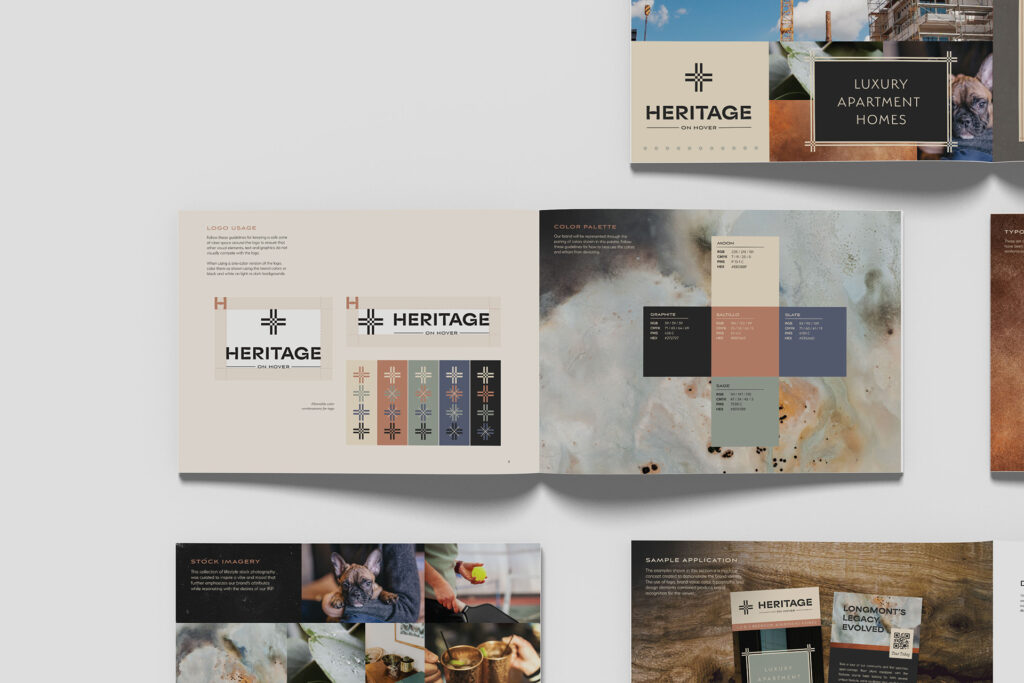
For multifamily branding, this means the era of safe, basic design is ending. The cookie-cutter aesthetic—clean sans-serif logos, muted earth tones, stock photography of people laughing on pristine couches—is losing its grip because it’s so sterile, it doesn’t make anyone feel anything.
The brands that will stand out are the ones that aren’t afraid to have a point of view. That means bolder colors, more distinctive typography, real photography of your actual property, and brand voices that sound like real humans wrote them.
Now, we’re not advocating for chaos over professionalism. It means leaning into your community’s distinct character—not sanding down the edges until your brand could be swapped with any competitor without anyone noticing.
Local Brand Saturation Will Win
Here’s a stat that should reshape how you think about marketing: most renters stay close to home. They’re not relocating from across the country—they’re moving within their city or neighborhood, comparing you against a tight set of local competitors.
This makes hyperlocal brand visibility more valuable than broad awareness campaigns.
The communities winning right now are the ones saturating their local market through every available channel—geofencing, local search optimization, streaming TV in specific zip codes, partnerships with neighborhood businesses. They’re not waiting around for renters to find them; they’re ensuring renters see their brand repeatedly before the apartment search even begins.
This is where community-specific branding becomes essential. A portfolio-wide brand might build recognition at scale, but a strong local identity helps prospects understand what makes each property special in its specific context. The best approach often combines both: clear connection to a trusted portfolio brand, plus a distinctive community-level identity that speaks to local renters.
Personalization Without Losing Brand Cohesion
AI isn’t just changing how renters find you—it’s also changing how you can communicate with them.
The tools now exist to deliver hyper-personalized messaging at scale. You can tailor email campaigns to different renter personas, serve ads that highlight amenities specific to what a prospect has browsed, and create content that speaks directly to young professionals versus families versus downsizing empty-nesters.
But here’s the trap: personalization without brand guardrails quickly becomes a mess. If your messaging shifts so dramatically from one audience to another that the brand feels inconsistent, you lose the recognition and trust you’ve built.
The solution is a strong brand foundation—clear voice, visual identity, and messaging hierarchy—that allows for customization at the surface level while maintaining coherence underneath. Think of it like variations on a theme rather than completely different songs.
This is where robust brand guidelines become essential. Not the dusty PDF that gets filed away and ignored, but a living document that empowers your team to create personalized content while staying unmistakably on-brand.
What This Means for You
The next five years will separate the communities that take branding seriously from the ones that treat it as an afterthought.
Here’s what you should be thinking about right now:
Audit your brand presence everywhere. AI tools are pulling from every corner of the internet. Make sure your information is accurate and consistent across your website, listings, Google Business Profile, and review platforms.
Build systems, not just logos. Think about how your brand needs to flex across different contexts, devices, and audiences. Consider motion, sound, and voice as part of your identity—not just visual elements.
Lean into what makes you distinctive. Generic branding that plays it safe is becoming invisible. Find the genuine differentiators—in your community, your location, your experience—and make them central to your brand.
Invest in local visibility. Broad awareness has its place, but local brand saturation is where leasing happens. Make sure your target renters see you before they even start their search.
Set up for personalization. Build the brand foundation that allows you to customize messaging for different audiences without fragmenting your identity.
The multifamily brands that thrive in 2030 won’t have followed every trend. They’ll have built something distinctive, showed up consistently, and made renters feel something. To get there in 2030, start today.
Lease a